
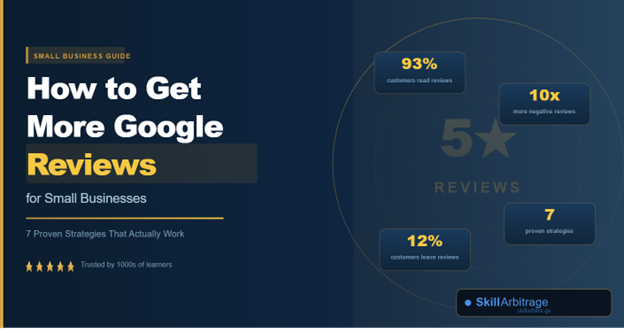

Unhappy customers are 10x more likely to leave a review than happy ones which means if you’re not actively collecting reviews, you’re losing the narrative.
Table of Contents
The Real Cost of Ignoring Google Reviews
A Story That Illustrates the Problem
Picture this: a fully renovated hotel in Central London. Beautiful rooms. Excellent service. But their Booking.com profile? Littered with reviews from before the renovation stale one-stars from a different era, a different business.
The result? Guests scrolled past them. Revenue walked out the door every single week. The management had no idea they were bleeding bookings until someone pointed it out and offered to fix it.
We found more restaurants in the UK with bad reviews to help them out. You can watch how it was done here. We have done the same for companies in the US as well and you can find it here.
This is the silent killer inside thousands of good businesses right now.
The Review Gap Nobody Talks About
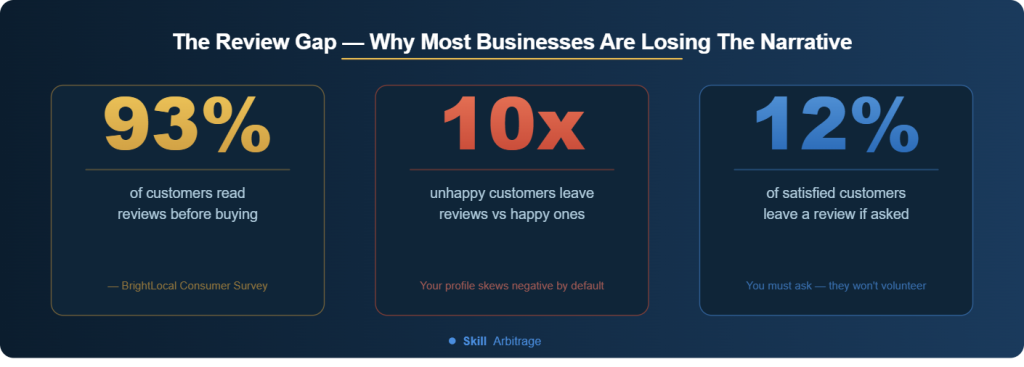
Here’s the uncomfortable math:
• Only ~12% of satisfied customers leave a review when asked
• Unhappy customers are up to 10x more likely to leave unsolicited reviews
• This means your review profile skews negative by default even if your product is excellent
The fix isn’t fake reviews (which backfire spectacularly). The fix is a proactive, systematic approach to getting your happy customers to speak up.
7 Proven Strategies to Get More 5-Star Google Reviews
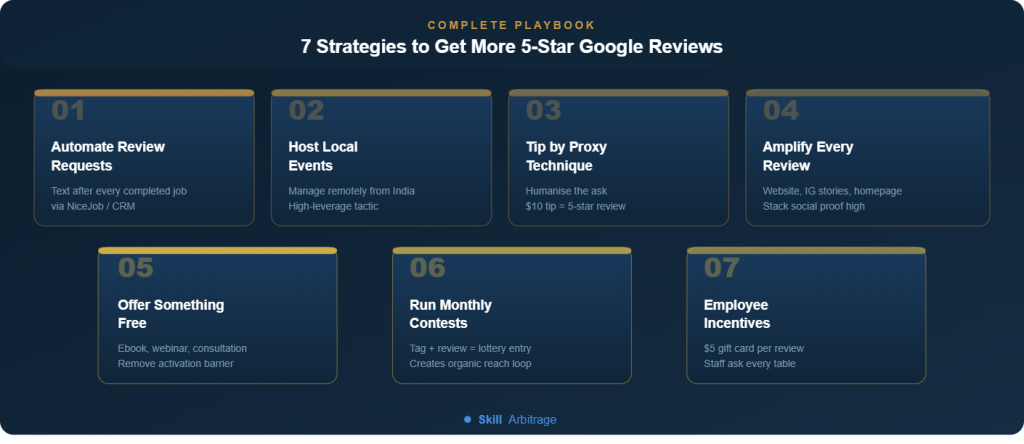
1. Automate Review Requests After Every Job
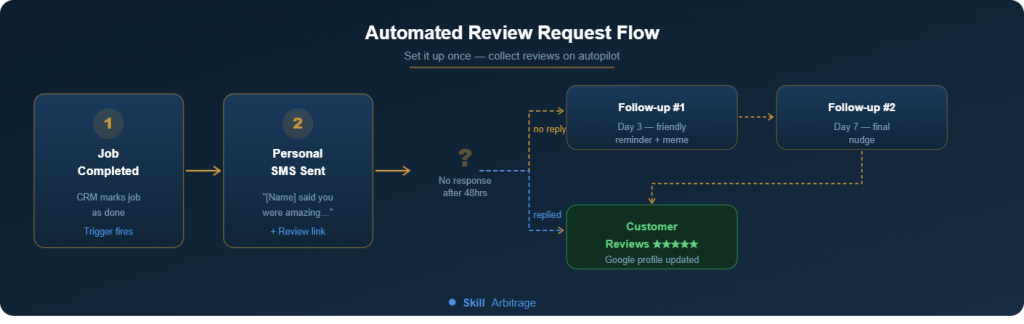
The fastest win for any local service business is a simple automation: trigger a review request text the moment a job is completed.
Tools like NiceJob integrate directly with scheduling software and CRMs to send personalised follow-ups automatically. The formula that works:
• Personalise it: ‘[Employee name] said you were amazing to work with.’
• Make the ask feel natural, not transactional
• Follow up twice a well-timed second nudge (ideally with a bit of humour) can double response rates
• Include a direct Google review link reduce friction to zero

Pro tip: If your client already has a database of satisfied past customers, a single well-crafted email blast asking for reviews can generate dozens of 5-stars in days.
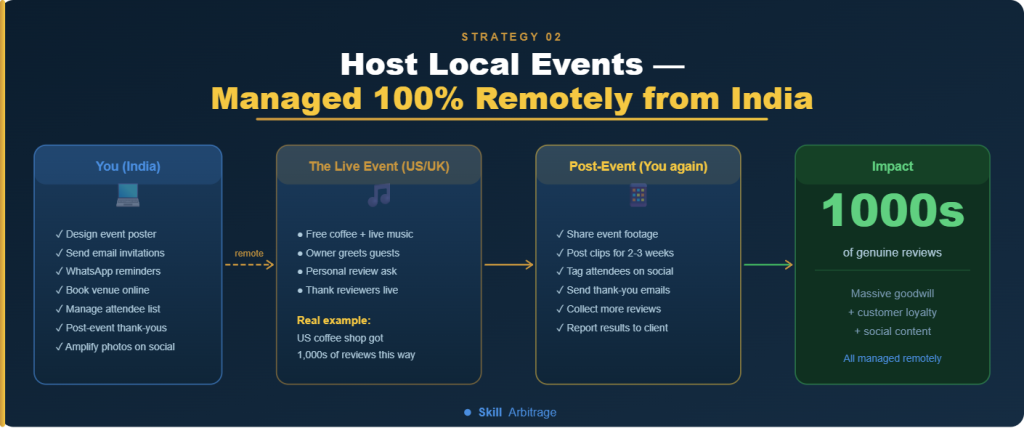
2. Host Local Events (Yes, You Can Organise These Remotely from India)
Offline events are one of the highest-leverage review-generation tactics available and you don’t need to be in the same city to run them.
Consider this: a coffee shop owner in the US ran a monthly community night free coffee, live music, the owner personally greeting guests. He walked the room asking for Google reviews.
Result: thousands of reviews generated from a recurring, low-cost event.
As a remote social media marketer, you can manage the entire event operation remotely:
• Customer invitations via email and WhatsApp
• Event posters and social media promotion
• Venue research and booking
• Attendee list management
• Post-event thank-you emails
• Social media amplification of photos and clips over 2–3 weeks following the event
“Most small business owners know offline events work they just don’t have time to organise them. That’s your opportunity.”
3. Use the ‘Tip by Proxy’ Technique
This one is deceptively simple and converts brilliantly. Send customers a message like:
“Hi! Leave our service provider a tip by writing a 5-star review. His name is Mahesh. Mention his name in your review and we’ll tip him $10 on your behalf!”
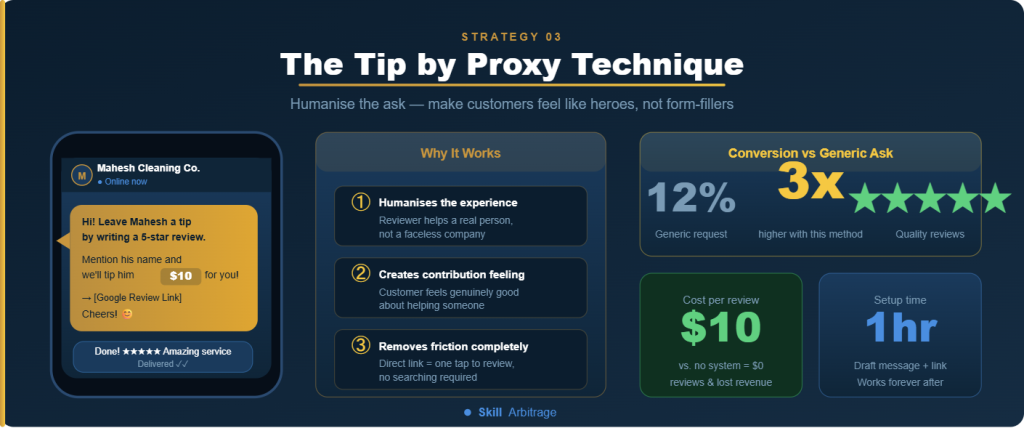
Why it works: it humanises the experience, creates a sense of contribution, and makes the reviewer feel genuinely good about helping someone not just filling in a form for a faceless company.
4. Amplify Every Google Reviews Across All Touchpoints
Getting a review is just step one. Amplifying it is where most businesses leave enormous value on the table.
Use a tool like Taggbox to pull Google and social reviews onto your website automatically. Then build a habit loop:
• Share 1 positive review daily on Instagram Stories
• Feature reviews prominently on the homepage with photos for maximum trust
• Create ‘review stack’ sections multiple reviews grouped together create compound credibility
• Embed Google reviews on the services or product pages most relevant to that reviewer’s experience
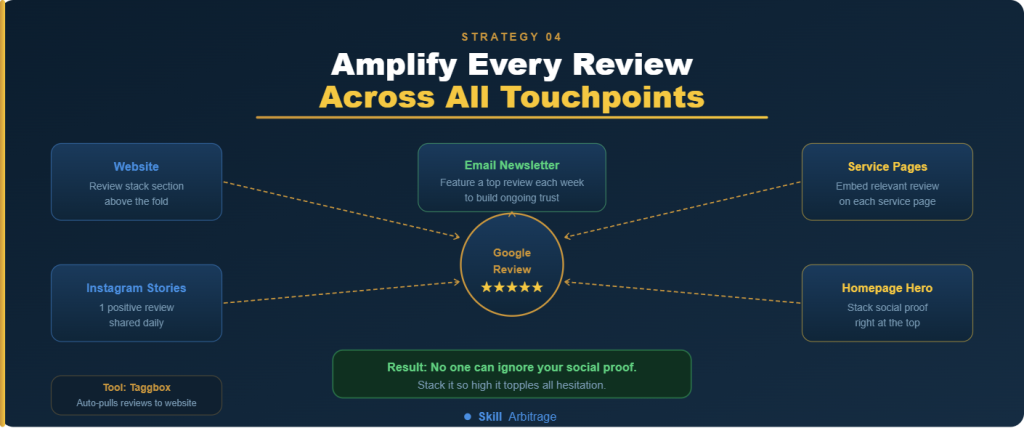
The goal: make it impossible for a website visitor to ignore your social proof. Stack it so high it topples all hesitation.
5. Offer Something Free in Exchange for a Review
For new businesses or clients with thin review profiles, an incentive removes the activation energy barrier entirely. Ethical options include:
• A free ebook or PDF guide
• Access to a recorded webinar
• A 10-minute complimentary consultation
• A small discount on their next order
Important: you’re incentivising the act of leaving a review not buying a positive review. Disclose this appropriately where required by the platform’s terms.
6. Run Monthly Google Reviews Contests
Turn review collection into a game. Structure it like this:
1. Ask customers to post a Google review and tag the business on social media
2. Each post becomes an entry into a monthly prize draw
3. Announce the winner publicly this creates social proof of the contest itself
4. The prize doesn’t need to be large: a gift card, free service, or branded merchandise works
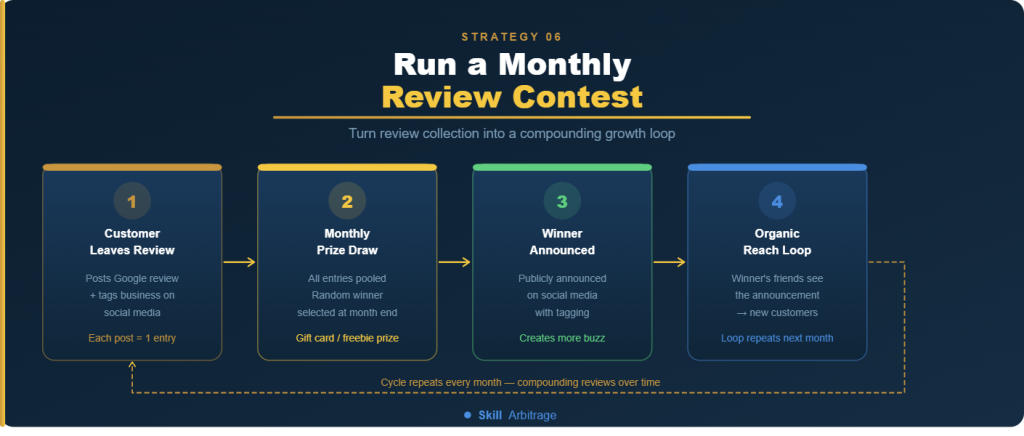
This compounds beautifully: the social media tagging generates organic reach, the contest generates reviews, and the winner announcement generates more content.
7. Create Employee Incentives in Service Businesses
For restaurants, cleaning companies, contractors any business where employees interact directly with customers frontline staff are your best review-collection asset.
The logic is simple: if a server at a 15-table restaurant gets a $5 gift card per Google review, and they work one shift per day, the math makes them highly motivated to ask every table. Management gets reviews. Employees get a bonus. Everyone wins.
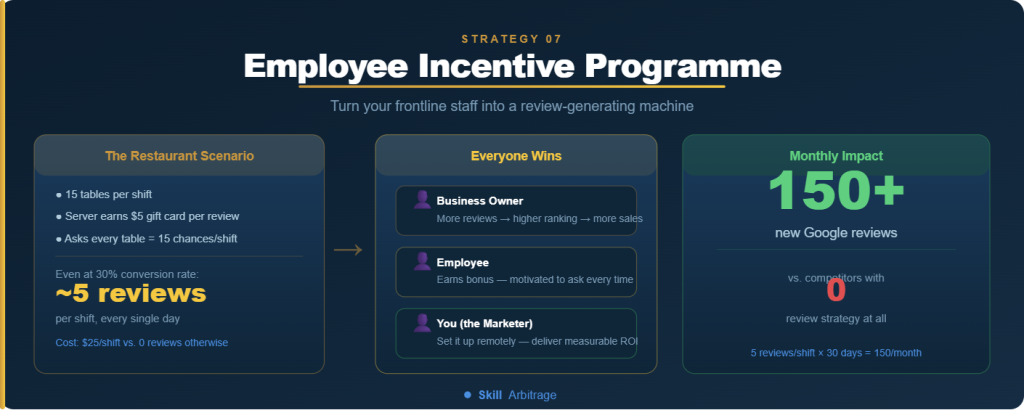
As a marketer, you can help your client set this programme up, design the tracking sheet, and manage the communication all remotely.
How to Handle Negative Reviews (And Turn Them Into Wins)
This is where most businesses panic and make things worse. The right approach is calm, professional, and solution-oriented.
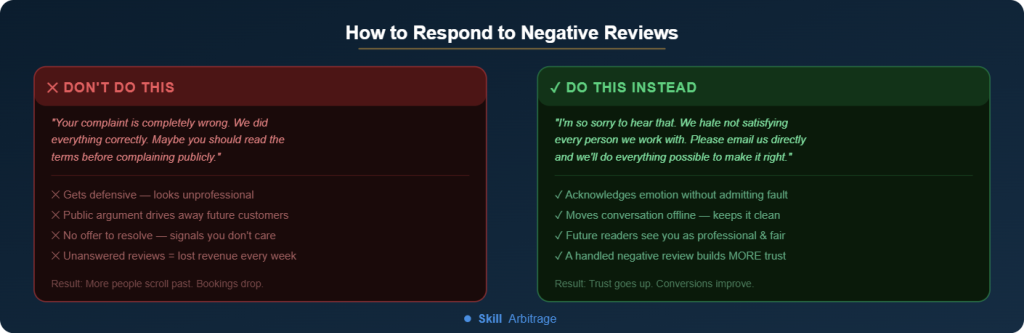
The Response Formula That Works
“I’m so sorry to hear that. I hate not satisfying every single person that works with us. Please email us directly and we’ll do everything possible to make it right for you.”
What this does: it acknowledges the emotion, takes ownership without admitting fault, and moves the conversation offline preventing a public back-and-forth that makes everyone look bad.
Dive deeper into finding US clients and crafting the perfect outreach
We’ve created a comprehensive guide that includes:
- 12+ directories and platforms to find US small businesses and startups
- Step-by-step instructions on how to identify potential clients
- A proven cold email template that gets responses
- Specific examples of how to specialize in high-demand industries like e-commerce
Click here to read “How to Find and Pitch to US Clients for Review Management Services”





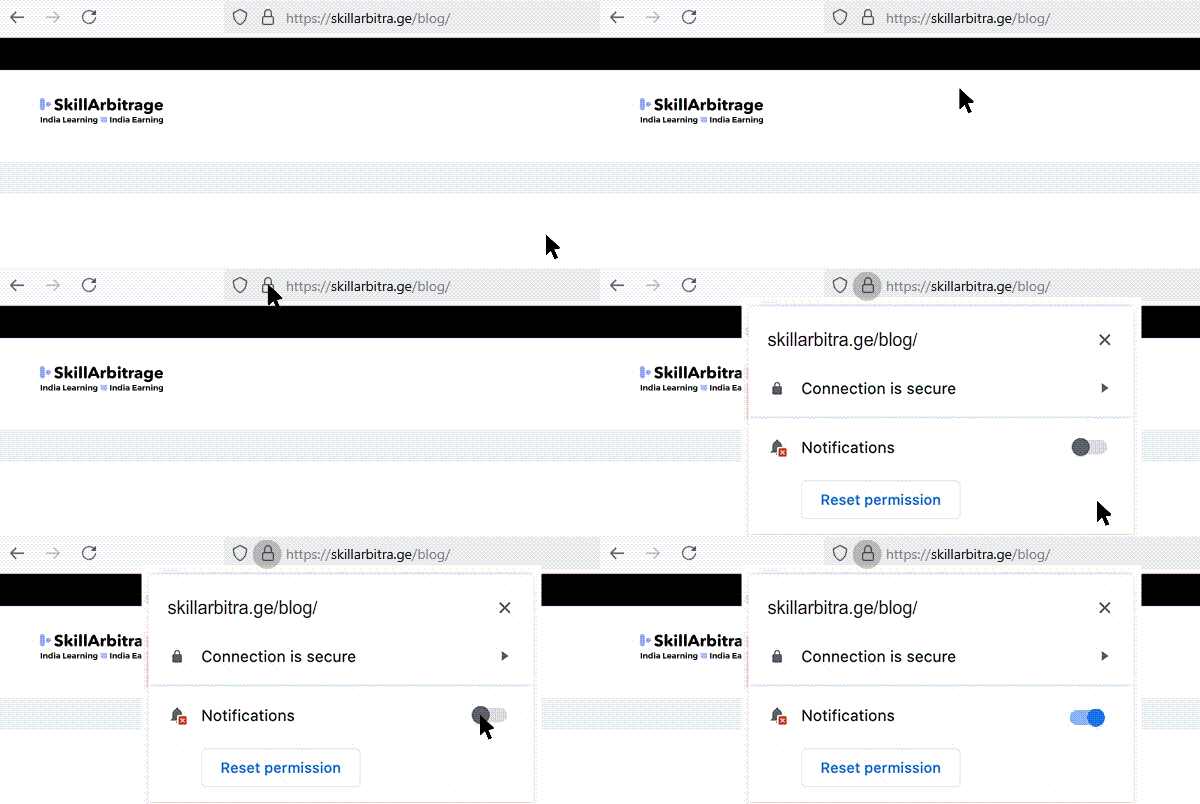
 Allow notifications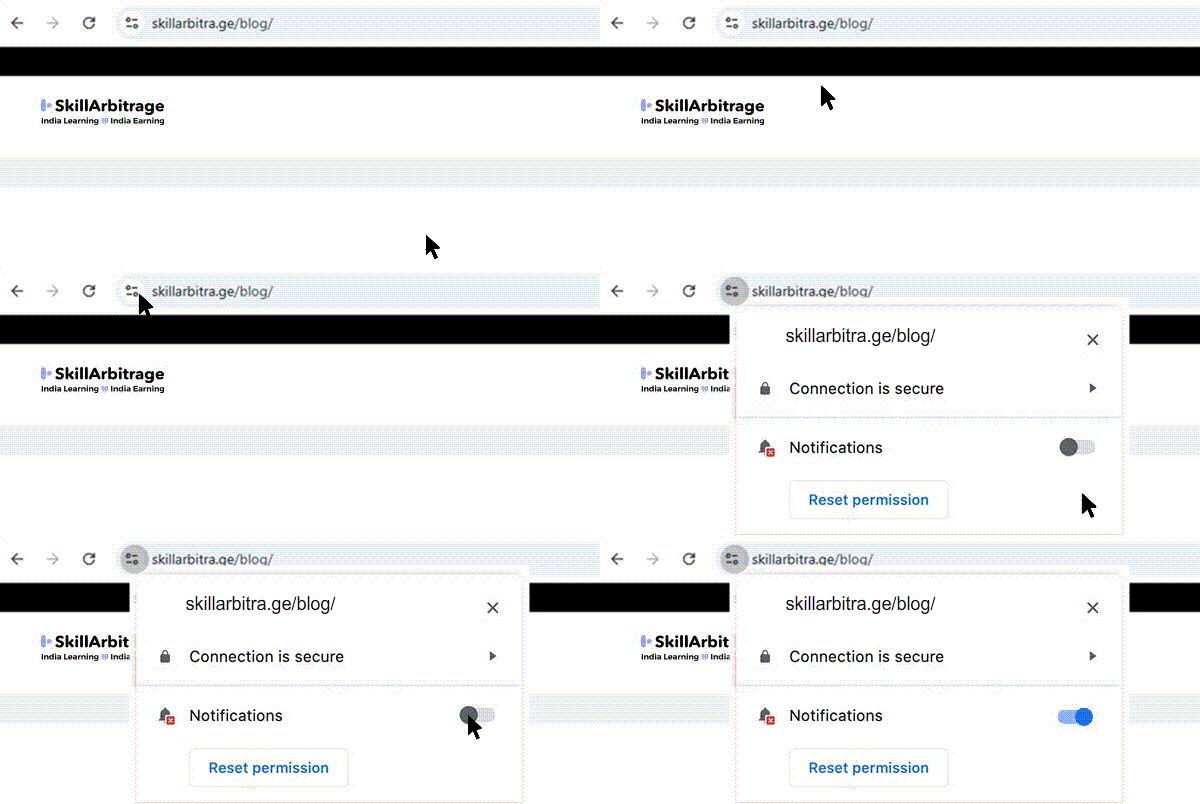
I really appreciate how you highlighted the importance of actively managing Google reviews rather than just hoping for positive feedback. The idea of automating review requests after every job seems like such a practical way to close the review gap, and I also like how you suggested turning negative reviews into opportunities—many businesses overlook that chance to learn and improve. It makes me think that even small, consistent actions can really shift a business’s online reputation over time.