
Table of Contents
Starting a consulting business in India has never been more strategically timed than it is today.
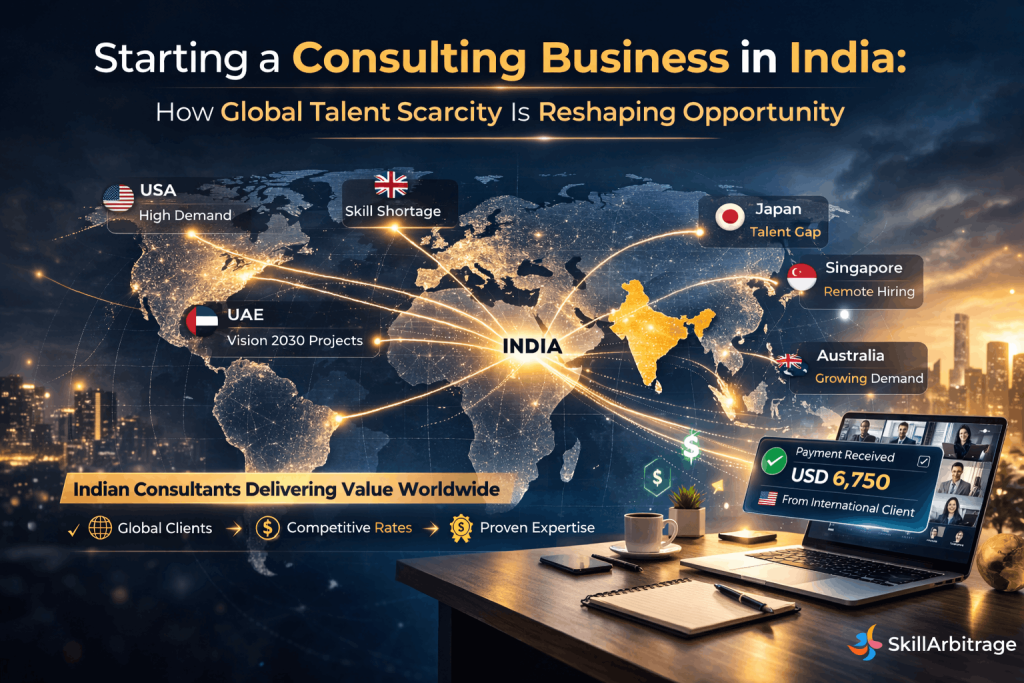
Across the United States, the United Kingdom, Japan, Singapore, and the UAE, businesses are facing one undeniable reality: they simply cannot find enough skilled talent locally.
This isn’t hype.
It isn’t a temporary hiring cycle.
It’s structural talent scarcity.
And that scarcity is creating one of the biggest global opportunities ever for Indian professionals.
This isn’t a short-term hiring wave.
It isn’t market hype.
It’s structural talent scarcity driven by demographics, policy shifts, and rapid digital transformation.
Yet many Indian professionals still ask the same questions:
- “Is the global opportunity really that big?“
- “Are there enough roles out there for someone like me?“
- “Why would an international client choose me over someone in their own country?“
These are valid concerns.
So instead of making claims, let’s look at the economic reality behind global hiring decisions and why it directly benefits professionals building a consulting business in India.
Imagine you are a founder in London, Singapore, Tokyo, Dubai, or New York. You have ambitious growth plans, but are struggling to hire locally. A senior consultant costs $150–200 per hour. Annual compensation can exceed $100,000–200,000, before accounting for overhead, benefits, and compliance costs.
For startups and mid-sized businesses, that’s often unsustainable.
Then they discover something practical and compelling: highly skilled Indian consultants delivering the same expertise and quality at significantly lower cost, without visa complications, relocation delays, or long hiring cycles.
Would they hesitate? Of course not.
This is not about undercutting markets. It is about economic efficiency. And that efficiency is precisely why starting a consulting business in India is no longer a side strategy; it is becoming a globally aligned solution.
Why Consulting Business in India Is Structurally Positioned to Win
1. The Price Advantage
You can charge $30–50 per hour and earn ₹2.5–4 lakh per month.
In London:
£800–1200/day
In Singapore:
SGD 200/hour

In Dubai:
AED 500–800/hour
In Tokyo:
¥15,000–20,000/hour
You deliver equal quality at a fraction of the cost.
This isn’t “cheap labor.”
It’s economic efficiency.
2. Time Zone as a Competitive Edge
When London ends its day at 5 PM, you still have productive hours.
When New York sleeps, you deliver.
When Singapore needs real-time collaboration, you overlap.
No local consultant can serve all these markets efficiently without overtime.
You can, within your normal workday.
3. English Fluency as Global Currency
While professionals in Japan, China, Germany, or Brazil may struggle with business English, Indian consultants are already fluent in global business communication.
You can:
- Present to the London boards
- Negotiate in Sydney
- Draft contracts in Singapore
- Run calls with Dubai
This is an embedded advantage within the consulting business in India exports.
4. India’s Global Credibility
Indian professionals built systems for:
- Deutsche Bank
- Toyota
- Samsung
- Emirates
UPI is studied globally.
Indian CEOs lead Microsoft, Google, Chanel, the World Bank, and PepsiCo.
When you approach global clients, credibility is pre-established.
You represent a consulting business ecosystem already trusted worldwide.
The World Is Facing a Talent Crisis
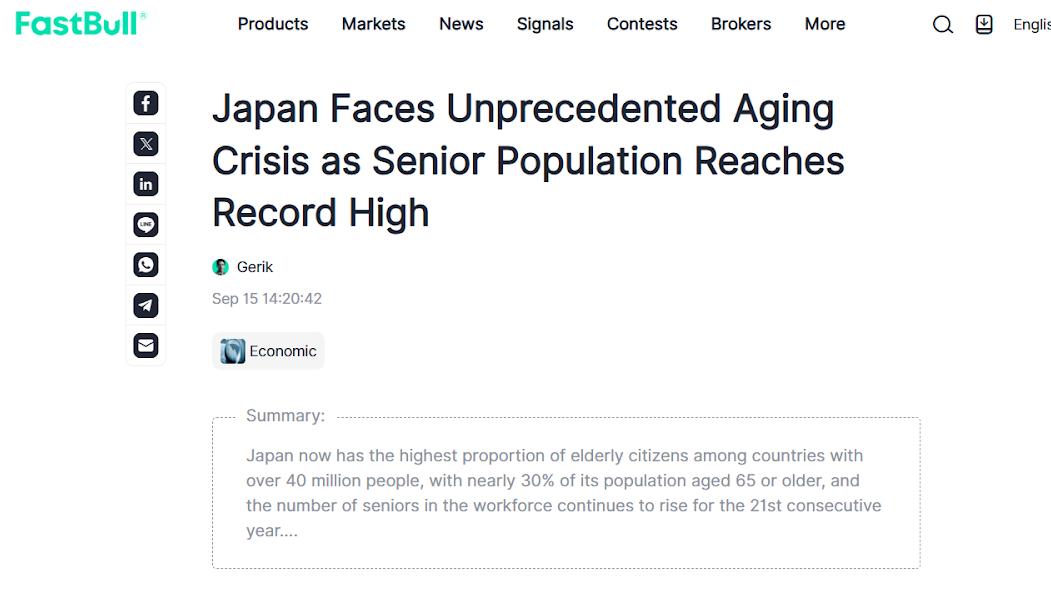
🇯🇵 Japan: 30% Population Above 65
Japan is facing the worst talent crisis in history, with nearly 30% of its population aged 65+ and births hitting historic lows; there’s simply no workforce to replace the retiring generation.
The situation is so desperate that 85% of Japanese companies are planning to hire more than 60% remote workers in the next 12-18 months.
They need professionals like YOU for IT, engineering, and business services, and they need you RIGHT NOW. Japanese tech giants, such as Rakuten, SoftBank, and NTT, are already partnering with Indian IT firms, while startups in Tokyo’s tech hub are posting thousands of remote positions specifically targeting Indian developers. The Japanese government has even relaxed work visa rules and launched digital nomad programs specifically to attract foreign talent. When a country known for its traditionally closed business culture opens its doors this wide, you know the crisis is real.
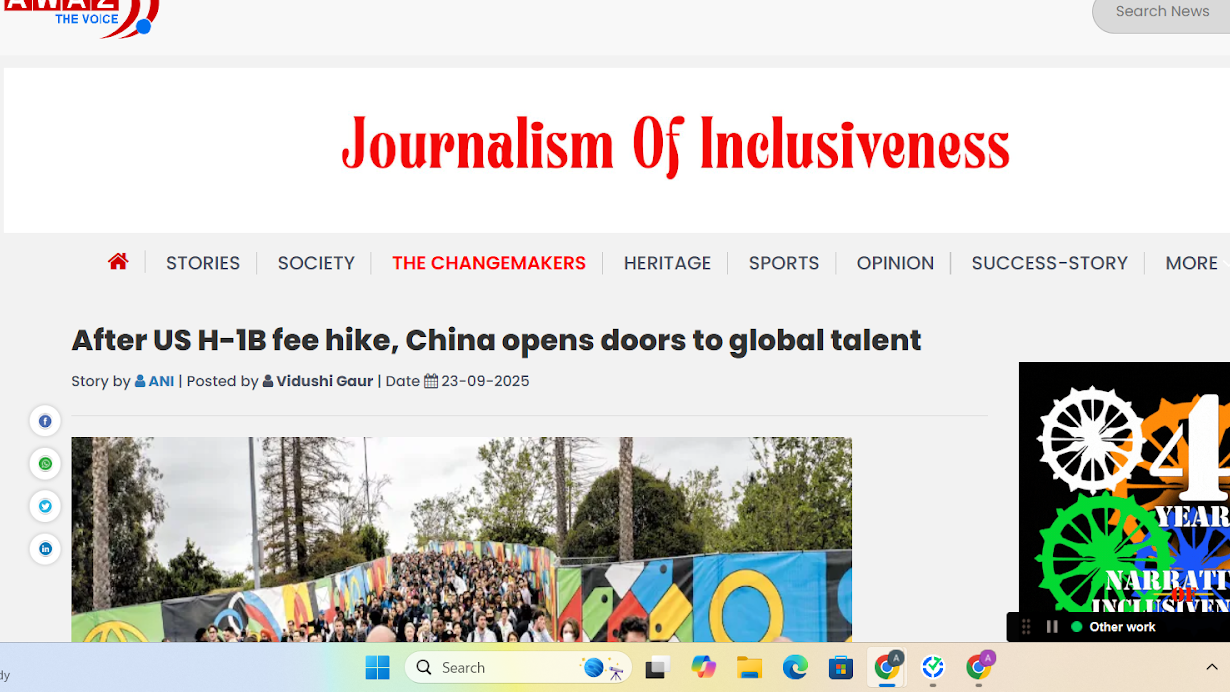
🇨🇳 China: STEM K-Visa Launched

Just launched their version of H-1B visa for STEM talent. Beijing is throwing open its doors to global professionals: another giant economy actively hunting for Indian expertise.
This isn’t just policy talk – Chinese tech companies are offering packages worth $150,000–$300,000 for senior engineers. Even if you charge half of this amount, that is, $75,000–$150,000, it will be a win-win scenario for both, and the best part, they are actively recruiting from overseas. When the world’s second-largest economy makes it this easy for you to work there, the opportunity is undeniable.
🇸🇬 Singapore: 83% Employers Can’t Find Talent
Singapore is in crisis mode with a staggering 83% of employers reporting they simply cannot find the skilled talent they desperately need. Right now, 75% of Singapore companies are planning to make more than 60% of their hires remote workers. The door is wide open.
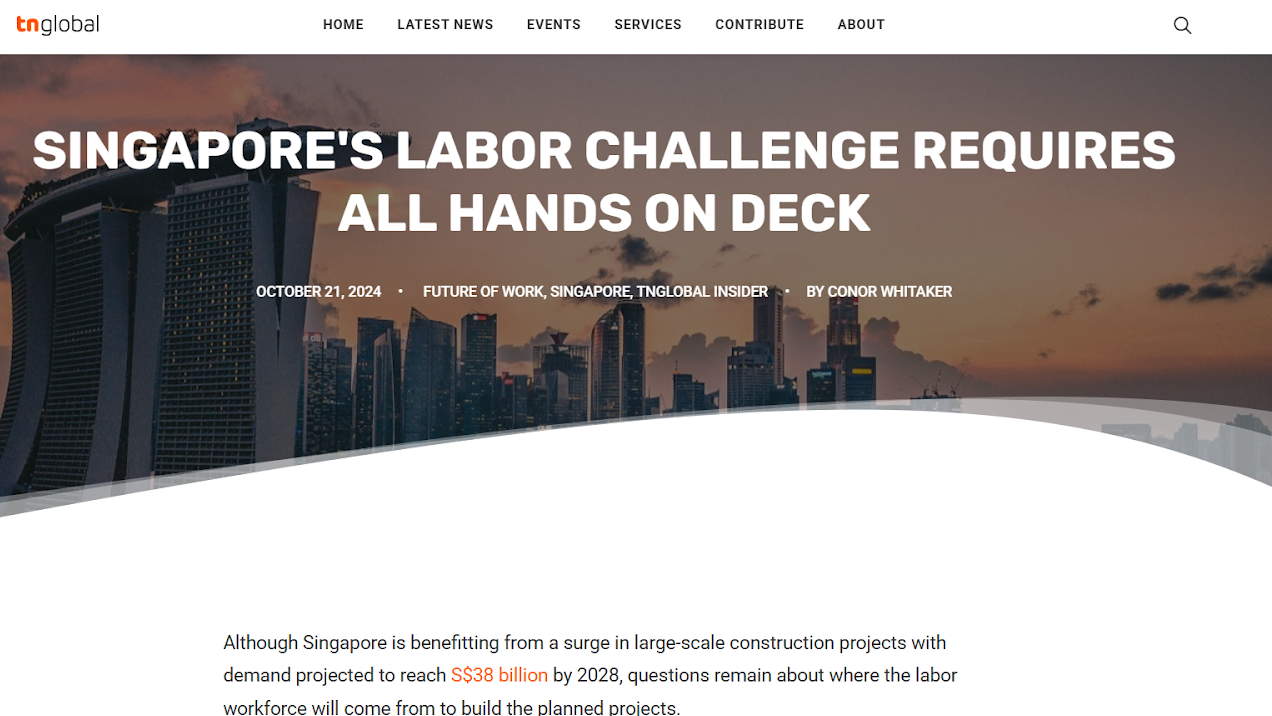
The construction sector faces significant challenges with projects worth S$38 billion in the pipeline, but constrained by labor shortages.
Major banks and financial institutions have hundreds of open tech positions, while the government’s Smart Nation initiative is aggressively hiring – expecting to triple its AI workforce to 15,000 professionals within five years. Singapore companies are now offering remote work packages with quarterly fly-in arrangements, showing they’ll do whatever it takes to get the talent they need.
🇦🇪 UAE: Consulting Market Growing 12%
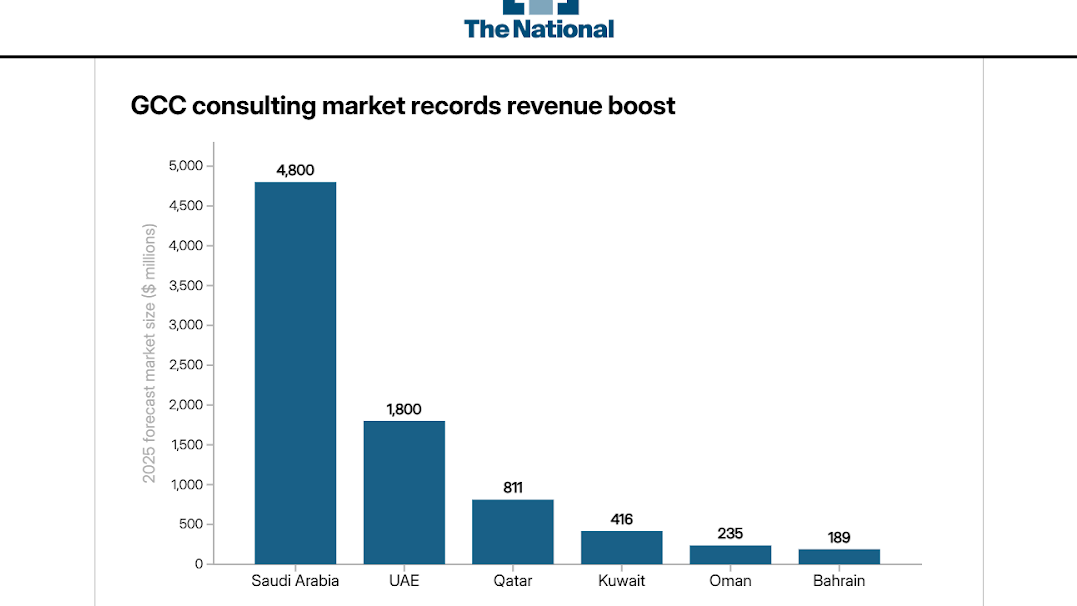
The Gulf consulting market is experiencing explosive growth, with a 12% increase projected for 2025, while Saudi Arabia’s market already surged 14% in 2024.
Their Vision 2030 mega-projects, like NEOM, are demanding world-class expertise in engineering, project management, and digital solutions, precisely the areas where Indian professionals have decades of proven success with Fortune 500 companies.

🇬🇧 United Kingdom: 84% Spike in Engineering Vacancies
With the US tightening H-1B restrictions and increasing costs, UK companies are desperately turning to remote Indian consultants as their stable, cost-efficient solution. They need you, and they need you now.
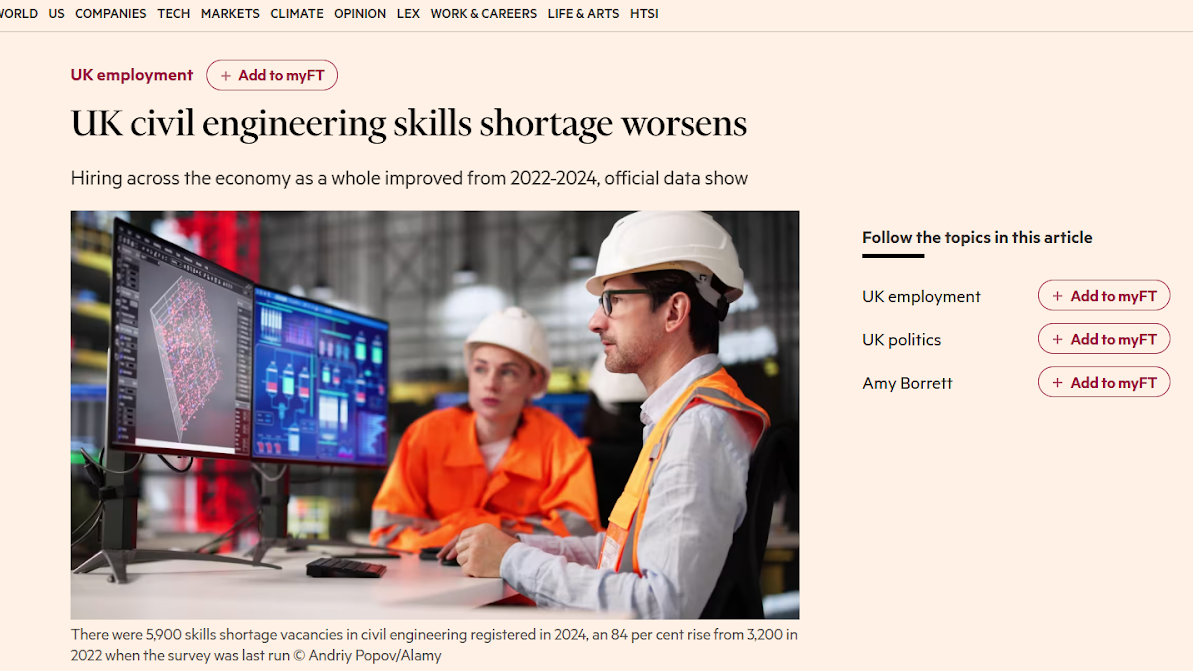
The UK is facing an unprecedented talent shortage, with civil engineering vacancies skyrocketing by 84% since 2022. Despite the government pumping £600m into skills development, they still can’t find enough talent.
For technical professionals specifically, this shift is already translating into real international contracts and remote consulting roles. Here’s how engineers are positioning themselves to capture this opportunity.
🇺🇸 United States: H-1B Costs Trigger Remote Shift
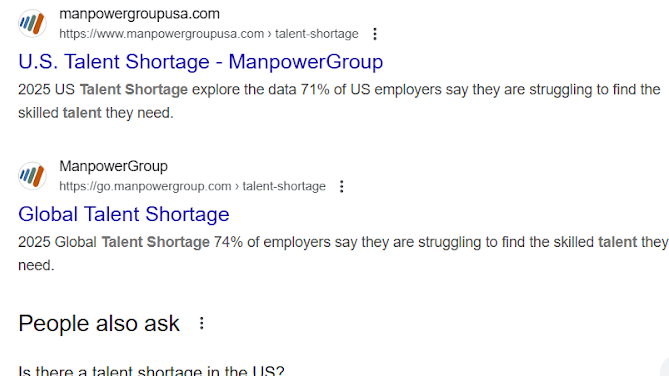
The US is experiencing its most severe talent shortage in decades.
But here’s what’s really changing the game: The H-1B visa process now costs companies $30,000-50,000 per employee in legal fees, filing costs, and processing time – and that’s before they even pay salaries! Add the lottery system with only a 25% success rate, 6-month processing delays, and increasingly strict regulations, and you understand why US companies are abandoning the H-1B route altogether.
Smart American businesses have discovered a better solution: Remote Indian consultants. No visa costs, no lottery gambles, no regulatory headaches – just immediate access to world-class talent at 70% less cost. Silicon Valley startups, Texas tech firms, New York financial companies – they’re all pivoting to remote Indian professionals who can start working tomorrow, not next year.
And this isn’t limited to a few isolated companies. In fact, U.S. enterprises already run large-scale operations overseas. More than 52.3% of all foreign-controlled assets in Canada are held by U.S. accounts. In the UK alone, there are 32,646 U.S.-owned business units operating today. India hosts over 1,000 U.S. companies, with nearly 1,800 offshore corporate offices, and more than 400 members of the American Chamber of Commerce. Australia? Around 1,700 U.S. businesses are already embedded across diverse sectors.
Visa Programs Are Reinforcing the Consulting Business in India
Singapore’s COMPASS system and new Flexible Work Arrangement guidelines are making it easier for foreign professionals to work there.
The UAE offers aVirtual Work Visa that lets you live in Dubai with zero personal income tax while working for your global clients – all you need is a $5,000/month income.
Japan just launched its Digital Nomad Visa, allowing you to work from Tokyo for 6 months while serving your international clients. These aren’t just job opportunities anymore – these are lifestyle invitations from countries that desperately need your expertise.
So, it’s entirely up to you whether you want to tap into these opportunities remotely from your bedroom or relocate to the country and work from there.
But here’s the strategic advice: Start remotely from India. Build $5,000–10,000 monthly consulting income first. Relocation becomes optional.
👉 If you want a structured roadmap to formally build your consulting business in India, read our detailed guide on how to start a consultancy business and escape the middle management trap.
The Path Forward for Consulting Business in India
Whether you are an engineer, project manager, business consultant, sales leader, marketer, or HR specialist, this is the moment to position yourself globally. The demand is not temporary; it’s structural, driven by demographics, policy, and transformation agendas across regions.
The Bottom Line
The world isn’t merely open to Indian consultants.
It is actively seeking you.
Your cost-efficiency, English fluency, time-zone positioning, digital expertise, and global credibility make consulting business in India one of the most strategically advantaged opportunities in today’s economy.





 Allow notifications