Table of Contents
Remote academic writing jobs are thriving globally in 2026, despite the rapid rise of powerful AI writing tools.
In fact, this may be one of the best times to build a remote academic writing career, if you understand where AI fits, where it doesn’t, and what’s changing.
Just two years ago, tools like ChatGPT were full of hallucinations. They confidently invented sources, misrepresented facts, and confused even experienced researchers. Academic writers were advised to use them cautiously.
That changed with newer models such as GPT-4 (2023), GPT-4.5 (2025), and tools like Claude, Perplexity, and DeepSeek. These now offer citation-backed summaries, academic integrations, and deep research features. Even free versions can produce professional-looking content.
Sounds impressive.
But here’s the reality: AI is more helpful than ever—but it is still not trustworthy on its own. Even its creators acknowledge that subtle errors can occur.
Are the new models free of hallucinations?
No.
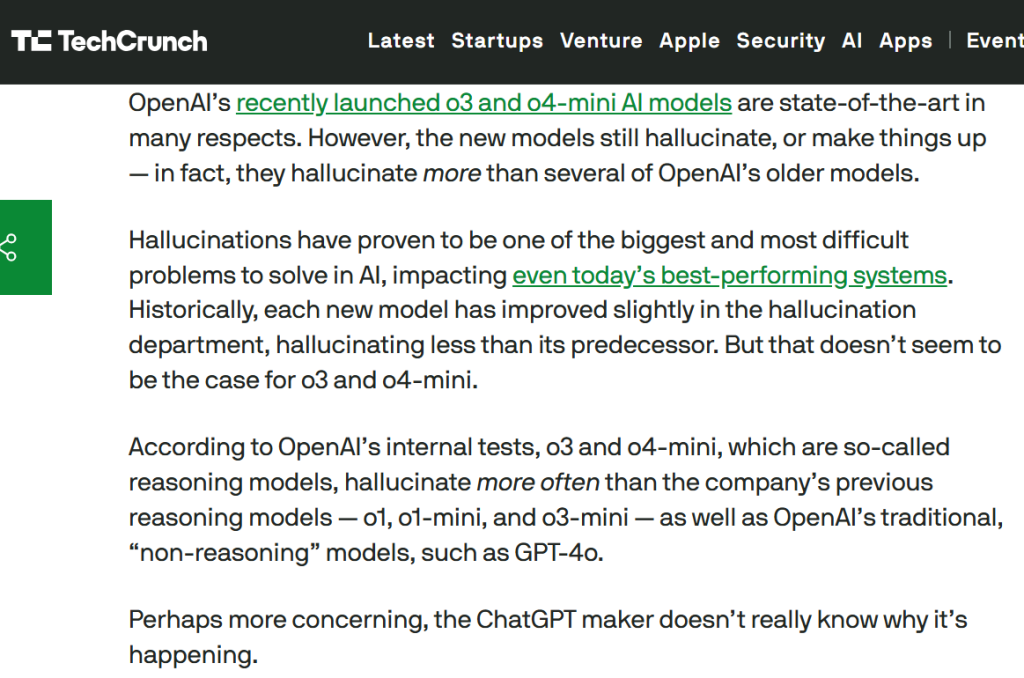
In academic writing, one cannot afford that!
One spurious citation or misinterpreted result is enough to sink the credibility of your work.
The New Role in Remote Academic Writing Jobs
What should an academic writer do in 2026?
You become the human brain behind the machine.
Use AI for:
- First-draft generation and outlining
- Literature summarisation and ideation
- Paraphrasing and formatting
- Language polishing (with human review)
Don’t use AI for:
- Fact-checking or interpreting research
- Writing ethics or patient-sensitive documents
- Drafting entire papers without review
- Bypassing plagiarism or peer review
The new rule is: Use AI to accelerate. But rely on yourself to verify.
Why Information Gain Matters for Remote Academic Writers
There’s another big change that’s shaping the massive content universe in 2026!
Google’s new rule: If your content doesn’t offer “information gain,” it won’t rank. This is big!
In 2026, search engines (and even academic databases) no longer reward long content or curated summaries. They want original insight.
That’s why AI-detected content is often flagged even when written by a human (to be sure, AI detectors throwing false-positives is a big problem for all writers today, but you can totally crack this challenge if you ensure information gain in your content)
The standard has changed.
Here’s what counts as “information gain” today:
- Original surveys or field data
- Primary research and internal case studies
- Exclusive interviews
- Strong point-of-view or novel argumentation
- Data visualisation or interpretation
And this is why human academic writers are needed more than ever.
Why Human Academic Writers Are Still in High Demand
Academic writing is a booming profession because there are at least 5 critical functions only human writers can fulfill:
1. Ethical compliance & credibility checks
Science journals, medical journals, and top publications now require AI disclosure—and ban unverified AI use.
For example, Science and JAMA explicitly prohibit AI-generated writing. Nature and IEEE require detailed AI-use statements. Only humans can safely navigate this.
2. Nuance, context, and clarity
AI doesn’t understand cultural context, voice, or argument structure.
Academic writers help clarify intent, tailor tone, and tighten logic—things AI still can’t do reliably.
3. Multilingual and ESL editing
Millions of researchers from China, Brazil, India, and the Middle East write in English as a second language.
AI grammar tools help, but they don’t fix fluency issues as human editors do.
4. Publishing pressure & quality race
Academic publishing hit over 3.3M articles in 2022. It’s a global race. One mistake or formatting error can get a paper rejected. That’s why authors turn to experts for copyediting, referencing, and submission help.
5. Formal journal requirements
Top journals now ask for proof of human editing, certificates of language check, and/or compliance with formatting styles (APA, IEEE, etc.)
Even if the paper is AI-assisted, it can’t be accepted unless a human expert verifies and polishes it.
What does this mean for you?
Whether you’re a current academic writer or just starting:
- AI will not replace you. But writers who don’t know how to use AI ethically and effectively may get left behind.
- Journals will demand more from you. If you can offer verified citations, compliance with AI policies, and high-quality editing, you will stay in demand.
- Clients will pay more for information gain. Writers who can offer field surveys, interviews, insights from Indian datasets, or structured argumentation will become trusted partners, not just vendors.



 Allow notifications