
Independent directors are essential for corporate governance. Failure to appoint them can lead to legal and financial consequences. This blog explores the impact of non-compliance with SEBI regulations and the Companies Act.
Table of Contents
What Are Independent Directors and Why Are They Important?
Independent directors are non-executive members of a company’s board who do not have any direct or indirect relationship with the company, except for their directorship. Their primary role is to provide an impartial and objective perspective, especially in decisions related to corporate governance, risk management, and audit.
Role of Independent Directors in Corporate Governance
Board directors act as a safeguard against potential conflicts of interest within the company. They contribute to more transparent decision-making processes and ensure that the interests of shareholders, employees, and stakeholders are well-protected.
Key Benefits of Independent Directors
- Enhanced Credibility: Board directors can improve the company’s image and credibility, making it more attractive to investors and regulatory bodies.
- Balanced Decision-Making: They offer a neutral perspective on key decisions, ensuring that the board makes well-informed choices.
- Improved Risk Management: Their oversight helps companies identify and mitigate potential risks.
SEBI Regulations & the Mandate for Independent Directors
The Securities and Exchange Board of India (SEBI) regulations require companies to appoint board directors, especially before seeking approval for an Initial Public Offering (IPO).
SEBI Regulations and IPO Approval Process
Under SEBI’s regulations, board directors must be in place before the company files its Draft Red Herring Prospectus (DRHP) for IPO approval. If a company fails to appoint board directors at this stage, it will not be able to proceed with the IPO approval process, delaying or completely halting its ability to go public.
Why Independent Directors Must Be Appointed Before Filing DRHP
Filing the DRHP with SEBI is a critical step in an IPO. The presence of board directors is essential to demonstrate the company’s commitment to corporate governance and regulatory compliance, which boosts investor confidence and ensures transparency.
Failure to fill the appointment may expose companies to penalties under the Listing Agreement, SEBI Regulations, and the Companies Act.
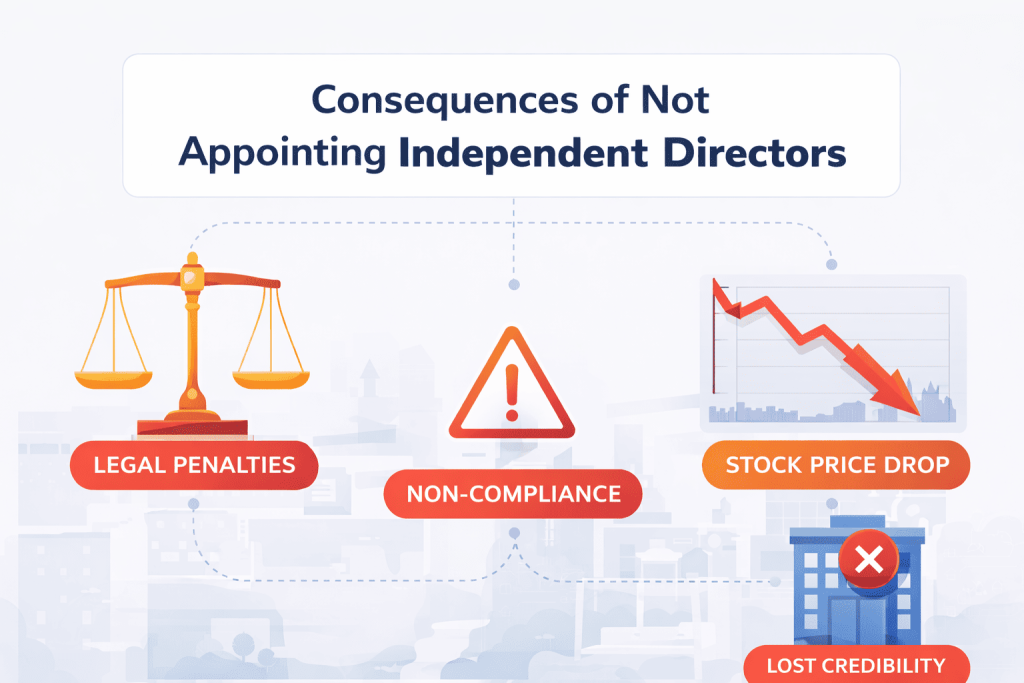
1. Legal & Financial Consequences of Not Appointing Independent Directors
Failing to appoint board directors is not only a regulatory failure but can lead to significant legal and financial consequences.
2. Legal Penalties for Non-Compliance Under the Companies Act & SEBI Regulations
Under the Companies Act, SEBI regulations, and other corporate governance laws, companies that do not appoint board directors face penalties. These include fines, suspension of operations, or even cancellation of the IPO approval.
3. Impact on Stock Prices and Investor Confidence
A lack of board directors can severely damage investor trust. Stock prices may fall as investors question the company’s commitment to governance and ethical practices. Non-compliance signals poor management, which can result in a loss of investor confidence.
In addition to legal obligations, not appointing board directors can negatively impact a company’s operations and financial stability.
How Non-Compliance Affects Unlisted Public Companies and NBFCs
Even unlisted public companies and non-banking financial companies (NBFCs) are required to appoint independent directors if stipulated by law. Non-compliance can lead to severe penalties.
1. Penalties for Non-Compliance with Independent Director Regulations
Unlisted public companies and NBFCs that fail to appoint board directors may face legal action, including penalties under SEBI and RBI regulations. These penalties can include fines or restrictions on business operations.
2. Repercussions for NBFCs and Fintech Companies
For fintech companies and NBFCs, the absence of board directors can lead to serious compliance issues. They may be barred from applying for or renewing licenses, which could jeopardize their operations and profitability.
How Non-Appointment Affects Loans and Investments
Investors and lenders typically require companies to have board directors as part of their contractual agreements. Failure to comply with this requirement may lead investors to withdraw funding or lenders to call back loans, which could severely impact the company’s financial standing.
Conclusion
Appointing board directors is not just a legal obligation, it is a fundamental aspect of ensuring corporate governance and protecting stakeholder interests. Companies that fail to comply with these requirements face significant risks, including legal penalties, loss of investor confidence, and even disruption of business operations. Therefore, businesses must prioritize appointing board directors to avoid these serious consequences and ensure smooth operations.






 Allow notifications