
You have been promoted, yet you still spend Friday nights preparing reports that an automated workflow could generate in minutes.
Table of Contents
You manage larger teams, bigger budgets, and more responsibilities. But you are stuck doing the same operational tasks you were doing five years ago. That is not a seniority problem. That is a systems problem, and workflow automation for professionals is exactly how you solve it.
This guide covers what workflow automation actually is, why it matters at the senior level, how it applies across 20 different professional domains, and the one benefit almost nobody talks about: the consulting income it quietly builds in the background.
The Middle Management Trap And Why Automation Is the Way Out
There is a specific career plateau that hits experienced professionals hard: your title has grown, but your days have not changed. Expertise that should be applied to strategy keeps getting consumed by operational execution, reports, follow-ups, status updates, and manual tracking.
This is the middle management trap. And it creates two compounding risks:
- Upward risk: You cannot demonstrate strategic value if 60% of your time is spent on tasks that require no strategic thinking.
- Downward risk: Younger professionals entering the workforce with automation-native skills can deliver the same operational output at a fraction of the cost.
Workflow automation breaks this trap by handling the repetitive operations while you focus on decisions that actually require your expertise, judgment, and experience.
What Is Workflow Automation? (And What It Is Not)
Workflow automation is the process of identifying tasks that follow a predictable pattern and building systems that execute those tasks automatically, without manual intervention each time.
What it is not: It is not about learning to code. It is not about mastering a specific tool. Tools like Zapier, Make, and N8N are simply the mechanisms, the same way Excel is a mechanism for financial analysis. The tool executes your logic. You provide the logic.
Key distinction: Automation is about identifying which tasks are wasting your strategic thinking time and building workflows that handle them automatically. Your domain expertise tells you what matters. Automation tools simply execute your knowledge.
This is not about becoming a programmer. This is about liberating your expertise from manual execution so you can focus on work that only you can do.
4 Things That Happen When You Implement Workflow Automation at Work
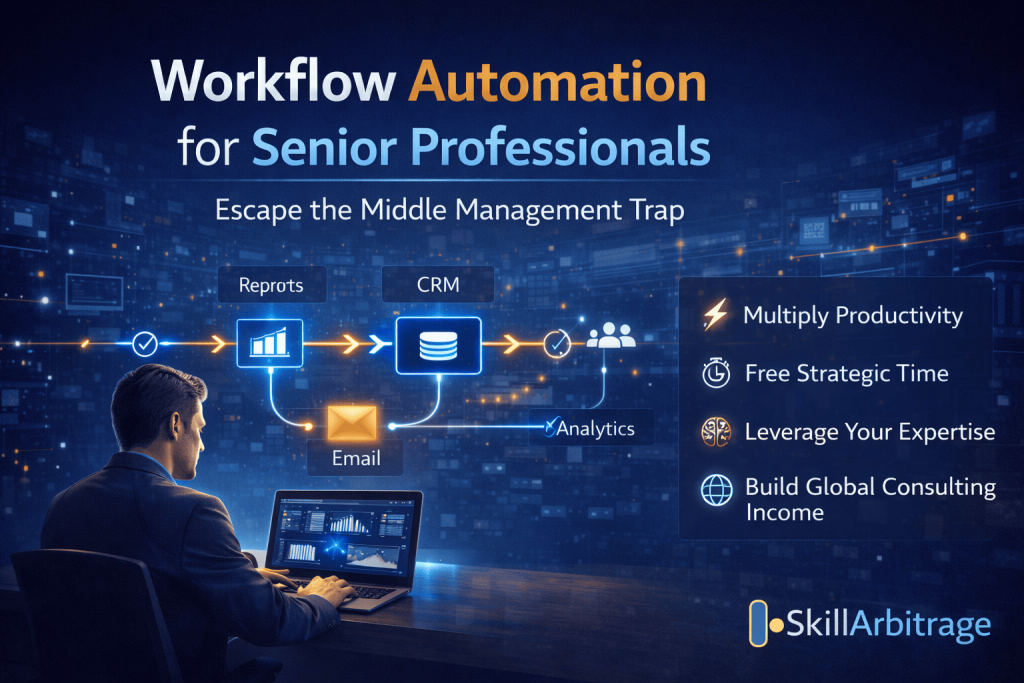
When you begin implementing workflow automation for professionals in your role, four things happen simultaneously:
- You multiply your productivity — the same output takes a fraction of the time
- You shift to strategic work — your hours go toward decisions, not execution
- You free up time — for skill development, relationship building, and higher-value activities
- You build a new consulting expertise — automation consulting is a globally in-demand skill that companies are actively paying for
That fourth point deserves its own section, and we will come back to it. But first, here is how workflow automation applies across your specific professional domain.
How Workflow Automation Benefits Professionals Across 20 Domains
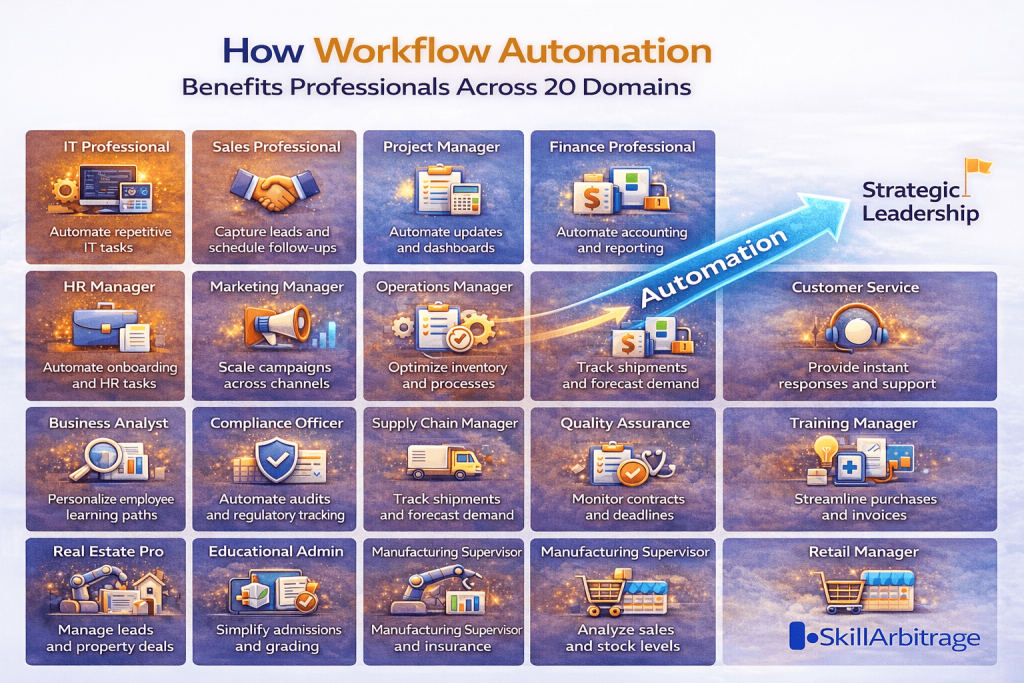
1. IT Professionals (Development, Testing, Cybersecurity, UI/UX, Product Management)
You entered technology to build innovative solutions, not to resolve password reset tickets and manage routine deployments. Automation handles ticket routing, common issue resolution, and deployment pipelines systematically. This frees you to architect solutions, improve security posture, and drive digital transformation. Companies transforming need IT automation expertise, but lack the internal professionals to implement it.
2. Sales and Business Development Professionals
You chose sales to build relationships and close deals, not to update CRM fields and compile pipeline reports. Automation captures all customer interactions, triggers personalised follow-ups, and generates accurate forecasts without manual input. This frees you to engage prospects meaningfully, negotiate deals, and expand accounts. B2B companies worldwide struggle with sales process adherence and pay well for systematic workflow solutions.
3. Project Managers and General Managers
You became a project manager to deliver complex initiatives, not to chase status updates across twelve stakeholders. Automation collects updates from all tools, generates real-time dashboards, and flags risks proactively. This frees you to manage relationships, resolve blockers, and make the strategic decisions only you can make. Companies managing distributed teams need automated project visibility, and most do not have it.
4. Finance and Accounting Professionals
You became a finance professional to provide strategic financial guidance, not to spend weekends reconciling accounts manually. Automation handles bank reconciliation, invoice matching, payment follow-ups, and compliance reporting. This frees you to analyse cash flow patterns, identify cost optimisation opportunities, and guide investment decisions. Companies in Singapore and Dubai pay premium rates for automated financial workflows because their finance teams face identical challenges.

5. Human Resources Managers
You entered HR to develop talent and build organisational culture, not to coordinate interview schedules through endless email chains. Automation manages resume screening, interview coordination, reference checks, and onboarding tasks systematically. This liberates you to focus on talent strategy, culture building, and employee development. Global startups that cannot afford full-time HR teams represent a large and growing consulting market for automated HR processes.
6. Marketing Managers
You pursued marketing to build brands and create compelling campaigns, not to manually post content across twelve platforms. Automation multiplies content across channels, personalises campaigns at scale, and tracks attribution accurately. This liberates you to develop strategy, analyse market trends, and innovate. Startups globally need sophisticated marketing automation but lack the resources and expertise to build it.
7. Operations Managers
You entered operations to optimise business processes, not to manually track inventory and coordinate vendor communications. Automation monitors stock levels, triggers reorders, and manages supplier communication systematically. This liberates you to design efficiency improvements, reduce costs, and scale operations. E-commerce businesses globally need operational automation to remain competitive.
8. Customer Service and CX Professionals
You joined customer service to enhance customer experience, not to manually categorise complaints and track response times in spreadsheets. Automation classifies queries, provides instant resolutions to common issues, and escalates intelligently. This liberates you to design service strategy, improve satisfaction metrics, and build customer loyalty. Growing companies need scalable service processes without proportionally growing headcount.
9. Business Analysts
You became an analyst to uncover insights and guide decisions, not to spend days consolidating data from multiple disconnected sources. Automation aggregates data continuously, identifies patterns, and alerts you to anomalies automatically. This frees you to perform deep analysis, identify strategic opportunities, and influence decisions at the leadership level. Data-driven companies need automated analytics but often cannot afford dedicated data teams.
10. Compliance Officers
You entered compliance to ensure organisational integrity, not to manually track regulatory changes and compile audit reports. Automation monitors compliance requirements continuously, generates required documentation, and maintains audit trails systematically. This liberates you to develop compliance strategy, manage regulatory relationships, and focus on prevention rather than paperwork. Regulated industries globally need automated compliance and struggle with implementation.
11. Supply Chain Managers
You chose supply chain to optimise global logistics, not to track individual shipments via WhatsApp messages. Automation provides end-to-end visibility, predicts disruptions before they escalate, and optimises routes intelligently. This frees you to negotiate strategic partnerships, design supply networks, and reduce costs. International traders and manufacturers need supply chain automation for competitive advantage.
12. Quality Assurance Professionals
You joined QA to ensure product excellence, not to execute repetitive test scripts and compile defect reports. Automation runs comprehensive testing, tracks quality metrics, and identifies patterns systematically. This liberates you to design quality strategies, prevent defects upstream, and improve processes. Software companies globally need automated testing to accelerate release cycles.
13. Learning and Development Managers
You entered L&D to develop human potential, not to track course completion rates and schedule training room bookings. Automation personalises learning paths, tracks progress, and measures impact automatically. This frees you to design transformative programmes, coach high-potential employees, and build a genuine learning culture. Organisations globally struggle to measure training ROI and need systematic, data-driven approaches.
14. Procurement Specialists
You chose procurement to optimise supplier relationships and reduce costs, not to process purchase orders and manually track contract renewals. Automation evaluates vendors objectively, manages approvals, and alerts you to savings opportunities systematically. This liberates you to negotiate strategic partnerships, identify long-term savings, and manage supply risk. Companies globally lose significant money through inefficient procurement processes.
15. Legal and Contract Managers
You studied law to provide strategic counsel, not to track contract expiration dates and review standard terms repeatedly. Automation monitors contracts, extracts key terms, and flags exceptions automatically. This frees you to negotiate complex deals, manage litigation risk, and guide business strategy. Startups globally need legal operations expertise but cannot afford full-time legal departments.
16. Healthcare Administrators
You entered healthcare administration to improve patient outcomes, not to manually juggle appointment schedules and verify insurance coverage. Automation coordinates scheduling, verifies coverage, and manages referrals systematically. This liberates you to improve patient experience, optimise resource utilisation, and enhance care quality. Healthcare providers globally face administrative burdens that directly affect patient care outcomes.
17. Real Estate Professionals
You chose real estate to close transformative deals, not to chase document signatures and update listing spreadsheets. Automation manages documentation workflows, nurtures leads at scale, and coordinates transactions systematically. This frees you to build client relationships, identify opportunities, and negotiate. Property companies globally need transaction automation to scale without proportionally scaling headcount.
18. Educational Administrators
You entered education to shape outcomes for future generations, not to process enrolment forms and calculate grades manually. Automation manages admissions workflows, tracks academic progress, and communicates with parents systematically. This liberates you to improve curriculum, support struggling students, and enhance institutional outcomes. Educational institutions globally are overwhelmed by administrative overhead that takes time away from their actual mission.
19. Manufacturing Supervisors
You joined manufacturing to optimise production processes, not to manually schedule shifts and compile production reports. Automation optimises scheduling, monitors quality in real time, and predicts maintenance needs before failures occur. This frees you to improve efficiency, reduce waste, and increase throughput. Factories globally are pursuing Industry 4.0 transformation but lack the implementation expertise to execute it.
20. Retail Managers
You entered retail to create exceptional customer experiences, not to count inventory and compile daily sales reports. Automation tracks stock levels, analyses customer behaviour patterns, and optimises pricing systematically. This liberates you to design in-store and digital experiences, build customer loyalty, and drive growth. Retail brands globally need operational automation to remain competitive against e-commerce players.
The Dual Benefit Nobody Mentions: Automation as a Consulting Skill
Here is what makes workflow automation uniquely valuable compared to most productivity improvements, it builds something beyond efficiency.
On the surface: You become the professional who gets things done faster and error-free. Management sees a high-performer who reduces chaos and saves time. You get promoted.
Behind the scenes: Every workflow you build is a consulting product. A workflow that saves your company 10 hours per week is worth thousands to another company facing the same problem. And there are thousands of companies facing the same problem.
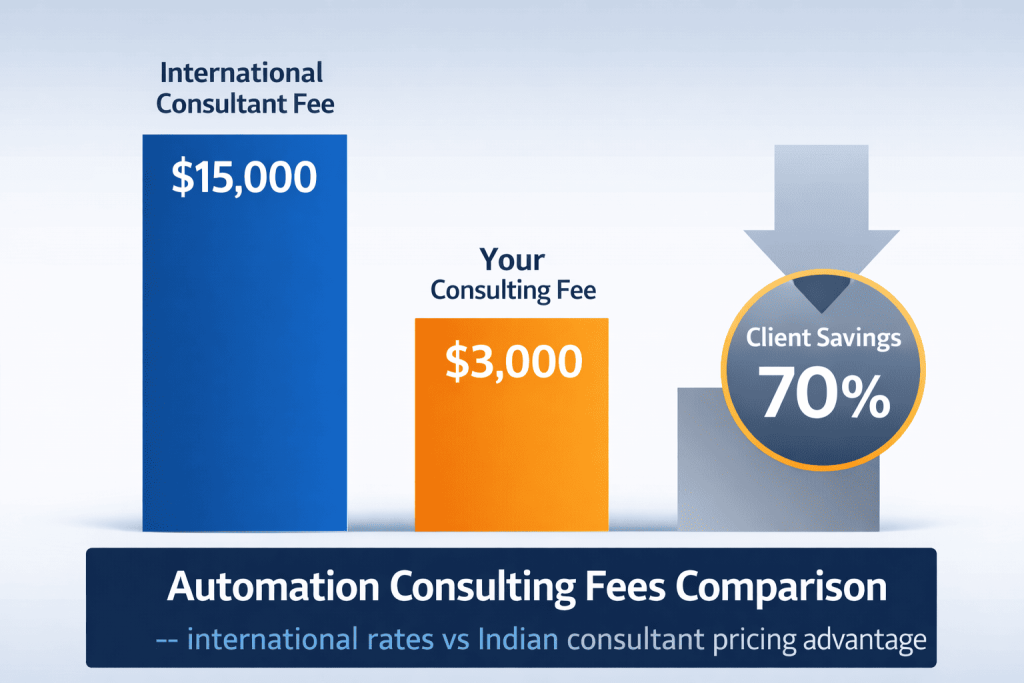
Companies pay fifteen thousand dollars for basic automation workflows built by generalist consultants who learned the tools but do not understand the business context. You understand the business context deeply, the domain expertise is already yours. Learning the tools takes weeks, not years.
That is the asymmetric opportunity in workflow automation for professionals: you solve your own problem at work, document the solution, and sell the same solution to companies globally who desperately need it.
How to Start: Your First Automation in 6 Steps
You do not need to automate everything at once. Start with the one task that frustrates you most, the one that consumes hours but requires no real thinking.
- Identify the task — Pick the single most repetitive task in your week
- Map the steps — Write out every manual step the task requires (this is your workflow blueprint)
- Choose a tool — Zapier, Make, or N8N all work; the right choice depends on your existing tech stack
- Build a basic version — A simple automation that handles 80% of cases is better than a perfect one you never finish
- Measure the time saved — Document this number; it becomes your consulting case study
- Present it at work — Frame it as process improvement; your employer benefits, and you demonstrate strategic thinking
Within weeks, you have your first automation running and your first consulting portfolio piece documented.
Conclusion
The middle management trap is real, and it is not your fault. The systems around most professionals are designed to consume expertise on operational tasks rather than strategic ones. Workflow automation for professionals is how you break that pattern deliberately.
The tools are accessible. The demand for domain experts who understand automation is at an all-time high. The dual benefit, better performance at work and a growing consulting expertise, invests in learning automation as one of the highest-return decisions a senior professional can make right now.
Pick your most frustrating repetitive task. Build one workflow. Measure the time it saves.
That single step starts both the efficiency gain and the consulting opportunity at the same time.




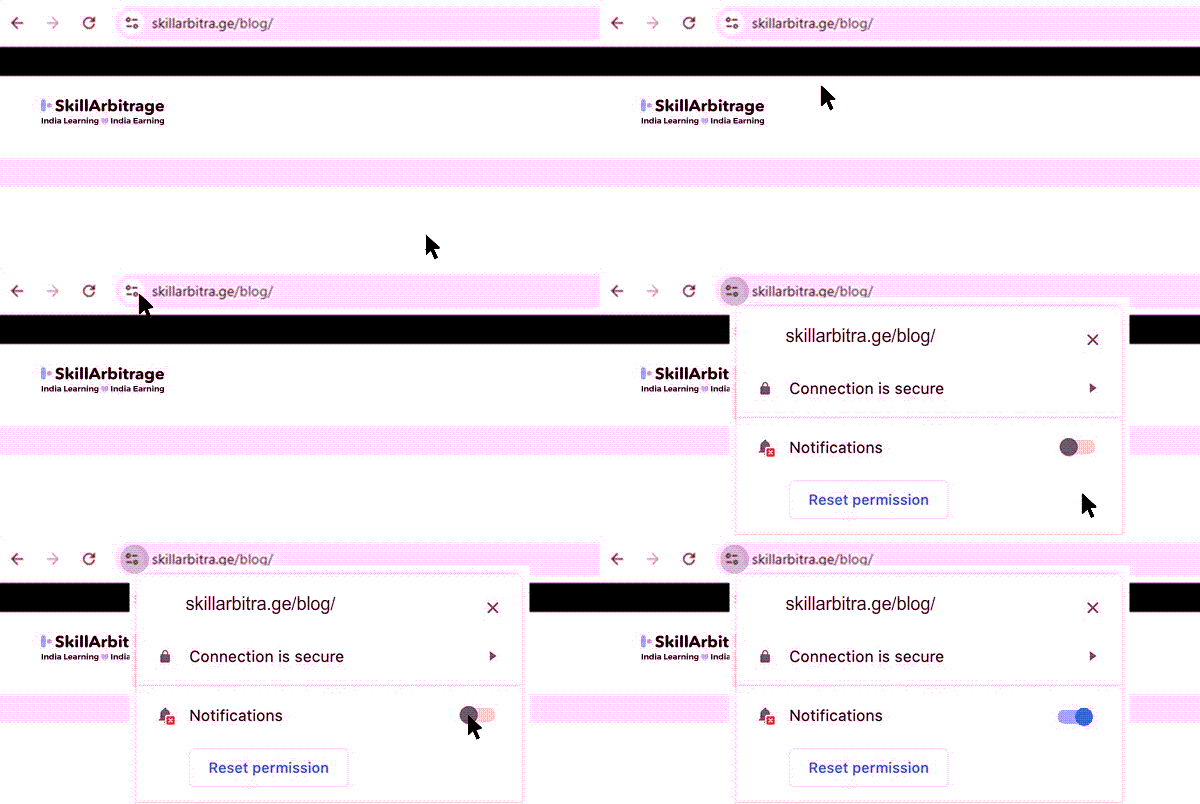
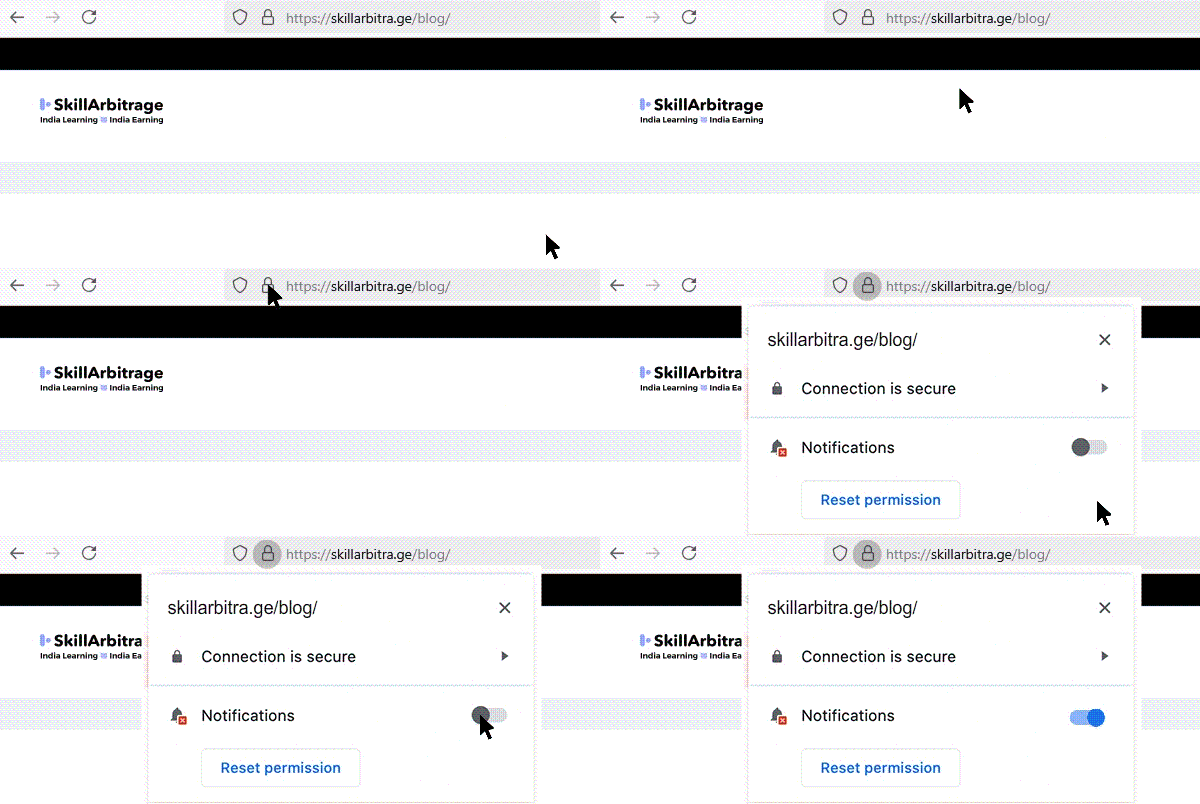
 Allow notifications