


Academic writing is no longer limited to publishing papers or working inside universities. In 2026, it has evolved into a global, opportunity-rich field where skilled writers can work across industries and countries.
Table of Contents
If you have expertise in research, analysis, and structured writing, you can apply those skills in multiple high-demand areas. This blog explores the top opportunities for academic writers in 2026, showing where demand exists and how your skills can translate into meaningful and well-paid work.
1. Research & Scholarly Writing
Professors worldwide face immense pressure to produce publications. Their promotions, tenure decisions, funding, and opportunities to lead research centres all depend on a steady stream of high-quality papers.
Look at how many professors there are in the US:

Here are key details regarding US college professors and faculty
- A typical tenure-track professor may be expected to publish ~1-2 papers per year, often aiming for 5-10 papers within a 5-6 year period to meet tenure guidelines.
- Publications are critical not just for securing tenure, but also for promotions, securing research funding (which runs into billions of dollars), and securing leadership positions in research.
The UK also has a good number of professors:
Professors are under relentless publication pressure to meet the following goals:
- Securing tenure and promotions
- Obtaining research funding
- Leading research collaborations or centers
This is where academic writers come in. Professors need help with literature reviews, drafting sections, data-cleaning, managing references, and journal-specific formatting, allowing them to focus on experiments, theory, or leadership.
Even the European Union alone allocated €95.5 billion under the Horizon Europe program (2021–2027), highlighting the massive scale of global research funding.
Professors in Different Regions
- English-Speaking Countries (US, UK, Australia, Canada, Singapore, Hong Kong):
- Professors are under constant pressure for high-impact publications.

- They require support in handling the technical aspects of writing to maintain their research output while managing other responsibilities.
- Professors are under constant pressure for high-impact publications.
- Non-English-Speaking Countries (Europe, Japan, China, Korea, Latin America):
- These regions face language and publication barriers, despite having high-quality research.
- Many scholars struggle to meet the stylistic expectations of English-language journals.
- For instance, China overtook the U.S. in scientific publication output in 2016, producing 23% of the world’s research papers by 2022.

- Japan’s R&D investment was about 3.405% of GDP in 2022, rising from 3.277% in 2021.

- South Korea has consistently operated at 4.8% of GDP in earlier years (e.g., 4.81% in 2020), making both Japan and South Korea among the world’s leading nations in research intensity.

- These regions face language and publication barriers, despite having high-quality research.
Many professors in non-English-speaking countries require help not just with editing, but with substantive transformation: rewriting for clarity, ensuring argument flow meets international norms, restructuring papers for target journals, and preparing submission-ready manuscripts that will pass rigorous peer review.
For non-English-speaking professors, there is significant demand for:
- Language expertise to improve their English-language academic writing.
- Structural editing to align papers with international journal conventions.
- Journal-targeting strategies to meet the specific needs of various academic publications.
Both branches (English-speaking and non-English-speaking) present massive opportunities. The difference lies in how you pitch and the services you emphasize for each group:
- For English-speaking professors, focus on reliability, bandwidth, and grant-specific support.
- For non-English-speaking professors, emphasize language expertise, structural editing, and journal-targeting strategies.
2. Grant & Proposal Writing
Grant writing can be understood as fundraising for academia, where strong writing directly influences funding outcomes. It is a high-value skill with global demand.
One example is the “Support for Policy-Oriented Research Program” by the Korea Foundation (KF).
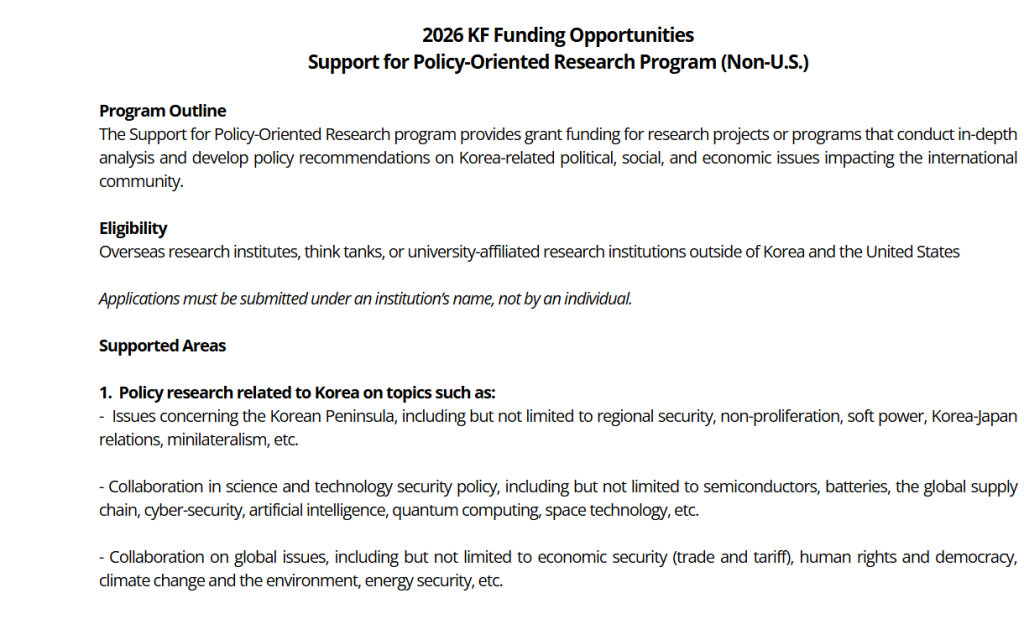
This program funds universities and research centers (including overseas institutions) to conduct in-depth research and publish policy papers.
This is not limited to Korea.
Research institutions compete for large-scale funding worldwide. Examples include:
- The U.S. National Institutes of Health (NIH) awards grants through nearly 50,000 competitive grants to over 300,000 researchers at more than 2,500 institutions.

- Globally, research is happening at scale: the Research Organization Registry tracks 116,000+ organizations (universities, labs, institutes) worldwide.
- Clarivate’s Grants Index tracks 5.7 million grants awarded by over 300 funding agencies worldwide, showing that the market is vast and multi-agency.
This shows why grant writing is a valuable skill: it is directly tied to accessing funding.
When institutions apply for such programs, they need writers who can: - Translate research ideas into persuasive proposals aligned with funder priorities.
- Structure budgets and timelines clearly.
- Prepare compelling narratives that connect research to policy or social impact.
Income Potential and Demand
Grant writing offers strong earning opportunities:
- US: $57,000/year

- UK: £38,000/year

Freelancers can earn:

- $75–150 per hour or more
Clients are willing to invest thousands in skilled writers because winning grants can secure funding worth hundreds of thousands.
Many roles are:
- Remote
- Project-based
- Available on freelance platforms like Upwork and Freelancer

Imagine if you could help with this work remotely for USD 1000-2000 per month.
3. EdTech & E-Learning Writing
The EdTech sector is rapidly expanding, creating continuous demand for academic writers who can translate knowledge into learning content.
Growth of the EdTech Industry
The global e-learning market is:
- Global e-learning services are estimated at ~USD 300 billion (2024) and projected to reach ~USD 843 billion by 2030. (Source)

This growth reflects increasing demand for structured and accessible learning materials.
Roles, Demand, and Salaries
Academic writers in EdTech:
- Create course modules and learning materials
- Develop quizzes, scripts, and assessments
- Structure content into teachable formats
Salary insights:
- US instructional designers: ~$94,163/year (~$45/hour)
- UK: ~£38,665/year

In short, salaries for grant writers range between 44 lakhs to nearly 80-90 lakhs!
All these roles can be performed remotely – and you could do it for just 2000 dollars per month!
These roles often involve collaboration with:
- Universities
- Coaching platforms
- Corporate training firms
All roles can be performed remotely, making this a flexible career path.
Remote EdTech content writing and curriculum development roles are actively listed on job boards. (Indeed)
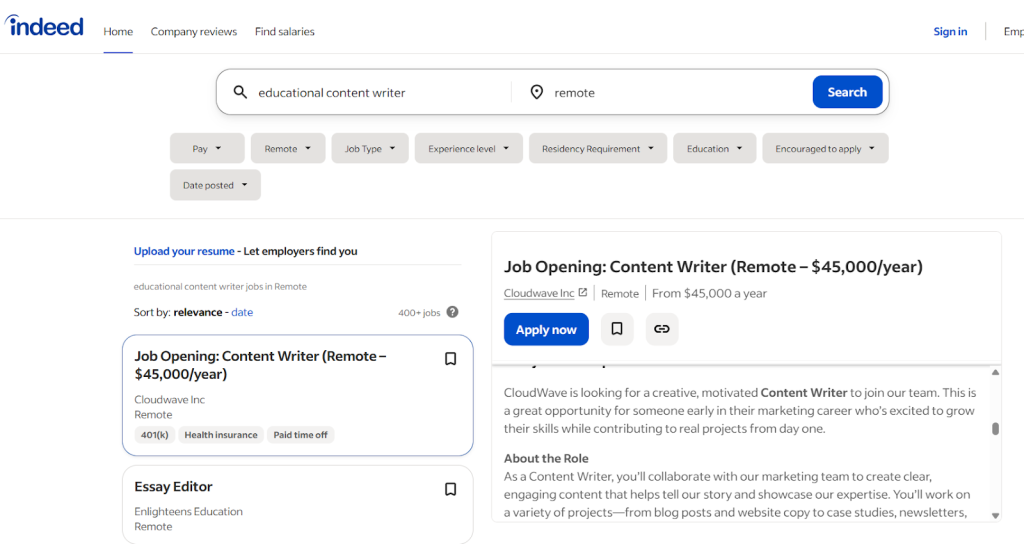
Also, For example; EdTech companies like IXL Learning actively hire academic content writers to develop curriculum-aligned ELA content (grades PK–12), including passages, assessments, and learning materials in collaboration with instructional designers and editors.

Who hires and what they want:
- Coaches, therapists, and successful professionals who want to launch their own courses.
- Universities turning to hybrid or fully online programs look for writers who can convert lecture content into modular formats, assessments, scripts, and student guides.
- Online coaching and test-prep platforms (e.g., for standardized tests, certifications) need writers to create practice modules, explanations, quiz content, and video scripts.
- Corporate training and upskilling firms require learning modules, scenario-based exercises, and a curriculum that aligns with learner outcomes across regions.
4. Technical and Business Writing
Academic writers are highly suited for this field because of their ability to simplify complex ideas into structured documents.
Why Academic Writers Fit This Role
Technical and business writing requires:
- Clear explanation of complex topics
- Logical structure and organization
- Strong research-backed writing
These are core strengths of academic writers.
Who Hires?
- IT and software firms worldwide: Every new release, from AI tools in the US to fintech apps in Singapore, requires clear documentation.
- Finance and fintech companies: Firms in London, Dubai, and Singapore hire writers to simplify blockchain, DeFi, and investment products.
- Engineering firms and renewable energy startups: Countries like Germany, Denmark, and Canada have a growing demand for manuals, white papers, and compliance reports.
- Consulting agencies: Global firms such as Accenture or McKinsey regularly publish research-backed business insights and white papers.
Types of Work and Earnings
Common work includes:
- Product documentation
- Whitepapers
- API documentation
- Research reports
- SOPs and compliance documents
- User manuals and guides
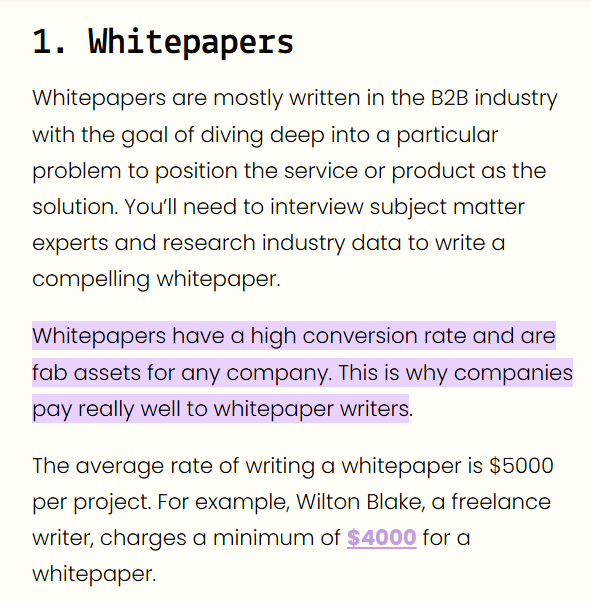
Whitepapers can pay $3,000–5,000 per project, reflecting the depth of research involved.(source)
Salaries:
- US: $101,177/year
- UK: £42,000/year
- Australia: AU$95,000/year
5. Science Communication & Knowledge Translation
This niche connects academic research with real-world audiences, making complex ideas understandable and usable.
What This Role Involves
Writers work on:
- Policy briefs
- Public-facing explanations
- Media content and scripts
- Outreach materials
This ensures research reaches policymakers, institutions, and the public effectively.
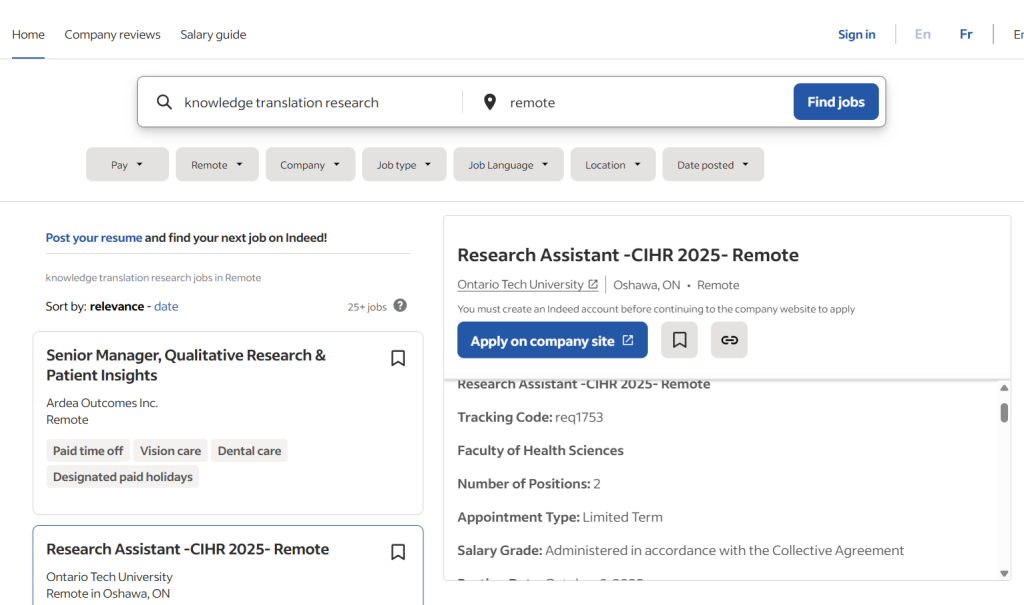
Many universities and research institutions are increasingly hiring for this as well, You can see an example of the Ontario Tech University here. There are several others
Global Demand and Scope
Demand exists across:
- In the US, science communication roles are booming in federal agencies (NIH, NASA, NSF).
- In the UK and Europe, universities, research councils, and public policy groups hire writers for policy briefs and public engagement.
- In Canada and Australia, ‘knowledge translation’ has become a formal job category in healthcare and public policy, turning evidence into usable guidelines.
Writers are needed to bridge the gap between researchers and broader audiences.
6. Medical & Scientific Writing
This is one of the highest-paying and fastest-growing opportunities for academic writers. It combines technical knowledge with precise communication.Here, your primary clients are corporate R&D departments, pharmaceutical companies, biotech firms, and contract research organisations (CROs).
Market Demand and Salaries
- Multi-billion-dollar market
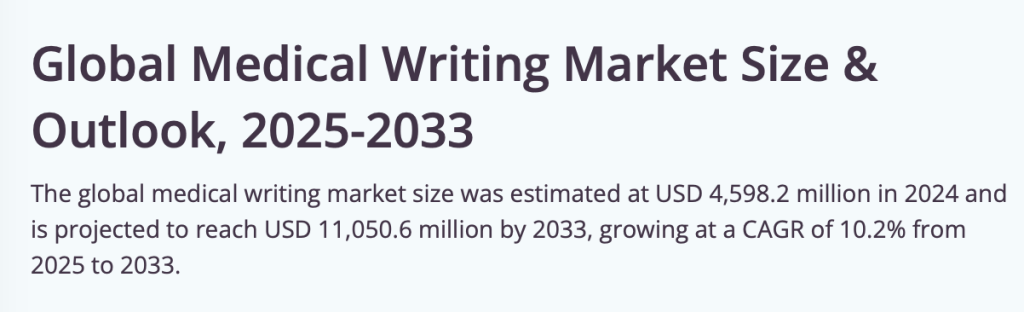
- The global medical writing market is already multi-billion in size and is expected to double (or more) by 2033
- The U.S. accounts for a large share (USD 1.33B in 2023), while countries like Canada are also experiencing strong growth, indicating global demand beyond major pharma hubs.

Salaries:
- In the US, medical writers earn an average of around $118,560 per year.

- In the UK, typical salaries for medical writers are about £45,000 per year.

Who Can Enter This Field
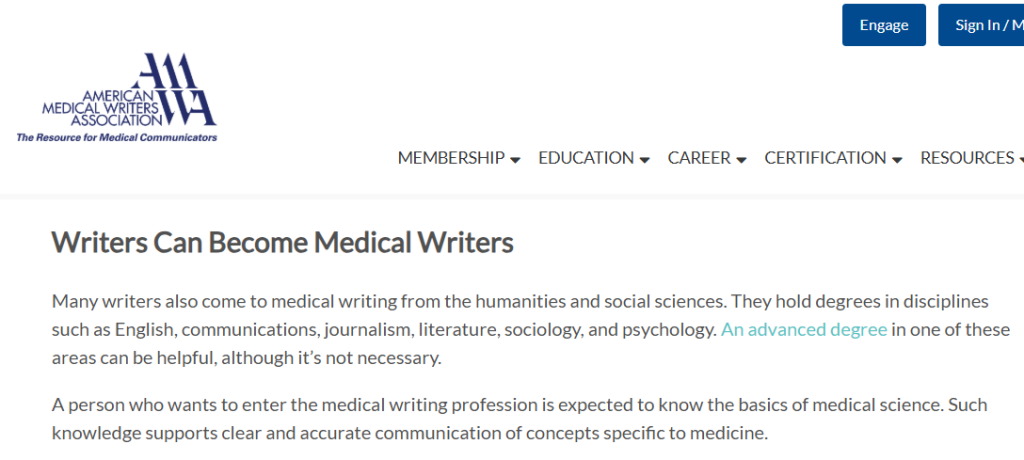
You do not need a medical degree:
- Humanities and social science graduates can also enter
- Strong writing and understanding of medical concepts are key
And, as an Indian professional, you already have a cost advantage here.
Even if you charge $2000 per month for the same job, employers from the UK, USA, and other countries can avail your services at 1/4th the cost they would have to bear if they limited hiring to their national borders.
According to the American Medical Writers Association, people from a humanities or social sciences background can also do this!
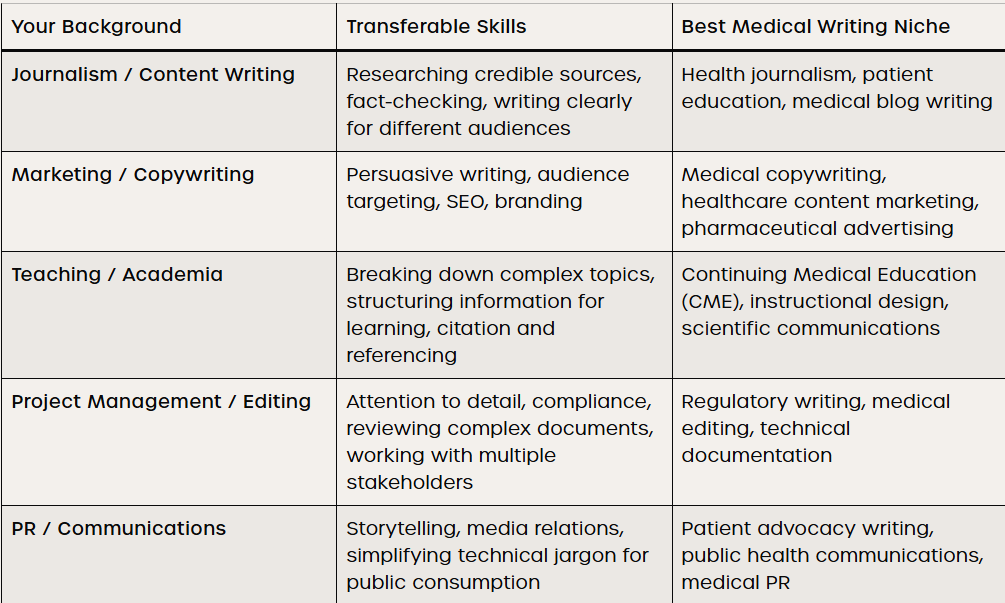
If you can master the essentials of medical science and combine that with clear, accurate writing, you can step into one of the most rewarding and high-growth careers today.
The key is to identify where your existing strengths align with the needs of medical writing clients.
Work includes:
- Clinical reports
- Regulatory documents
- Journal articles
Many roles are freelance and remote, making them accessible globally.
Essential Skills for Academic Writers
13 Essential Skills for Academic Writers
Academic writing requires a specific skill set to succeed in various fields. Here are the 13 essential skills every academic writer should have:
- Literature review & gap identification: Helps propose novel research angles and craft publishable introductions.
- Manuscript formatting & stylesheet compliance: Ensures submissions meet journal rules to avoid rejections for technicalities.
- Survey design & basic data analysis: Supports research with usable primary data.
- Grant proposal drafting: Converts research ideas into fundable project narratives.
- Clear, discipline-appropriate translation of complex ideas: Makes technical findings readable by diverse audiences.
- Reference & citation management (Zotero/Mendeley/EndNote): Speeds up bibliography work and avoids errors.
- Research ethics & IRB application preparation: Ensures compliance and accelerates approval timelines.
- Project management for multi-author timelines: Prevents missed deadlines and keeps multi-site collaborations on track.
- Pre-submission peer-review/critical editing: Enhances argumentation and increases chances of acceptance.
- Data visualization & infographic creation: Presents results clearly to reviewers and non-technical stakeholders.
- Transcription & qualitative coding: Turns interviews and field notes into analyzable datasets.
- AI-assisted literature synthesis & automation: Saves hours by producing structured summaries for refinement.
Networking & outreach to foreign professors (LinkedIn/ResearchGate/email): Transforms capability into paid projects.





 Allow notifications

The point about research and scholarly writing being the largest opportunity really resonates, especially with the pressure professors face to publish consistently for tenure and funding. I also think the distinction between English-speaking and non-English-speaking academics is important, since many strong researchers simply need help communicating their work clearly to global journals. It would be interesting to also explore how academic writers can position themselves across multiple areas you mentioned, like combining research writing with EdTech or science communication.