

Most finance professionals overlook the startup fundraising space entirely, here’s why that’s a mistake, and exactly how to fix it.
Table of Contents
Most founders are brilliant at building products. But when it comes to fundraising, they are often completely lost.
They don’t know how to build a financial model that makes sense to investors. They don’t know how to tell a story with numbers. And they definitely don’t know how to walk into a room full of VCs and make a compelling case for why their company deserves capital.
That’s where you come in.
As a corporate finance professional, you are not just there to crunch numbers. Your job is to make a startup look fundable, and more importantly, be fundable. In this guide, we break down the four most powerful ways you can help startups successfully navigate the fundraising process, build lasting investor relationships, and set themselves up for future rounds.
Why Startups Struggle With Fundraising
Fundraising is one of the most time-consuming and emotionally draining parts of building a startup. Founders typically face three core challenges:
- They don’t speak the investor’s language. Investors think in terms of TAM, burn rate, LTV, and return multiples. Most founders think in terms of product and customers.
- Their financial models are either missing or unconvincing. A spreadsheet thrown together the night before a pitch meeting is not a financial model, and investors can tell immediately.
- They don’t know who to approach or how. The startup funding world runs on relationships and warm introductions. Cold outreach rarely works without the right positioning.
These are not insurmountable problems. They are exactly the gaps that a skilled corporate finance professional can fill.
Your Role as a Corporate Finance Professional
Think of yourself as the bridge between a founder’s vision and an investor’s requirements.
Your value is not just technical; it is strategic skills that are increasingly being used by finance professionals working with global startups. You translate raw ambition into structured financial narratives, help founders anticipate hard questions before they sit across from an investor, and build the systems that keep stakeholders aligned long after the funding round closes.
The four areas where you can add the most impact are:
- Building financial plans and sensitivity analysis
- Crafting pitch decks and investor storytelling
- Connecting startups with the right investors
- Driving ongoing investor reporting
Let’s go deep on each one.
#1 — Build Financial Plans and Sensitivity Analysis
This is your foundation. Before any investor conversation happens, the numbers need to be in order, and they need to tell a coherent, believable story.
Key Metrics Every Startup Financial Model Must Include
A strong startup financial model is not just a revenue forecast. It is a comprehensive view of the business that gives investors confidence in the team’s ability to manage capital. The core metrics to build around include:
- MRR (Monthly Recurring Revenue) — The predictable, recurring revenue the business generates each month
- CAC (Customer Acquisition Cost) — How much it costs to acquire each new customer
- LTV (Customer Lifetime Value) — The total revenue a single customer generates over their relationship with the business
- Burn Rate — How quickly the company is spending its cash reserves
- Runway — How many months of operation the current cash balance supports at the current burn rate
Beyond these headline metrics, you should help startups build:
- 12–24 month financial forecasts with monthly granularity
- Best case and worst case projections that reflect realistic assumptions, not wishful thinking
- Unit economics breakdowns that demonstrate the business model is structurally sound
How Sensitivity Analysis Builds Investor Confidence
Sensitivity analysis is one of the most underused and most impressive tools in a startup financial model. It answers the questions investors are silently asking during every pitch:
What happens if revenue growth is 20% slower than projected? What if CAC increases by 30%? How does that affect runway?

By running these scenarios proactively and presenting them clearly, you demonstrate two things:
- The founding team understands the risks in their own business
- The company has enough buffer to survive adverse conditions
This gives investors confidence, and confidence is what converts a meeting into a term sheet.
Key Takeaway: A financial model that only shows the best case scenario signals inexperience. A model with rigorous sensitivity analysis signals maturity.
#2 — Craft Pitch Decks and Tell the Right Story
A pitch deck is not a collection of slides. It is a narrative, and narratives are what move investors to act.
The numbers matter. But the story that surrounds those numbers matters just as much. Your job is to help founders bridge that gap.
What Every Investor-Ready Pitch Deck Must Cover
A compelling pitch deck typically follows a proven structure that mirrors how investors evaluate opportunities:
| Slide | Purpose |
|---|---|
| Problem | Define the pain point clearly and make it feel urgent |
| Solution | Show how the startup solves the problem in a unique way |
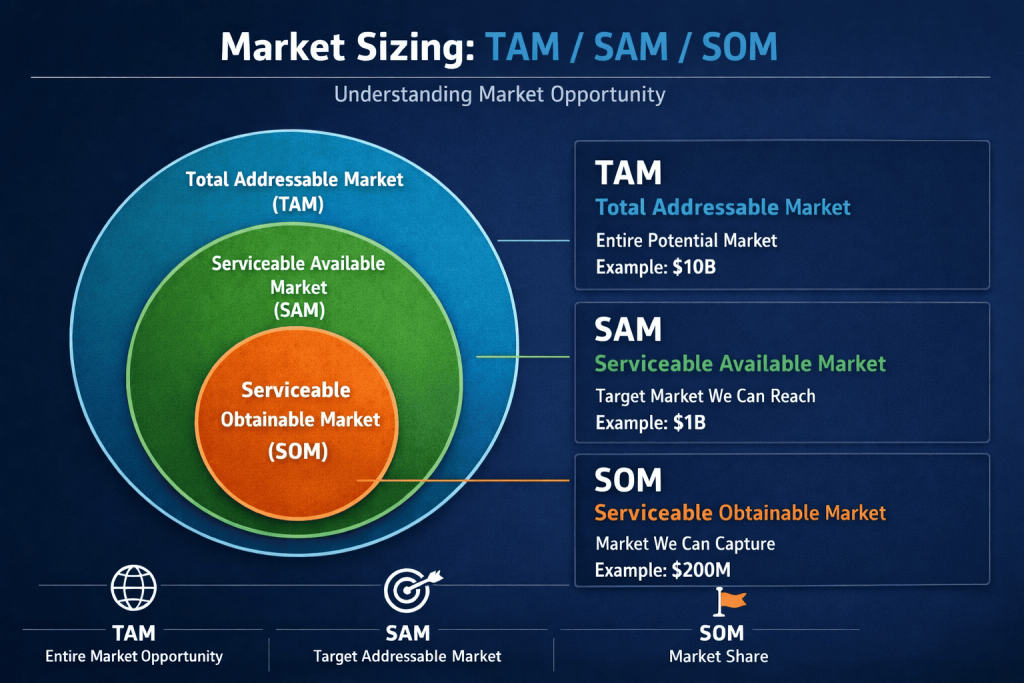
| Market Size | Quantify TAM, SAM, and SOM with credible sources |
| Business Model | Explain clearly how the company makes money |
| Traction | Show evidence that the model is working, revenue, users, growth |
| Team | Establish credibility and relevant expertise |
| Financial Projections | 3–5 year forecasts tied to realistic assumptions |
| The Ask | Specify how much is being raised and how it will be used |
How to Turn Numbers Into a Narrative
This is where your finance expertise meets communication strategy. Here’s how to approach it:
- Lead with the problem, not the product. Investors fund solutions to real problems, not features.
- Let the numbers validate the story. Every claim in the deck should be backed by a data point, revenue growth, retention rate, market size.
- Quantify the market opportunity. TAM (Total Addressable Market), SAM (Serviceable Addressable Market), and SOM (Serviceable Obtainable Market) need to be realistic, not aspirational.
- Make the financial projections believable. Walk investors through the assumptions behind the numbers. Unsubstantiated hockey-stick projections destroy credibility instantly.
- Help founders speak the investor’s language. Replace founder jargon with terms investors use and trust.
Pro Tip: A good deck opens doors. A great deck opens wallets. The difference is almost always in how clearly the financial story is told.
#3 — Connect Startups With the Right Investors
Even the most compelling pitch deck will not raise money if it lands in the wrong inbox. Investor-startup fit matters enormously and most founders have no systematic way to identify and approach the right investors.
How to Build an Investor Pipeline
Your role here goes beyond introductions. You can help startups build a structured, data-driven investor outreach process:
- Identify relevant investors by stage (pre-seed, seed, Series A), sector focus, and geography
- Research investment history — which angels and VCs have previously backed similar companies are your warmest targets
- Build an investor CRM to track outreach status, follow-ups, meetings, and feedback
- Develop a targeted email strategy that is personalized, concise, and leads with the most compelling proof point
- Identify accelerator programs that align with the startup’s stage and sector, many offer not just capital but structured introductions to investor networks
The Power of Warm Introductions
In the VC world, warm introductions are the currency that opens doors. A cold email has a conversion rate close to zero. An introduction from a trusted mutual contact dramatically changes that equation.
As a finance professional embedded in the ecosystem, your network is one of your most valuable assets:
- Introduce founders to angels and VCs you have worked with directly
- Connect startups to other portfolio founders who can provide peer referrals
- Leverage relationships with lawyers, accountants, and bankers who regularly interact with investors
Key Takeaway: Sometimes, making the right introduction is more valuable to a startup than preparing the perfect pitch deck.
#4 — Drive Ongoing Investor Reporting
Here is something most finance professionals overlook: the fundraising journey does not end when the money hits the account.
Investors expect transparency, accountability, and regular updates. And the startups that deliver on this expectation consistently are the ones that find it easiest to raise their next round.
What to Include in Monthly Investor Updates
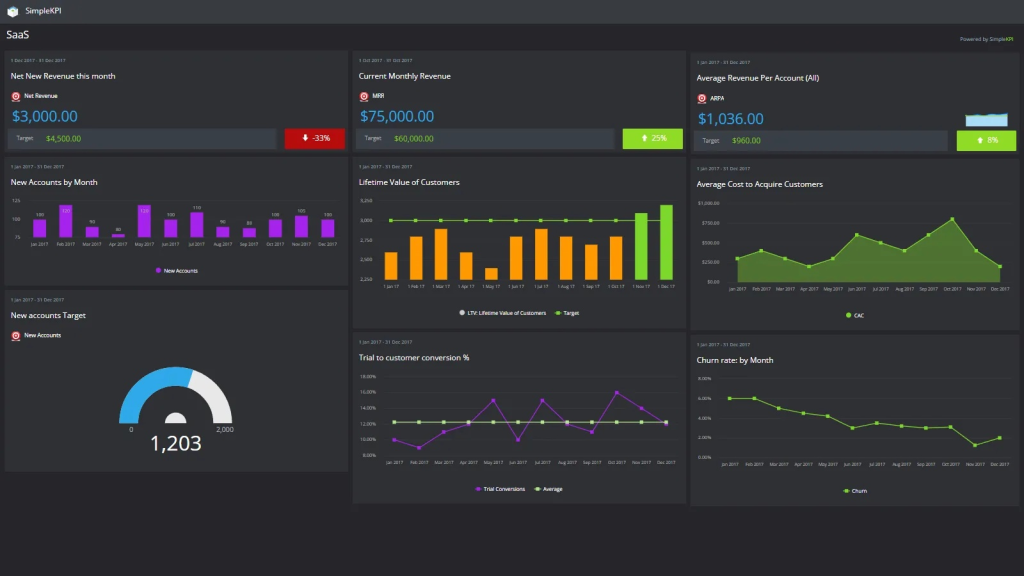
A well-structured monthly investor update typically covers:
- P&L Summary — Revenue, gross margin, operating expenses, and net loss for the month
- Cash Flow Statement — Opening balance, cash in, cash out, and closing balance
- Key KPIs — The 3–5 metrics that matter most for this specific business
- Variance Analysis — Actual performance vs. budget, with clear explanations for significant deviations
- Runway Update — Current months of runway at the current burn rate
- Highlights and Lowlights — Honest assessment of what went well and what did not
- Ask — A specific request for help, introductions, or advice from the investor
Why Reporting Builds Long-Term Relationships
Consistent, high-quality investor reporting does more than keep investors informed. It builds trust, and trust is the foundation of every future fundraise.
Investors who receive clear, honest, and timely updates are:
- More likely to participate in future rounds
- More likely to make introductions to other investors
- More likely to offer strategic support when the startup needs it most
As the finance professional managing this reporting, you become indispensable, not just to the startup, but to its entire investor base.
Fundraising by Stage: What Changes at Each Round
Understanding how fundraising needs evolve across stages makes you a far more effective advisor:
| Stage | What Investors Focus On | Your Key Deliverable |
|---|---|---|
| Pre-Seed | Founder, idea, market | Basic financial model, pitch narrative |
| Seed | Early traction, unit economics | Full financial model, sensitivity analysis |
| Series A | Scalable growth, repeatability | Detailed projections, KPI dashboards |
| Series B | Market leadership, efficiency | Board-level reporting, variance analysis |
| Series C+ | Path to profitability or IPO | Full CFO-level financial infrastructure |
Each stage requires a different depth of financial sophistication, and a different type of storytelling.
Conclusion
Startups need capital to grow. Investors need confidence to deploy that capital. And the gap between those two realities is where skilled corporate finance professionals can build an extraordinary career.
By mastering financial planning, investor storytelling, network-driven deal introduction, and ongoing reporting, you position yourself as an indispensable partner to the startup ecosystem, not just in India, but globally.
Ready to take the next step? Start by picking one of the four services above, identify two or three startups in your network that are actively fundraising, and offer your expertise. The opportunity is real, the demand is growing, and the best time to start is now.





 Allow notifications