

In 2023, Sam Altman, the CEO of OpenAI, was unexpectedly fired by the board, sparking controversy and raising questions about the role of independent directors. This case study explores the board dynamics, promoter expectations, and key lessons for independent directors aiming for success.
Table of Contents
The Sam Altman–OpenAI Boardroom Crisis
Why the OpenAI board fired Sam Altman
The OpenAI independent directors decided to remove Sam Altman as CEO, but they did not clearly communicate why. They did not publicly spell out their specific issues with his direction or decision-making.
From the outside, Sam appeared to be doing what many high-impact founders do: innovating quickly, launching new products, and leading OpenAI into a dominant position in AI. The lack of transparent reasons from the board created confusion and triggered a backlash from employees, investors, and the wider tech ecosystem.
Investor reaction and Microsoft’s strategic move
Firing visionary founders and CEOs has rarely ended well for major tech companies. The Steve Jobs–Apple saga is a classic example, and the OpenAI–Sam Altman case looks similar.
Sam Altman and cofounder Greg Brockman could easily have started a competing AI company, raised massive funding, and challenged OpenAI directly. They had the track record, brand, and investor trust to do it.
To make matters worse, the OpenAI board did not inform or consult key investors like Microsoft and Khosla Ventures before the firing. Independent directors likely anticipated strong resistance from these investors, who had a huge stake in OpenAI’s success.
Fortunately, he secured an opportunity to join Microsoft, which is Open AI’s largest investor with 49% shareholding, to lead an AI research team.
How Sam Altman returned as CEO
This boardroom move quickly backfired. Microsoft, OpenAI’s largest investor with a major economic stake, offered Sam Altman a role to lead a new AI research team. In effect, they signaled that they backed Sam, not the board.
Soon after, Sam returned as CEO of OpenAI. At the same time, Microsoft secured a non voting observer seat on the OpenAI board. The board’s attempt to remove Sam was effectively nullified, and the independent directors who led the effort damaged their own reputations in the process.
What Independent Directors Must Learn from the OpenAI Case
Why firing visionary founders backfires
The Sam Altman–OpenAI case shows how risky it can be for independent directors to act without understanding the strategic value of a visionary founder. In high growth tech companies, founders often embody the brand, vision, and culture. Removing them without clear cause can destroy trust, value, and stability.
Independent directors must remember that in such companies, the wrong move against a founder can trigger investor backlash, talent loss, and long-term reputational damage for the board itself.
The importance of understanding promoter expectations
This case is a powerful lesson in promoter and investor expectations. Promoters and key shareholders expect independent directors to guide, challenge, and protect the company, but not to act like detached bureaucrats or activist enforcers with no skin in the game.
If independent directors misread promoter expectations, they risk being seen as adversarial rather than value-adding. This is exactly the nightmare scenario founders want to avoid when selecting their board.
The Mindset Problem of Many Aspiring Independent Directors
Due diligence vs interrogation
As someone who runs courses for independent directors, I see a recurring mindset issue among aspiring IDs. Many believe they must “investigate” the company and grill the promoters even before joining the board.
Doing due diligence is essential. However, treating promoters like suspects and interrogating the CEO or MD is counterproductive. It signals a lack of trust and an adversarial approach even before the relationship begins.
Why promoters avoid “loose cannon” board members
Under current regulations in many jurisdictions, promoters and major shareholders have significant influence over who becomes an independent director. No rational promoter will willingly appoint an ID they fear will turn into a loose cannon in the boardroom.

They may initially be attracted to your personal brand, credentials, and experience. But if they sense that you will be confrontational on a bad day, or that you see yourself as a mini regulator rather than a partner, your chances of appointment drop to zero.
Aspiring IDs often complain that promoters only appoint people from their own circle or “coterie.” What they miss is that promoters want people they can trust, not people who are looking for a fight.
How Promoters Really Choose Independent Directors
Reputation, trust, and personal brand
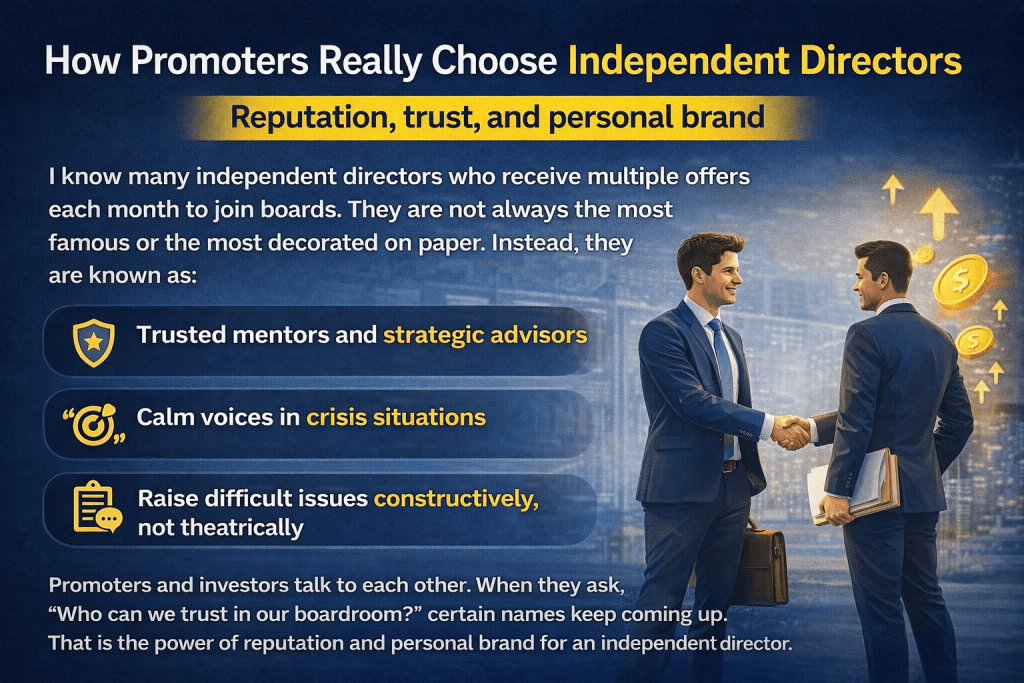
I know many independent directors who receive multiple offers each month to join boards. They are not always the most famous or the most decorated on paper. Instead, they are known as:
- Trusted mentors and strategic advisors
- Calm voices in crisis situations
- People who raise difficult issues constructively, not theatrically
Promoters and investors talk to each other. When they ask, “Who can we trust in our boardroom?” certain names keep coming up. That is the power of reputation and personal brand for an independent director.
Why some IDs get multiple board offers
These independent directors are valued because they create tangible value. They help management make better decisions, bridge conflicts, and strengthen governance without turning every issue into a public war.
If you want repeated board offers, focus on becoming this kind of ID. Build relationships, demonstrate judgment, and show that you understand both governance and promoter psychology.
Balancing Governance, Legality, and Trust
The duty to flag fraud and illegality
None of this means independent directors should ignore wrongdoing. If a company is engaging in fraud, non-compliance, or illegality, it is your duty as an ID to raise red flags. That is core to your role and your legal responsibility.
Being supportive of promoters does not mean being blind to misconduct. It means you raise concerns in a responsible, effective way rather than in a performative or confrontational manner.
How effective IDs get issues fixed fast
In most serious companies, if an independent director calmly and clearly points out illegality or a compliance issue, it gets fixed very quickly. Promoters know that a public resignation by an ID, or a dispute that spills into the media, can crash market value and damage their life’s work.
You want to be in a trusted position where your word carries weight, so that when you point out a problem, it is acted on at “rocket speed.” That is how effective IDs protect shareholders and stakeholders while preserving trust with promoters.
What Founders and Promoters Expect from an Independent Director
Supporting promoters without becoming a yes-person
For an independent director, a board seat may be one more role or line on a CV. For promoters, the board oversees their life’s work. They cannot afford to have IDs who behave like a bull in a china shop.
The best independent directors:
- Support promoters, shareholders, and other stakeholders
- Challenge management when needed, but with respect and context
- Avoid ego battles and public grandstanding
- Understand that long-term value and reputation matter more than short-term theatrics
You do not have to be a yes-person. But you must be a trusted person.
Bridging conflicting interests in the boardroom
Independent directors are often the bridge between conflicting interests: promoters vs institutional investors, management vs shareholders, short term vs long term priorities.
If you cannot build trust, listen actively, and help parties compromise, you will struggle as an ID. If you treat the role as raw power instead of responsibility, you will be quietly blacklisted. Over time, word spreads about which independent directors are constructive, and which ones should be avoided.
How to Become an Effective Independent Director
Building your personal brand as an ID
If you want to enter more boardrooms, you must build a personal brand as a value creating, trustworthy independent director. That means:
- Demonstrating strategic thinking in your current roles
- Showing sound judgment in public forums and industry discussions
- Building relationships with promoters, investors, and other IDs
- Developing a track record of calm, balanced decision-making
This is what makes promoters and investors say, “We want this person on our board.”
Learning promoter psychology and boardroom skills
You also need to understand promoter psychology and boardroom dynamics. This includes:
- How promoters think about risk, legacy, and control
- How investors evaluate board performance
- How to ask tough questions without attacking people
- How to handle conflicts and crises in the boardroom
These are learnable skills, but they require training, self awareness, and real practice.




 Allow notifications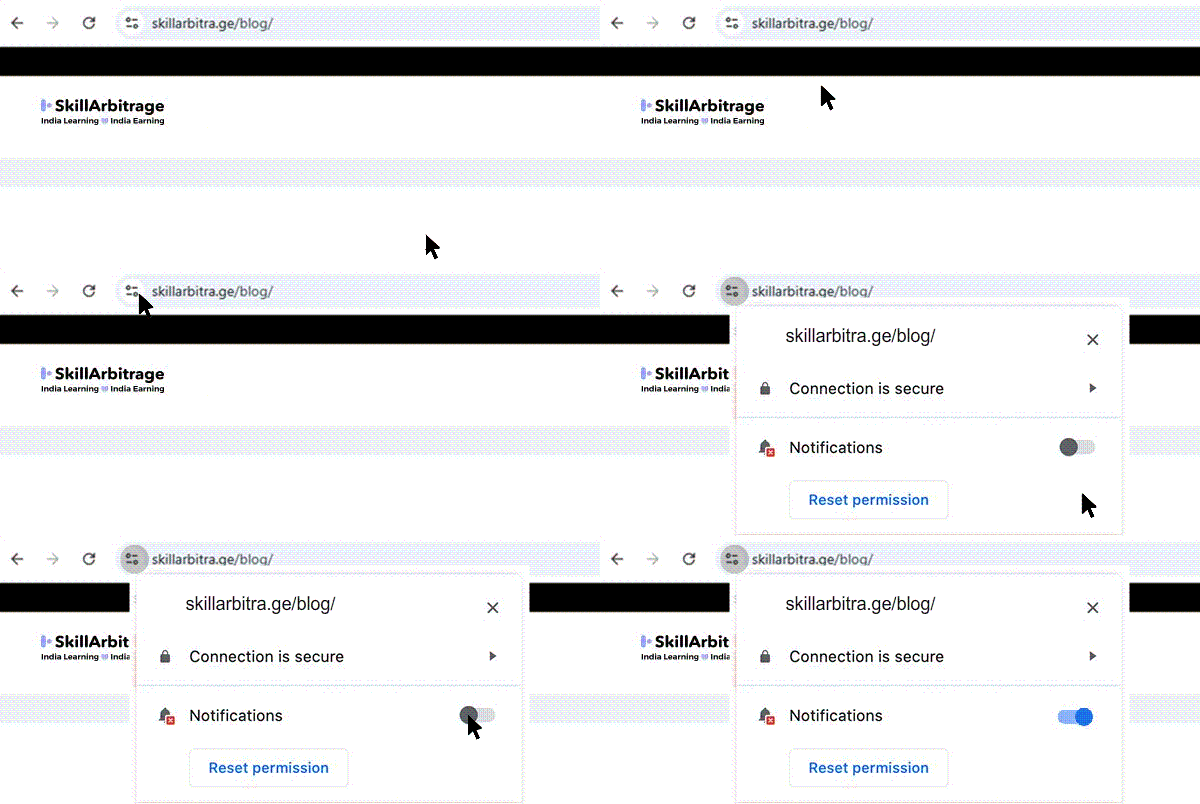
The OpenAI case really shows how complicated the relationship between founders and boards can be. Independent directors need to understand the human side of leadership, balancing legal and ethical responsibilities with the need to align with and support the vision of promoters, without losing their independence.