


The world’s top companies spent $1.3 trillion on R&D in 2024. But here’s what none of them are talking about: they cannot find enough writers to communicate what they’ve built. For Indian professionals with a science, engineering, or writing background, academic writing for R&D labs is one of the highest paying and fastest growing remote opportunities available today.
Table of Contents
The $1.3 Trillion Opportunity in Academic Writing for R&D Labs
The numbers tell a clear story. The world’s top 2,500 R&D-spending firms invested $1.3 trillion in 2024—continuing growth even through global economic headwinds. In the US alone, corporations spent $722 billion on R&D in 2023, up from $692 billion the year before.
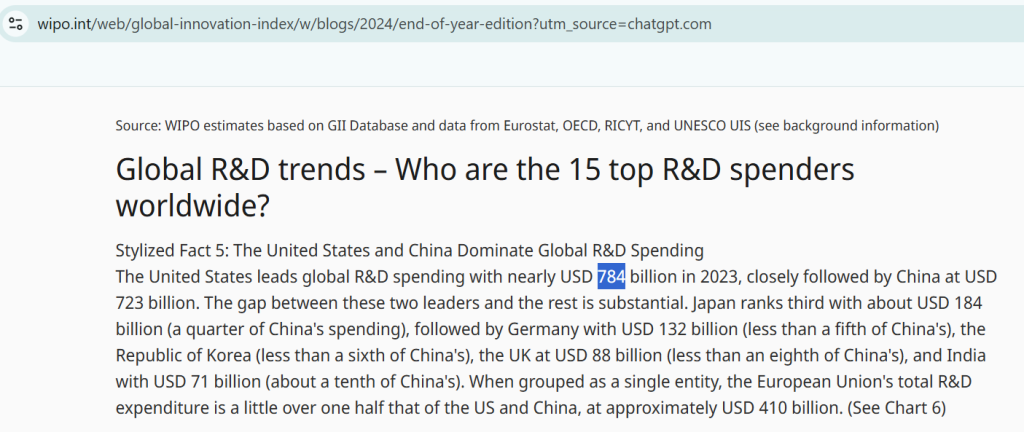
The United States leads global R&D spending with nearly USD 784 billion in 2023, closely followed by China. This massive investment creates unprecedented opportunities for skilled technical and academic writers.(Source)
This creates a massive opportunity for Indian academic and technical writers to work remotely with cutting-edge global companies.
Which Sectors Have the Highest Demand for R&D Writers?
Not all industries invest equally in research communication. These six sectors generate the most consistent demand for academic writing for R&D labs:
- Biotech & Pharmaceuticals — Clinical trial reports, regulatory submissions, journal articles, patient literature
- AI, Software & IT Companies — Technical whitepapers, algorithm documentation, research blogs, conference papers
- Semiconductors & Advanced Engineering — Product specs, technical manuals, patent support documents
- Aerospace, Defense & SpaceTech — Mission reports, compliance documents, grant proposals
- Quantum Computing & Cybersecurity — Research summaries, investor briefings, technical explainers
- Deep Tech Startups — Pitch decks, due diligence reports, science communication content

These sectors share a common problem: they are producing more research than they have the capacity to write up, publish, and communicate. That’s exactly the gap academic writers fill.
What Do R&D Labs Actually Need Academic Writers to Do?
Academic writing for R&D labs is far broader than most people realise. It’s not just about writing journal articles. Global R&D teams need writers across a wide range of deliverables:
- Technical whitepapers — In-depth documents explaining a technology, methodology, or research finding to a professional audience
- Scientific journal articles — Peer-review-ready manuscripts based on original research data supplied by the lab
- Product manuals, API docs & SOPs — Step-by-step documentation for internal teams and external users
- Investment & market reports — Research-backed reports for deep tech startups seeking funding or market entry
- Literature reviews — Comprehensive surveys of existing research to guide new R&D directions
- R&D summaries — Condensed versions of findings for internal circulation or client-facing updates
- Ghostwritten technical books & blogs — Long-form content for startup founders and researchers building a public profile
- Science communication copy — Marketing content that explains complex innovations to non-technical buyers
- Grant proposals — Funding applications for academic institutions and research labs
- Pitch decks & due diligence reports — Investor-facing documents for deep tech startups at Series A/B stage
You Don’t Need to Be a Scientist to Do This
This is the single biggest misconception about academic writing for R&D labs. You do not need a PhD or a lab background.
What you need is the ability to read technical material, understand the core argument, and communicate it clearly to the right audience whether that’s a peer reviewer, an investor, a regulator, or a product user. Research fluency, structured thinking, and strong writing are the real requirements.
Real-world example: Startups often lack in-house science communication talent entirely. A biotech founder who has spent five years developing a drug compound does not have time to write a 10,000 word whitepaper explaining it to hospital procurement teams. That is exactly the work a trained academic writer steps in to do.
How Academic Writing for R&D Labs Differs from Regular Content Writing
If you’ve been doing SEO blogs, social media copy, or website content, you already have transferable skills but R&D academic writing operates by a different set of rules.
Regular Content Writing vs. R&D Academic Writing: A Comparison
Regular Content Writing:
- Goal: drive traffic, engagement, or brand awareness
- Tone: conversational, accessible, often informal
- Sources: general research, brand guidelines
- Typical rate: ₹500–1,500 per article
- Client: marketing teams, agencies, SMBs
Academic Writing for R&D Labs:
- Goal: communicate findings, support decisions, satisfy regulators or investors
- Tone: precise, structured, evidence-based
- Sources: primary research data, peer-reviewed literature, lab outputs
- Typical rate: $500–3,000+ per deliverable
- Client: research directors, CTOs, grant committees, pharma companies

The bottom line: Most Indian content writers pitch to undergrad students or write generic blogs. Offering specialised research-backed writing unlocks higher rates, more credible international projects, and escape from the crowded low-paying gig pool.





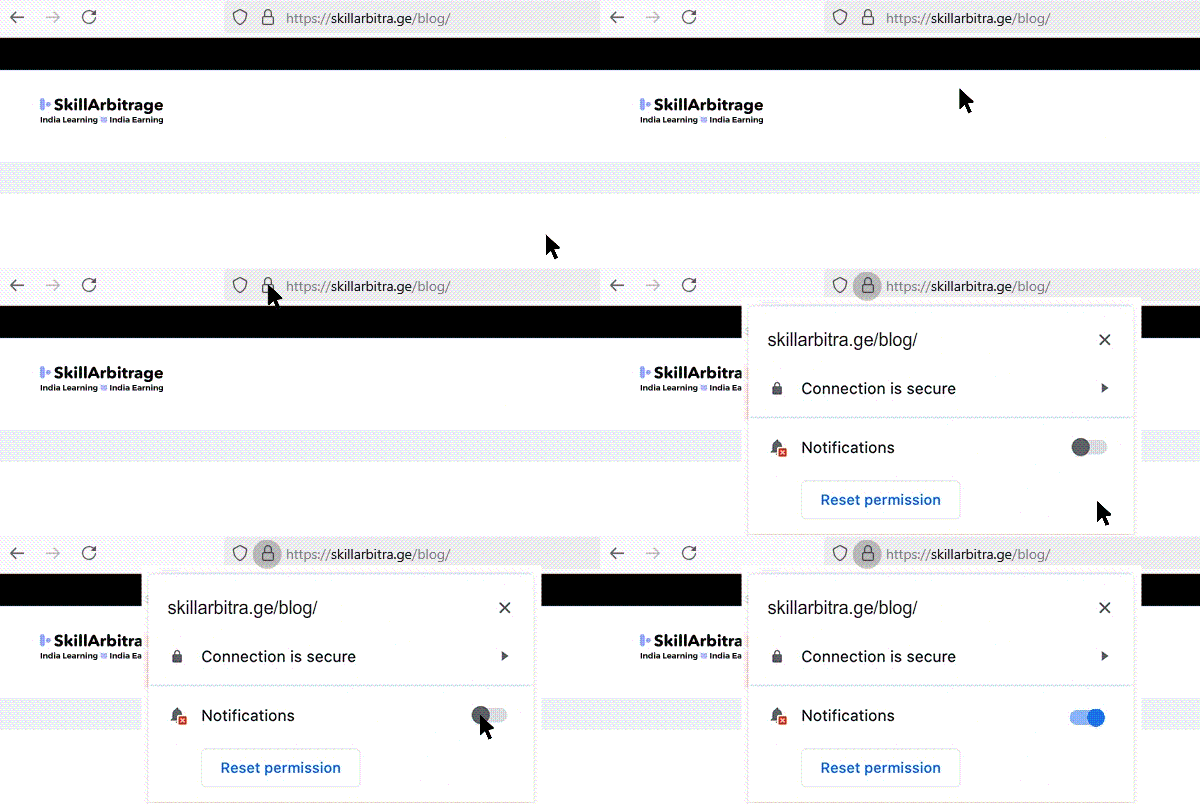
 Allow notifications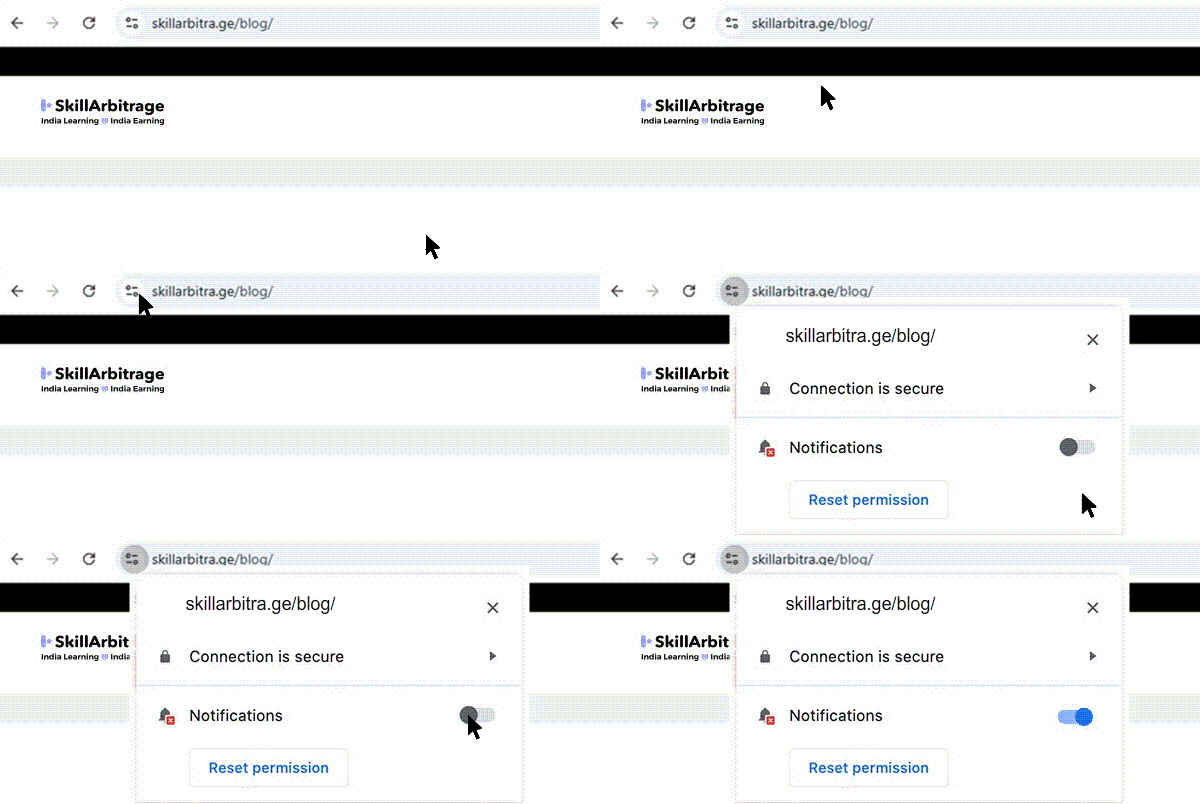
It’s interesting that the need for writers in tech and science is so high, yet so few people are talking about it. With the right training, anyone with a solid science background could dive into this field and open up remote opportunities. The step-by-step guide in this post is definitely a good starting point.