


Securing your first independent director appointment doesn’t require elite connections, you already have the network you need. In this guide, learn a simple three-step “Brahmastra” strategy to leverage your existing relationships and land your board appointment.
Table of Contents
Why You Already Have Everything You Need
The Myth of “Special Networks” for Board Roles
Many experienced professionals assume that board appointments are reserved for people with rare access to promoters, investment bankers, or big-name investors. You may think you are “too far removed” from startup hubs, IPO markets or merchant bankers to get noticed for an independent director role. The truth is that most successful appointments come from long-term trust, not secret clubs.
How Your 25–30+ Years Have Secretly Built Your Board Network
Think about your 25–30+ years of professional life. How many colleagues, vendors, clients and business associates have you worked with? How many school or college batchmates, seniors or juniors have launched businesses? If you taught students, how many of them now run their own startups or SMEs? If you worked in NGOs, social impact or consulting, how many social entrepreneurs or organisations did you help grow? These everyday relationships are the exact network you need to secure your first independent director appointment, they just need to be reactivated with intent.
This is the “Brahmastra strategy” that has already helped dozens of professionals secure their first board roles, including agriculture consultants, professors, retired defence officers, and industry specialists.
Step 1 – Identify Your Hidden Network of IPO-Ready Companies
Your first step is not to “build a new network” but to uncover IPO-ready or growth stage companies already connected to you.
How to Spot IPO-Worthy Companies in Your Own Circle
Start by making a list of around 30 companies from your existing network that could potentially do an IPO in the next 12 to 18 months. Traditional SME IPO candidates often share patterns such as:
- Turnover approaching or above around 30 crore
- Profit of around 3 crore or more
- A business model with clear growth potential
- Professional promoters open to governance and scaling
Even if they do not meet these numbers yet, many traditional businesses can become SME IPO-ready within a few years with the right guidance.
Practical Ways Different Professionals Can Find IPO-Ready Businesses
Different professional backgrounds give you access to different segments of this hidden opportunity:
>> Teachers and Professors
- Your ex-students are building startups and SMEs.
- Alumni WhatsApp groups and college networks are full of founders.
- Judging a single business plan competition may reveal a startup that will be IPO-ready in 2–3 years.
- Many of these founders will happily onboard you as an advisor simply because you mentored them.
>> Sales and Marketing Professionals
- You already know which businesses can realistically grow to 30–50 crore revenue.
- If you can help them with strategic insights to cross milestones like 30 crore turnover and 3 crore profit, they become strong IPO candidates.
- These founders value people who understand growth, markets, and customer acquisition.
>> Finance and Banking Professionals
- You know which companies are consistently profitable and need growth capital.
- Past or current clients that you helped with loans or working capital may now be ready for the next level.
- An SME IPO can unlock liquidity and significant wealth for them, and they often need someone they trust to guide them on the journey.
>> Operations and Manufacturing Leaders
- Your vendor and supplier network is a goldmine.
- Contractors, logistics partners and manufacturers that grew from small units to 50+ crore businesses could be ideal SME IPO candidates.
- Even companies making about 3 crore profit can explore SME IPO routes.
>> Engineers and Technical Professionals
- Former colleagues who left to start manufacturing units or tech firms are obvious prospects.
- Vendors who supplied critical technical equipment and scaled operations may be ready for capital markets.
- You can gauge their IPO potential based on technical capability, scalability and recurring demand.
>> Ex-Government or Ex-PSU Professionals
- Your regulatory understanding and familiarity with how government machinery works is hugely valuable.
- You may have managed MSME clusters, suppliers or industry groups with strong future potential.
- Businesses trying to navigate compliances, tenders or licences will value your insight at the board level.
>> CAs, CSs, Lawyers and Services Professionals
- Your clients are constantly raising capital or restructuring.
- You know who is profitable, who maintains good governance and who wants to grow.
- If you help them resolve crucial regulatory or compliance roadblocks, your appointment as an independent director becomes a natural next step.
Even if you don’t fall exactly into these categories, you can still apply this framework. Professionals from non-profit, social sector and niche domains like agri-business consulting have successfully used this strategy.

Use Simple Financial Checks to Shortlist SME IPO Candidates
In India, every company files annual reports with the Ministry of Corporate Affairs (MCA). You can:
- Pay a small fee (e.g., INR 100) to download their financials.
- Look for turnover above roughly 30 crore and profit above roughly 3 crore.
One professional even convinced her traditional business owner father to pursue an SME IPO using this simple filter, and now he needs independent directors. This same pattern repeats across thousands of traditional businesses.
You can also explore curated resources, such as “100 ideas to find potential IPO-worthy companies from your existing network”, to spark ideas on where to look and who to shortlist.
Step 2 – Reach Out and Offer Genuine, Non-Commercial Help
Once you have identified promising companies, the next step is to start building relationships, not to immediately ask for a board seat.
Why Asking Directly for a Board Seat Fails
Most aspiring independent directors make one common mistake: they open with “Can you consider me for your board?” or “Are you appointing independent directors?”. This feels transactional and self-serving to founders and promoters. At this stage, you want them to trust you, not feel pressured. The right approach is to first create value and goodwill without seeking remuneration or position.
How You Can Help Based on Your Expertise
Ask yourself: “What can I help this founder with right now, without charging a fee?” For example:
>> If you are in finance:
- Can you connect them with trustworthy investors, merchant bankers, or investment bankers?
- Can you explain how financial control systems, reporting and governance must evolve post-IPO?
- Can you guide them on practices required in a listed company that are not expected in a private company?
>> If you are in marketing or sales:
- Can you share new market trends relevant to their sector?
- Can you help unlock a breakthrough in a marketing or customer acquisition problem they have been facing?
>> If you are in HR:
- Can you help them set up performance management systems?
- Can you design compensation, benefits and ESOP programs suitable for growth and listing?
>> If you’re from operations, tech, law, compliance, or governance:
- Can you mentor them on processes, contracts, internal policies or risk management?
You know your strengths better than anyone. The key is to contribute something meaningful before talking about appointments.
Example Outreach Script to Founders and Promoters
Here is a message template you can adapt:
Hi [Name],
Congratulations on what you are achieving with your startup/business, it is absolutely fascinating. I have been following your progress and always rooting for you from the sidelines.
I am a [sales/finance/admin/operations/HR/tech/legal/compliance] professional with [X] years of experience, and I have helped many listed or growth-stage companies navigate the period before and after listing. I understand the corporate governance challenges you are likely to face during the listing process and beyond.
I can help you prepare in advance by building the right systems so that you save time, money and avoid unnecessary stress when you are ready to raise capital or explore an SME IPO. I can also connect you with trustworthy merchant bankers and investment bankers who can support your listing journey.
I will not charge you anything for this, this would be my labour of love and contribution to the institution you are building.
If you are interested, reply with a quick “yes” and I will share some available slots next week for a brief call.
Warm regards,
[Your Name]
At this stage, your only focus is to build a relationship, add value and let them benefit from your expertise. Do not ask for anything in return. When they eventually need independent directors, they will already know you are qualified and aligned with their interests.
Step 3 – Connect Founders with Merchant Bankers and Investment Bankers
Your third step is to become valuable not only to founders but also to merchant bankers and investment bankers who work on IPOs.
Why Merchant Bankers Need You As Much As You Need Them
Merchant bankers need two things to succeed:
- Good companies to take public (they invest time and resources to find IPO-worthy businesses).
- Qualified independent directors for their client companies.
If you introduce credible, growing companies from your network to merchant bankers, you become important to both sides. You are the bridge between IPO-ready businesses and the capital markets ecosystem.
You can find lists of SME IPO lead managers and merchant bankers on online IPO tracking platforms and on stock exchange or regulatory websites. Once you identify a merchant banker, look for an employee contact on their website or in a recent draft red herring prospectus (DRHP) of a company whose IPO they managed.
You will find them here:https://www.chittorgarh.com/report/ipo-lead-manager-list/95/sme/
Script to Introduce Founders to Merchant Bankers
Here is a message you can adapt when you introduce a founder to a merchant banker:
Hi [Name],
Congratulations on [name of a recent or notable listing you handled]!
I am a [sales/marketing/finance/tech/law/compliance/accounts, etc.] professional with [X] years of experience. I have been associated with [Founder’s Name], who runs [Company Name] in the [industry] space, as a [mentor/advisor/describe relationship] for the past few years.
They closed last year at around [revenue, ideally above 10 crore] with profitability of more than 10%. They are exploring financing options and, in my view, would be an excellent candidate for an SME IPO in the near future.
Given your strong track record in this space, I thought of connecting you. If you are interested in exploring this further, just reply with a quick “yes” and I will send an introduction email so that you can connect one-on-one.
Regards,
[Your Name]
Notice how this short message:
- Adds value to the founder by connecting them to a relevant banker.
- Adds value to the banker by presenting a filtered, serious prospect.
- Quietly positions you as a mentor/advisor who understands IPOs and governance, signalling your potential as an independent director.
Over time, as you make more such introductions, merchant bankers recognise you as someone who:
- Brings them good deals.
- Understands governance and board dynamics.
- Can serve as an independent director or recommend other qualified independent directors.
Real Success Stories Using This Brahmastra Strategy
This three-step Brahmastra strategy has already helped professionals from diverse backgrounds secure independent director appointments:
· Priyanka Karwa, our co-founder and head of operations, used this exact approach. She networked with bank relationship managers who knew companies with 30 crore turnover and 3 crore profit and found 7 IPO-worthy companies in 10 days. Merchant bankers agreed to appoint at least one independent director from our network when these IPOs happen. Here’s the full story.

· Mahender Singh, a procurement leader from Faridabad, with more than 20 years of experience, cleared the ID exam in June 2023 and secured his first appointment at Exim Routes, a global recyclable exchange company.
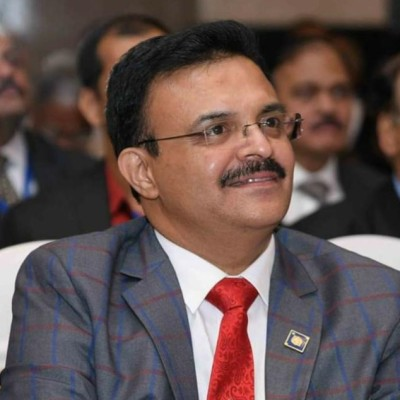
· Yakub Bhetasiwala has 21 years of experience in industrial and factory automation, and has an MBA and a B.Tech degree (is not a lawyer/CA or CS). Despite clearing the Independent Director Exam in July 2023, he struggled to secure appointments. He built his personal brand and network, leading to an appointment as an independent director at CORE Energy Systems Limited within a few months.
Want to see what a real appointment letter looks like?
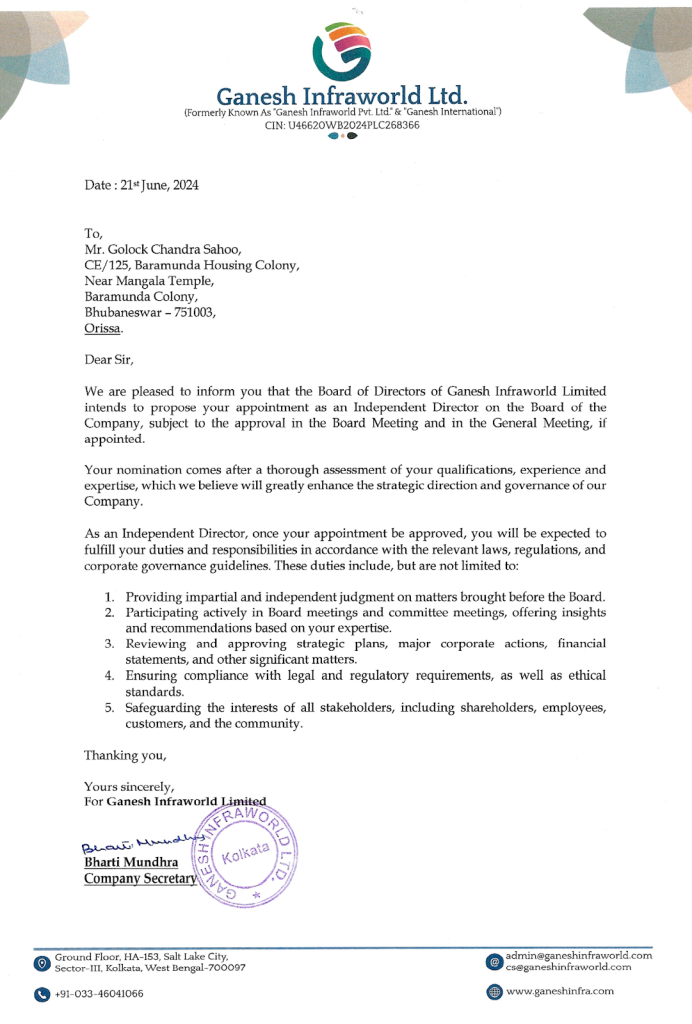
These examples prove that you do not need to “start over” or become a full-time networker. You need a clear roadmap and a focused way to use the professional capital you have already built over decades.



 Allow notifications
I love how this post challenges the myth of needing special networks for board roles. By identifying hidden networks and offering value first, it’s clear that anyone with experience can take actionable steps toward an appointment.