
Most academic papers get rejected on first submission not because the research is bad, but because authors fail to anticipate the objections reviewers will raise. A single missed statistical detail, an unclear methodology description, or a missing ethics statement is enough to trigger the kind of harsh criticism that derails months of work.
For Indian academic writers, this is a concrete, high-value freelance opportunity. By offering pre-publication peer review services to US professors, corporate R&D labs, and early-career researchers, you can earn $200–$500 per manuscript working 15 to 20 hours per project, entirely remotely. This guide walks you through a proven 14-step method that makes academic papers reviewer-proof, using AI as your primary tool.
Table of Contents
Why Academic Papers Get Rejected and Why That Creates an Opportunity
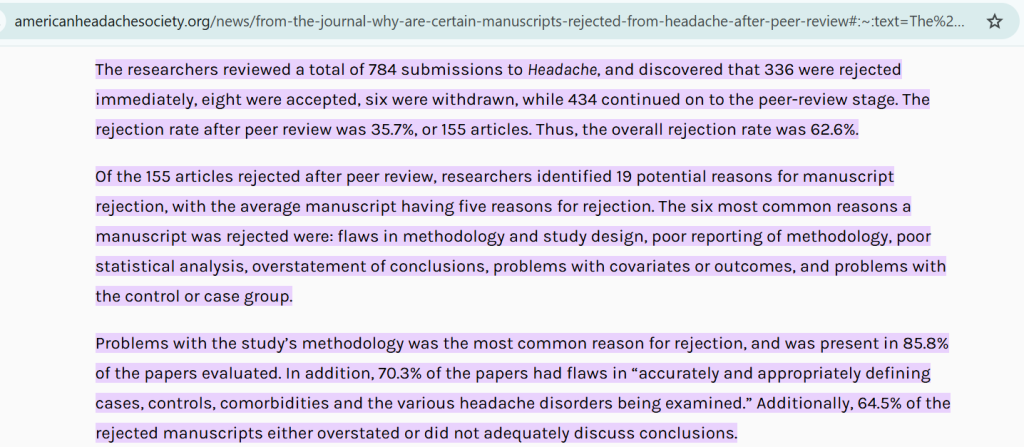
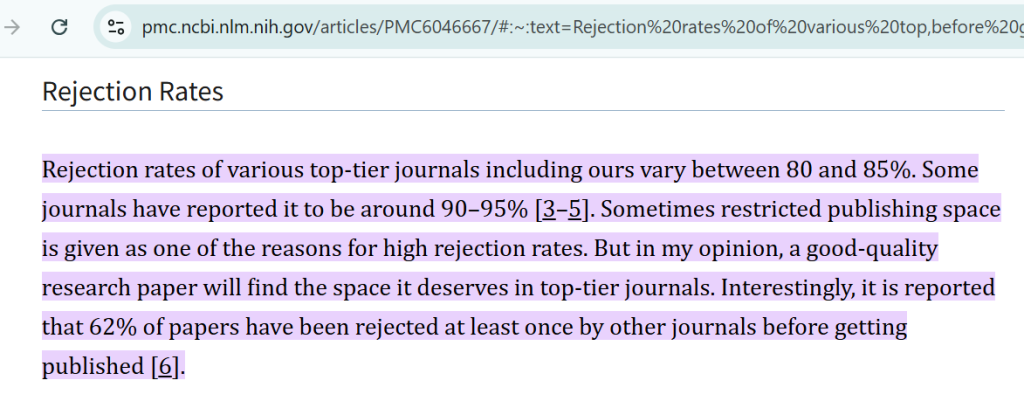
Peer review rejection is far more common than most people outside academia realise. Top journals like Nature, Science, and Neuron have rejection rates above 90 percent. Even at less selective journals, methodological and analytical flaws are among the most frequently cited reasons for rejection not weak research ideas, but preventable execution errors.
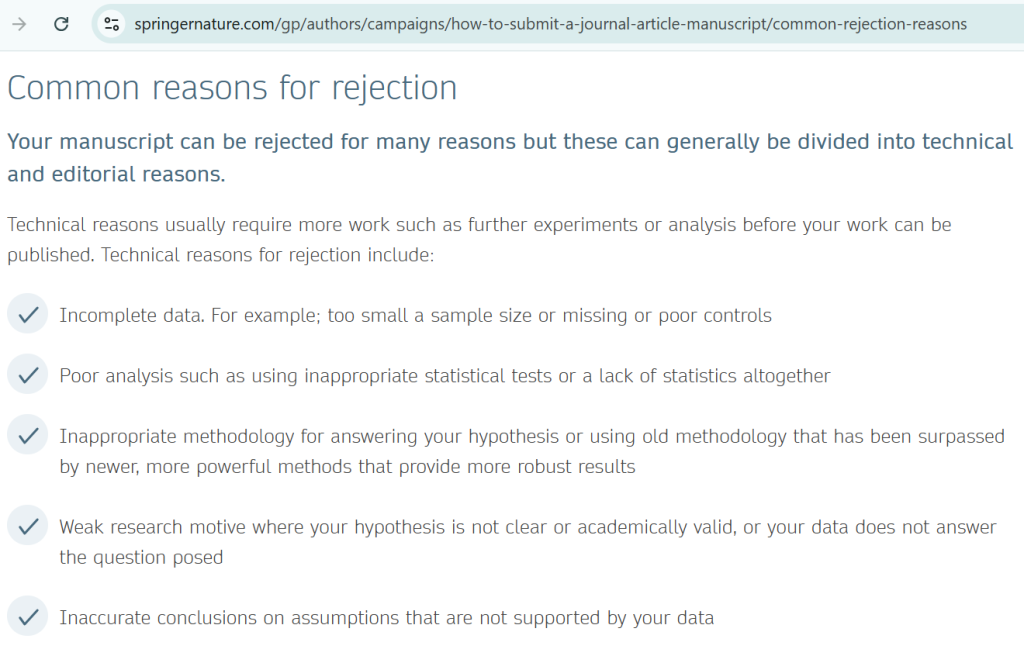
A 2017 analysis of submissions to the journal Headache found that flaws in study design and statistical analysis were among the most common rejection triggers issues that a trained reviewer could have caught before submission. Even excellent research fails due to avoidable problems: missing citations, incomplete ethics statements, statistical reporting gaps, or internal contradictions between sections.
“Even excellent research fails due to preventable reviewer concerns about ethics statements, missing citations, or statistical reporting gaps. Not because the research is bad but because of avoidable errors.”
Who Pays for Pre-Publication Peer Review Services?
- University professors preparing submissions to top-tier journals
- Research institutions with multiple manuscripts in the pipeline
- Corporate R&D labs producing technical papers for peer-reviewed publication
- International researchers who need help anticipating English-language journal reviewer expectations
- Early-career academics postdocs and assistant professors who cannot afford traditional editing services but are under intense pressure to publish
The market is enormous and systematically underserved. Researchers who understand the value of pre-submission review are highly motivated to pay for it because the cost of one successful publication vastly exceeds the cost of your service.
What You Will Earn
Pre-publication peer review sits at a compelling rate point. Traditional academic editing services charge $500–$800 or more per manuscript. As a freelancer entering this market, you can price at $200–$500 per project and still deliver exceptional value particularly if you serve early career researchers or those working with limited departmental budgets.
At 15 to 20 hours of work per manuscript, that translates to an effective rate of $10–$33 per hour at the entry level rising significantly as you build a track record and refine your process. Three to four projects per month is achievable once you have an established client base, generating a meaningful side income alongside your primary work.
The 14-Step Method for Reviewer-Proof Manuscripts
The following method uses AI specifically Claude as the engine for simulating hostile peer reviewers, identifying structural weaknesses, and generating revision suggestions. The methodology applies to any academic discipline: neuroscience, economics, psychology, medicine, engineering, education, or any field that publishes in peer-reviewed journals.
For this walkthrough, we use a real neuroscience preprint available on bioRxiv as the example manuscript. The paper investigates how brain neuroinflammation affects compulsive behaviours a piece of genuinely strong research that nonetheless contains the kinds of addressable weaknesses that a pre-submission review can fix before they reach a hostile reviewer.
Step 1 — Load the Target Journal’s Guidelines and a Reference Publication
Before reading the manuscript itself, upload the author guidelines for the journal the client is targeting, along with a recently published paper from that journal for style reference. This grounds your entire review in the specific expectations of the intended publication.
Prompt: I need your help to analyse a manuscript for me. I want to get it published in Neuron. I want you to thoroughly read and understand the author guidelines for Neuron. You can find it here: https://www.cell.com/neuron/information-for-authors
I am also sharing with you a similar research paper that was published in Neuron after review.
This is for style reference and thorough understanding. You can find it here: https://pmc.ncbi.nlm.nih.gov/articles/PMC7813554/pdf/nihms-1638712.pdf
This step is critical because a paper that would be strong for one journal may be poorly framed for another. Reviewer expectations, preferred statistical approaches, and acceptable scope all vary significantly between publications.
Step 2 — Conduct a Full Manuscript Assessment
Once the journal context is established, upload the manuscript and ask Claude to analyse it section by section: Abstract, Introduction, Methods, Results, Discussion, and Conclusions. Breaking the analysis into sections produces more focused, actionable feedback than reviewing the whole document at once.

Prompt: I am sharing with you the manuscript here. I want you to put yourself in the shoes of a Neuroscience researcher and analyse it thoroughly. In doing so, I want you to neatly arrange the content into: Abstract, Introduction, Methods, Results, Discussion, Conclusions. You can do it as you think fit – this is not a rigid instruction. <upload file / share link>
Step 3 — Run a Hostile Reviewer Simulation (The Methods Skeptic)
This is the core of the methodology. You simulate specific types of difficult reviewers each focusing on a different dimension of the paper and use Claude to generate the objections they would raise, along with fixes for each one.
The Methods Skeptic focuses intensely on finding flaws, gaps, or unclear explanations in the research methodology. They will recommend rejection if they cannot understand exactly how the study was conducted.
Prompt: You are a highly critical peer reviewer with expertise in [FIELD]. You are known for being particularly strict about methodological rigour. Review the following Methods section and identify every possible weakness, ambiguity, or point of criticism. Be harsh but fair. Think like a Reviewer #2 who wants to reject this paper. For each criticism, provide: ISSUE: [specific problem] LIKELY REVIEWER COMMENT: [what they would write] SOLUTION: [how to fix it]
Step 4 — The Statistical Nitpicker
The Statistical Nitpicker scrutinises every number, statistical test, and data analysis decision in the paper looking for missing information, incorrect methods, or inadequate reporting that violates statistical best practices.
Prompt: Act as a peer reviewer with strong statistical expertise. Examine this Results section for: 1. Appropriate use of statistical tests 2. Multiple comparison corrections 3. Sample size justifications 4. Effect size reporting 5. Confidence intervals 6. Data distribution assumptions 7. Missing statistical information List every statistical issue that could lead to rejection, and provide specific fixes.
Step 5 — The Literature Expert
The Literature Expert knows the field extensively and will reject the paper if important citations are missing, existing research is misrepresented, or the work is not properly positioned within the current body of knowledge.
Prompt: You are a reviewer who has published extensively in [FIELD]. Review this Introduction and identify: 1. Missing key citations 2. Misrepresented existing literature 3. Overclaimed novelty 4. Weak justification for the study 5. Unclear research gaps Be extremely critical about the literature review completeness and accuracy.
Step 6 — The Confused Reviewer (Clarity and Flow Check)
The Confused Reviewer comes from an adjacent field and does not know the specific jargon. They will recommend rejection if the paper is not clear enough for someone outside the exact speciality to follow.
Prompt: Pretend you are a reviewer from a slightly adjacent field who doesn’t know the specific jargon. Read this section and identify: 1. Every undefined term or acronym 2. Logical jumps that need explanation 3. Assumptions that aren’t justified 4. Places where the reasoning is unclear Mark each issue with ‘CLARITY ISSUE:’ and suggest a fix.
Step 7 — The Completeness Checker
The Completeness Checker goes through standard reporting guidelines with a checklist mentality, looking for any missing required elements such as ethics statements, data availability declarations, funding disclosures, or methodology details that journals require.
Prompt: Review this manuscript section against standard reporting guidelines for [TYPE OF STUDY — e.g., CONSORT for RCTs, STROBE for observational]. Create a checklist of: 1. Elements properly included 2. Missing required elements 3. Elements that are present but inadequate For each missing or inadequate element, provide example text of what should be added.
Step 8 — The Big Picture Critic (Strengthen the Discussion)
The Big Picture Critic is a senior reviewer who evaluates whether the research actually matters. They look for overinterpretation of results, weak real-world implications, insufficient novelty, or failure to demonstrate why anyone should care about the findings.
Prompt: As a senior reviewer evaluating this Discussion section, identify: 1. Overinterpretation of results 2. Missing limitations 3. Weak connections to existing literature 4. Unsupported speculations 5. Missing clinical or practical implications 6. Inadequate future directions For each issue, provide specific reviewer criticism and how to address it.
Step 9 — The Abstract Assassin
The Abstract Assassin judges the entire paper based on the abstract alone. They look for unsupported conclusions, missing key numbers, unclear significance, or any disconnect between what the authors claim and what they actually found.
Prompt: This abstract must convince busy reviewers to recommend acceptance. Critically evaluate: 1. Does it follow journal structure (Background/Methods/Results/Conclusions)? 2. Are the numbers specific enough? 3. Is the conclusion supported by the stated results? 4. Is the significance clear? 5. Word count: [JOURNAL LIMIT] Rewrite problematic sentences to be reviewer-proof.
Step 10 — The Ethics Guardian
The Ethics Guardian scrutinises the study for any ethical red flags, missing approval statements, inadequate consent procedures, or potential harm to participants that could cause immediate desk rejection.
Prompt: As an ethics-focused reviewer, examine this manuscript for: 1. IRB/Ethics approval statements 2. Informed consent procedures 3. Data availability statements 4. Conflict of interest declarations 5. Author contribution statements 6. Funding transparency 7. Any ethical red flags in methodology Flag anything that would cause immediate desk rejection.
Step 11 — The Detail Detective (Internal Contradiction Check)
The Detail Detective cross-checks the paper for internal contradictions inconsistencies in numbers, sample sizes, timelines, or claims between different sections that suggest careless errors or data problems.
Prompt: Compare these sections for internal contradictions: Abstract: [PASTE] Methods: [PASTE KEY POINTS] Results: [PASTE KEY FINDINGS] Conclusions: [PASTE] Find any inconsistencies in: – Numbers and statistics – Sample sizes – Methodological descriptions – Claims vs. evidence – Temporal sequences List each contradiction and how to fix it.
Step 12 — Generate Reviewer Response Tables
For each manuscript section, generate a pre-emptive response table a document that anticipates the top five likely reviewer criticisms, prepares responses to each, and specifies the exact text changes that would prevent each criticism from arising.
Prompt: Based on this manuscript section, create a table of: 1. Top 5 likely reviewer criticisms 2. Your prepared responses 3. Specific text changes to prevent the criticism Format as: | Potential Criticism | Our Response | Manuscript Change |
Step 13 — Polish for Journal Fit
The Journal Matcher evaluates whether the research actually fits the journal’s scope, target audience, and recent publication patterns — and will recommend rejection if the work seems like a poor fit regardless of quality.
Prompt: Compare this manuscript to [JOURNAL NAME]’s scope and recent publications: Our manuscript: [PASTE ABSTRACT] Journal scope: [PASTE FROM JOURNAL WEBSITE] Identify: 1. Alignment strengths 2. Potential scope concerns 3. How to frame the work for this specific journal 4. Keywords that should be included
Step 14 — Generate a Revised Manuscript and Run a Second Round
Ask Claude to apply all the suggestions from the previous steps and generate a comprehensive revised version of the manuscript. Then run a second review pass this time as an even tougher reviewer to identify remaining weaknesses in the revised version.
Prompt (second round): I have revised my manuscript based on previous reviewer concerns. Now be an even tougher reviewer and find remaining weaknesses. Original version: [PASTE] Revised version: [PASTE] Are the revisions sufficient? What would still concern a hostile reviewer?
Once the second round is complete, run one final synthesis prompt asking Claude to incorporate all suggestions and produce the best possible version of the manuscript — accounting for all reviewer types and all rounds of feedback.
How to Find Clients for Pre-Publication Review Services
Learning the methodology is only half the equation. Here is a systematic approach to finding researchers who need and will pay for your service.
Method 1 — Find Authors of Recent Preprints
Preprint repositories are a goldmine for finding researchers who are actively preparing manuscripts for submission. Sites like bioRxiv, arXiv, PLOS ONE, and PeerJ list recently uploaded preprints along with author contact details. These researchers have already invested significant effort in their work and are highly motivated to maximise their chances of acceptance.
- Go to bioRxiv.org, arXiv.org, or PeerJ.com
- Search for recent preprints in your area of expertise
- Read the abstract and identify the corresponding author’s email — it is listed in the paper
- Send a personalised outreach email referencing their specific research and offering a targeted pre-submission review
Method 2 — Target Early-Career Researchers
Postdoctoral researchers and assistant professors are under intense publication pressure but typically have limited access to departmental editing budgets. They are the most motivated buyers of affordable pre-publication review services. Find them through:
- PubMed and Google Scholar searches filtered to recent publications in your field
- LinkedIn searches for ‘postdoc’, ‘assistant professor’, or ‘research fellow’ combined with your subject area
- University department websites listing junior faculty and their research interests
- Online academic conferences and webinars where early-career researchers present work in progress
Method 3 — Expand Beyond Peer Review
Once you have established a track record in pre-publication review, you have a credible platform for offering related services to the same clients:
- Grant proposal writing and review
- Full manuscript editing and restructuring
- Publication strategy advice — which journals to target and in what order
- Response-to-reviewers document preparation after initial submission
“The academic world is huge and desperate for these services. Researchers will pay good money to increase their chances of getting published in prestigious journals.”




 Allow notifications