
Professors around the world are overworked, under-resourced, and willing to pay skilled research assistants to help them. The question is: are you skilled enough to get hired?
Table of Contents
The Four Ways You Can Help Professors Globally
Before diving into the specific skills, understand the four broad categories where you can add value to academics worldwide:
- Research and writing work — the core of most academic projects
- Administrative, operational, and liaisoning work — coordinating workflows, managing communications
- Pitching for grants and government projects — writing proposals and budgets
- Public-facing work — podcasts, social media content, book writing, and knowledge dissemination
One important rule: do not limit yourself to just one of these. The more categories you can serve, the more valuable and employable you become. Aim to add value in at least three of these areas.
Core Skills for Global Academic Writing Projects (With Pay Rates)
Here is a breakdown of the most in demand academic writing skills and how much they pay per project or assignment on platforms like Kolabtree:
- Conceptualising field research.
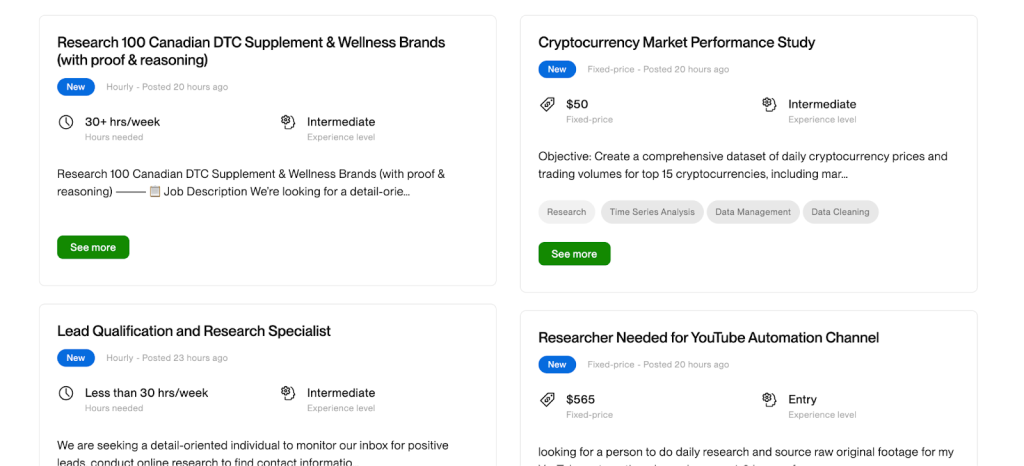
- Data collection and analysis can make you $200-500.
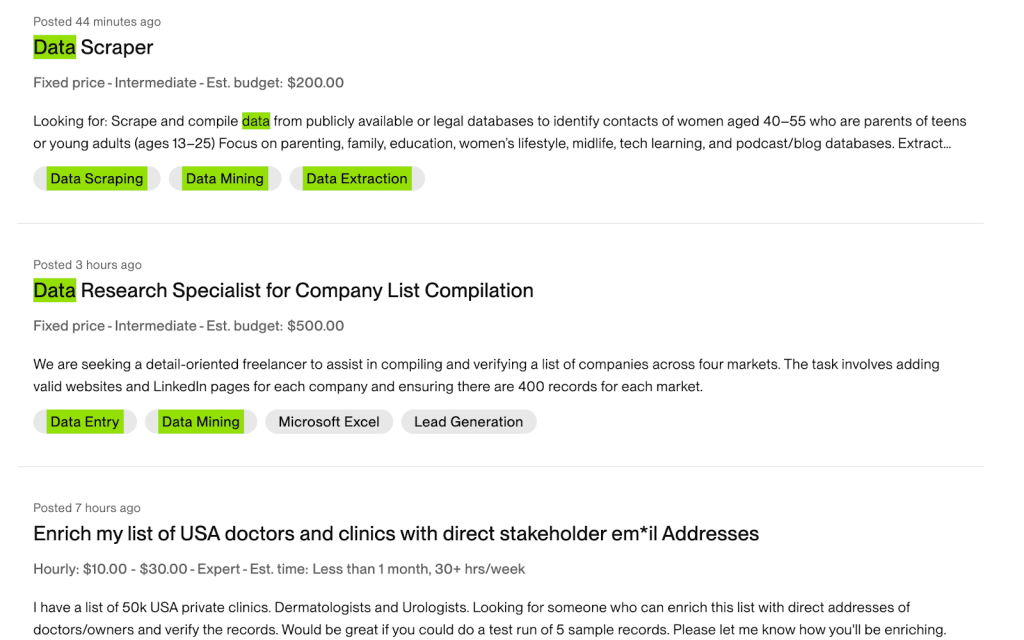
- Meeting citation standards and stylesheet guidelines for journals, manuscript formatting, and submission processes for target journals. This can pay you anywhere between $50-100.
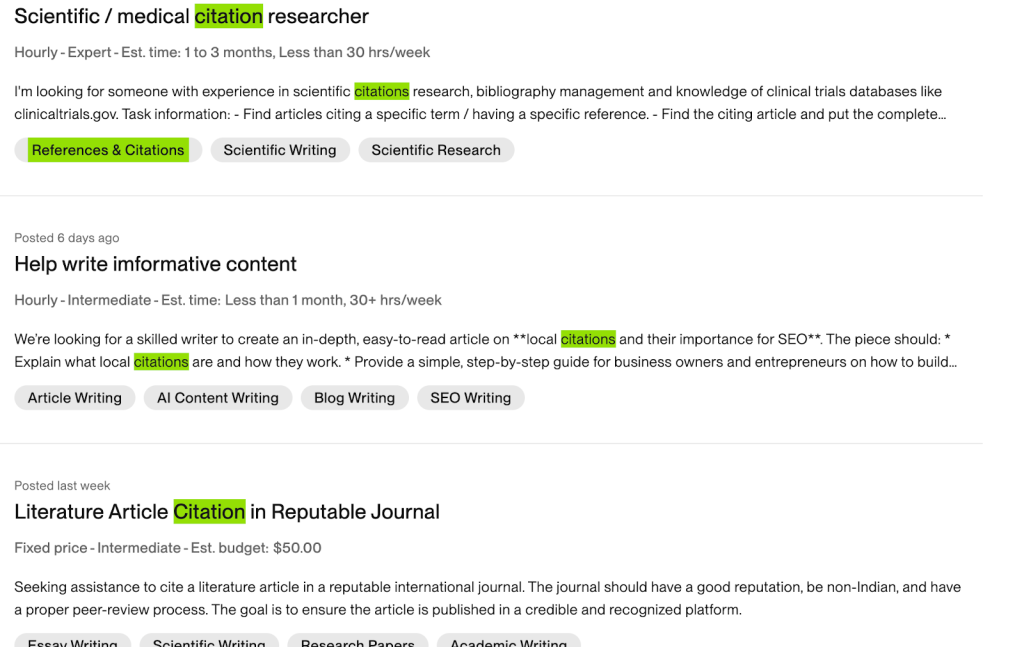
- How to prepare comprehensive literature reviews that can get you $50-70.
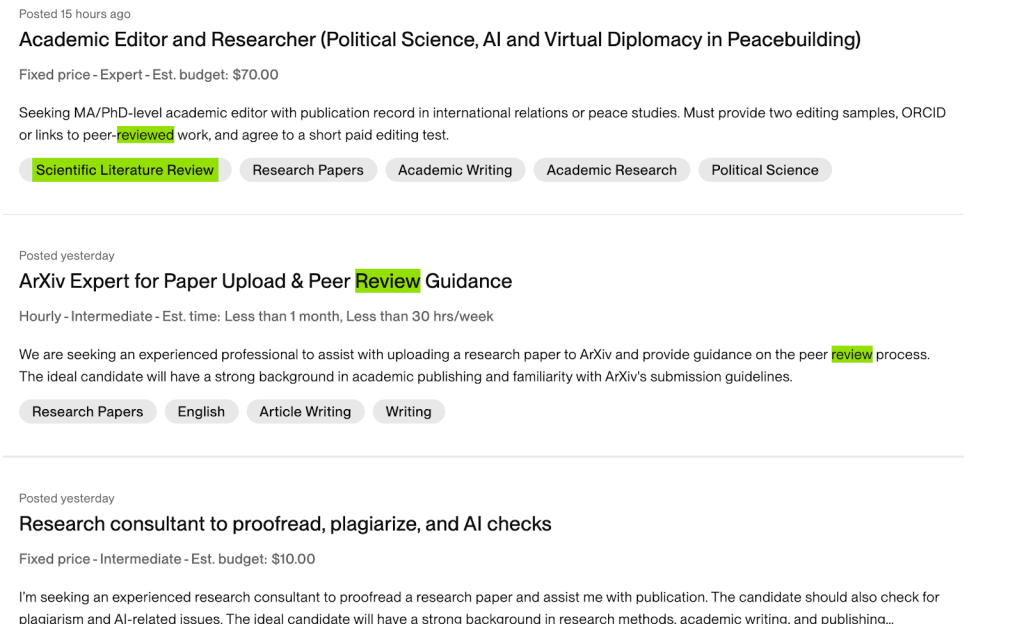
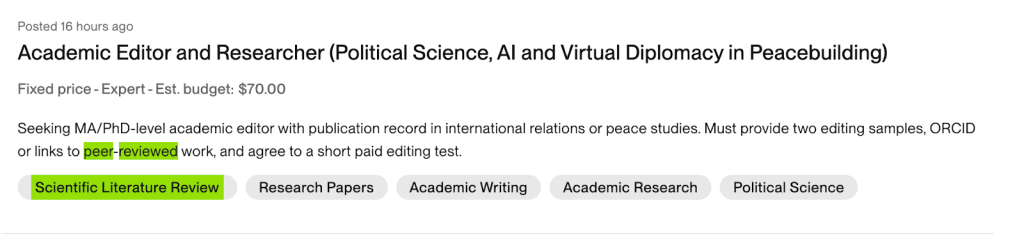
- How to conduct a pre-publication peer review worth $70?
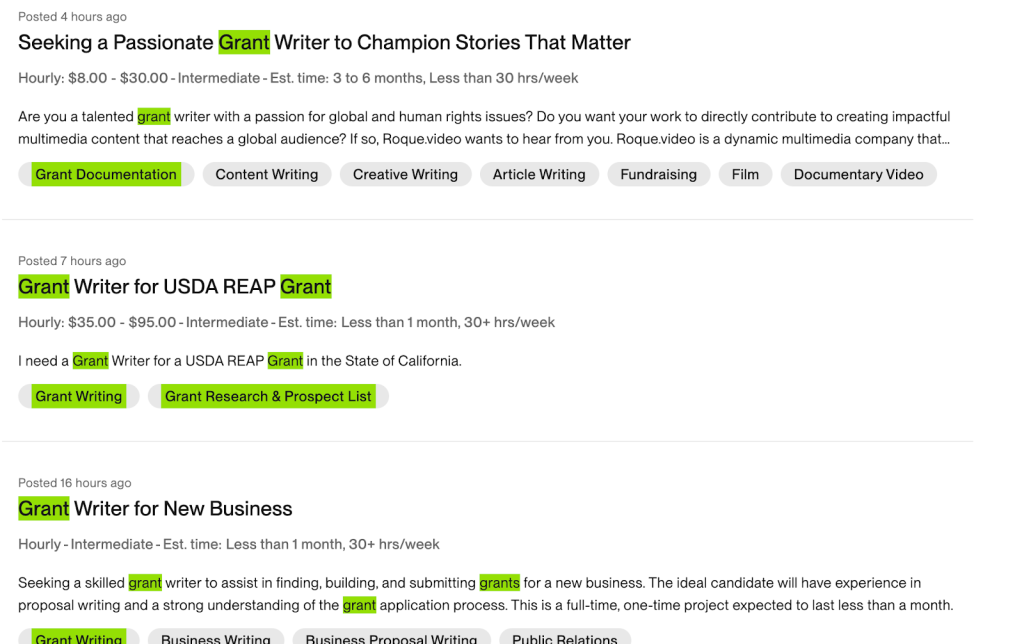
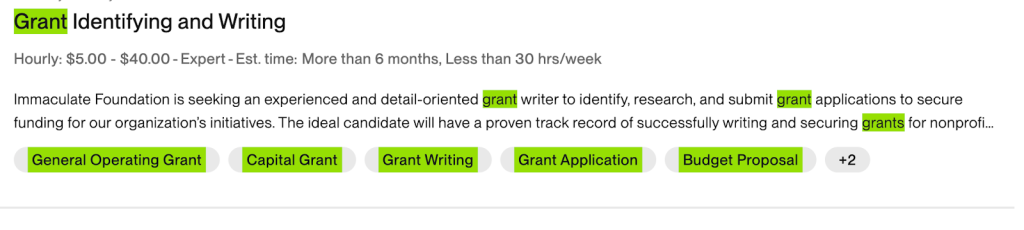
- How to write grant proposals that meet the technical requirements of prospective donors and funding agencies that can pay you around $95?
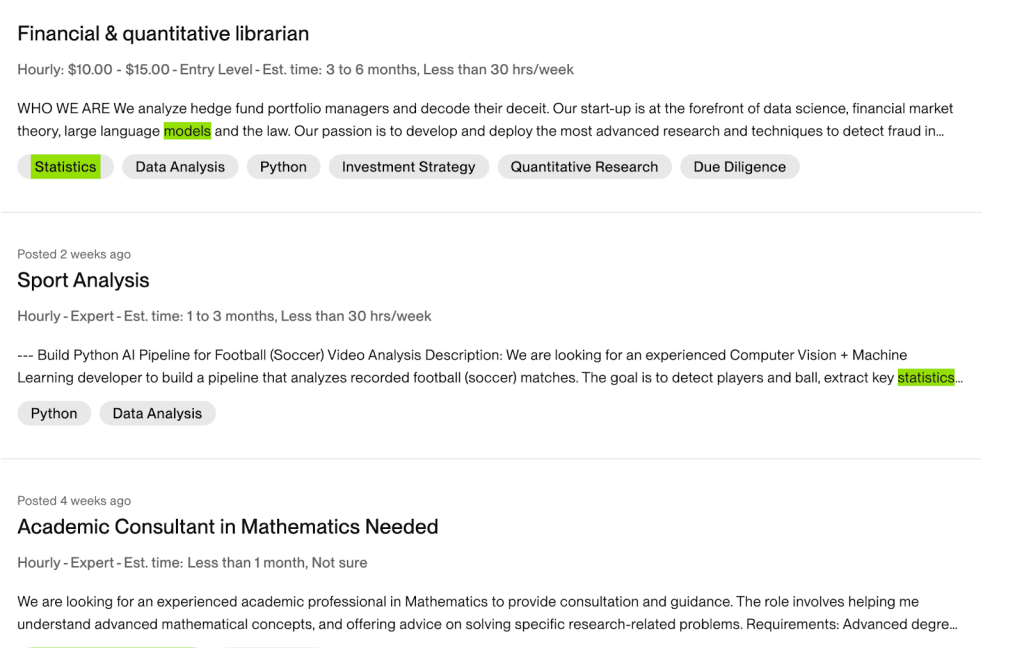
- Statistical analysis and data visualization techniques (using AI) can easily fetch you $30.
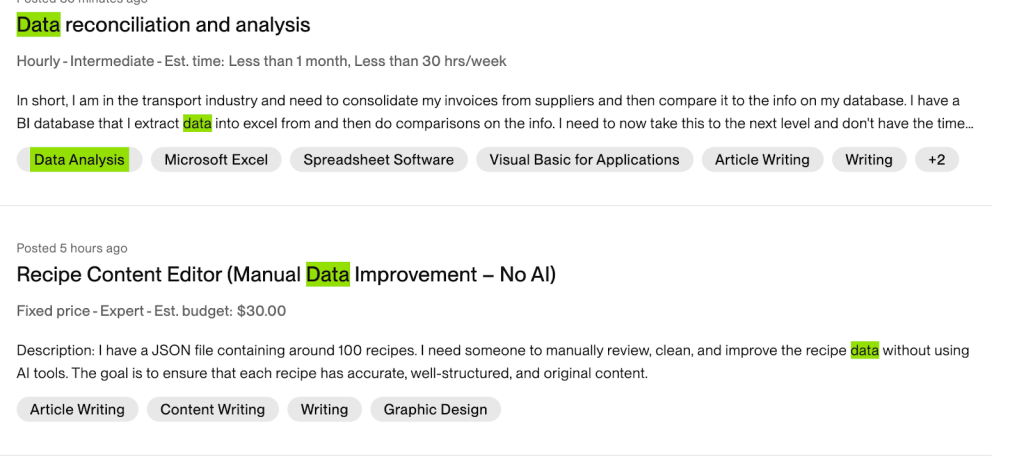
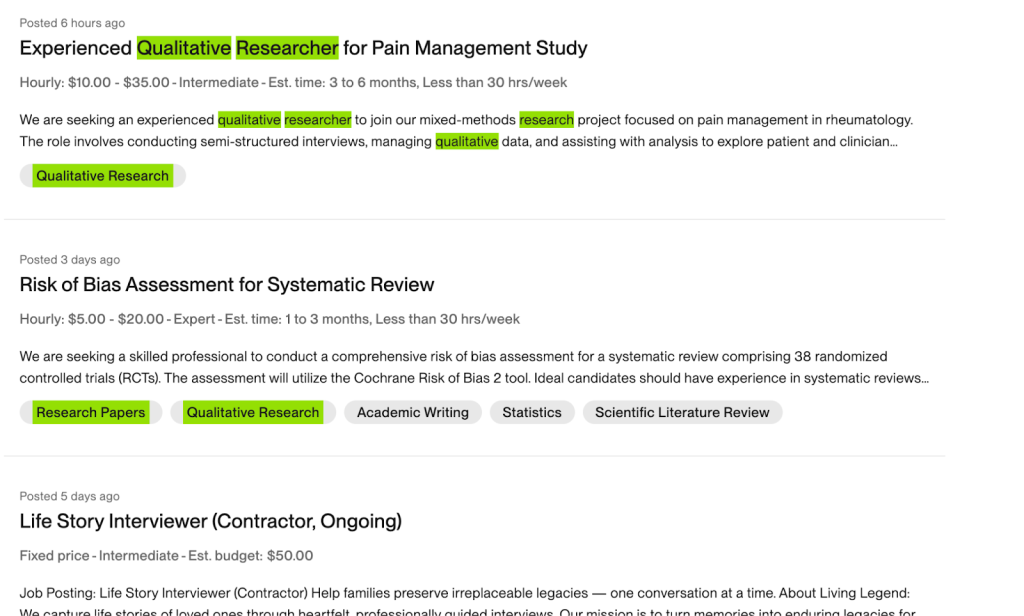
- Qualitative research (interviews, focus groups, etc.) pays you around $50.
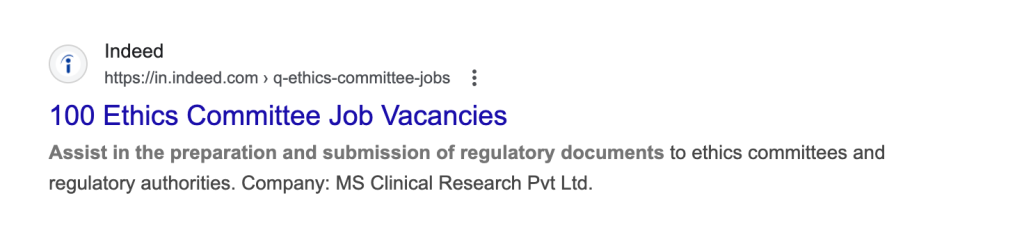
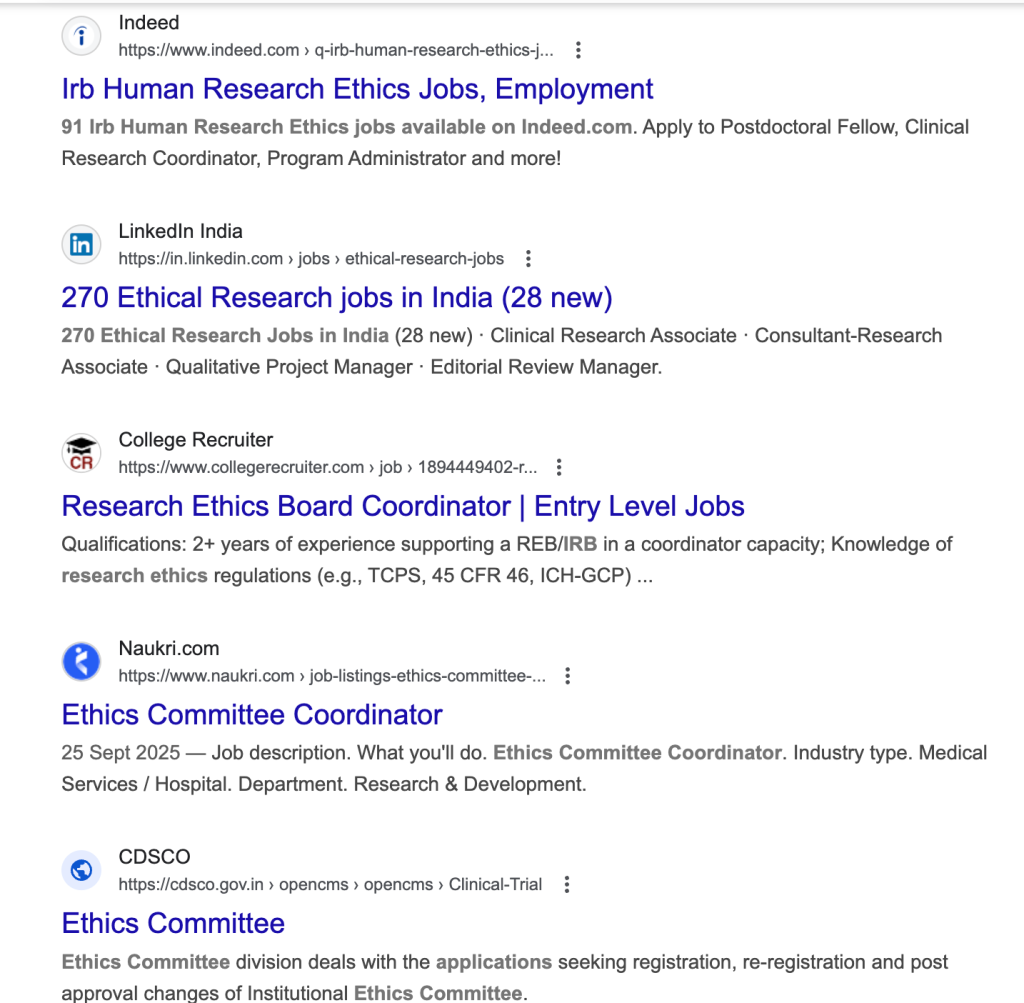
- Research ethics and IRB/ethics committee application preparation.
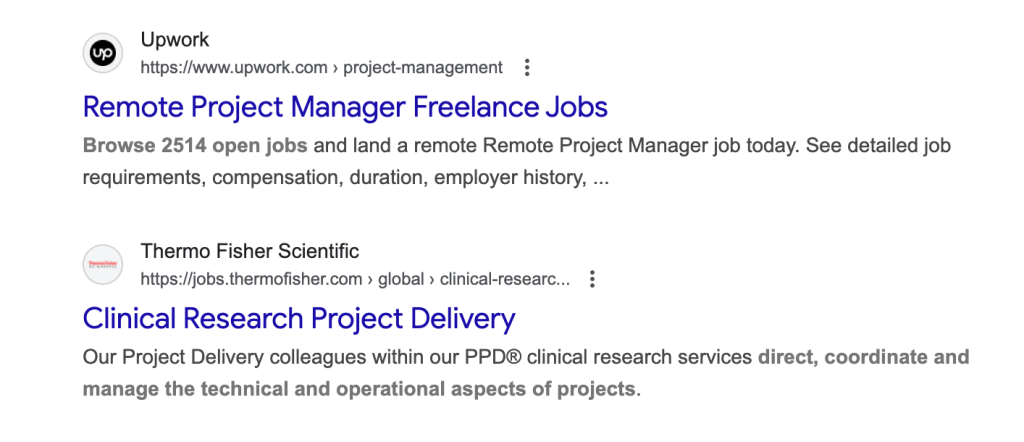
- Project management for research timelines and deliverables.
- Proficiency in reference management software (Zotero, Mendeley, EndNote), managing bibliometric indicators, and journal impact factors. Do you see the budget of $200?
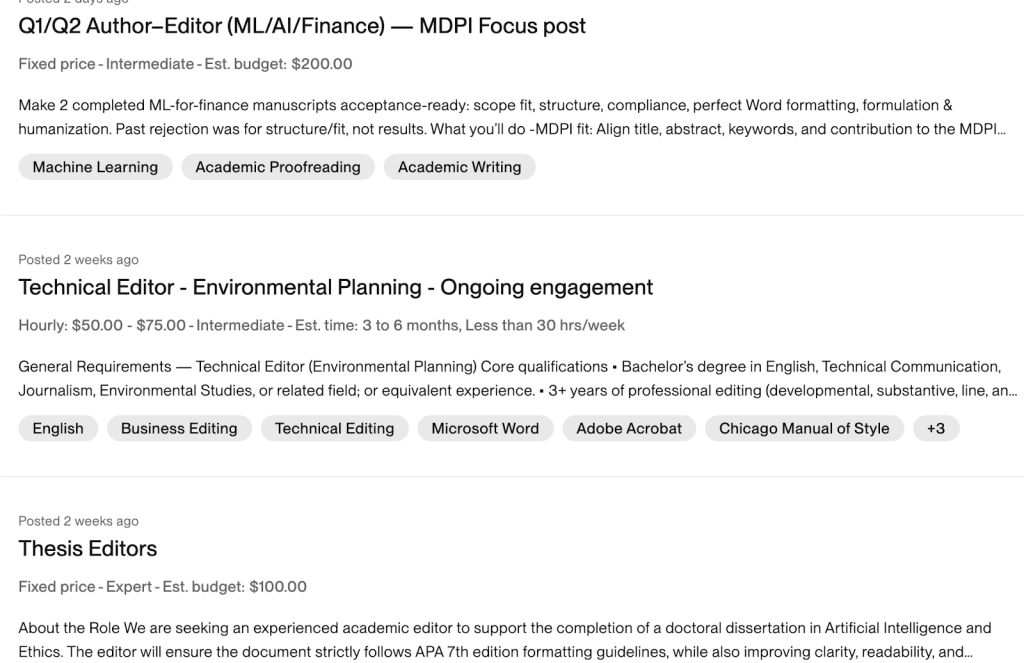
- Creating effective research posters and conference presentations can easily get you around $90.

- Grant budget development and financial reporting go up $40.
- Collaborative writing and version control for multi-author papers.
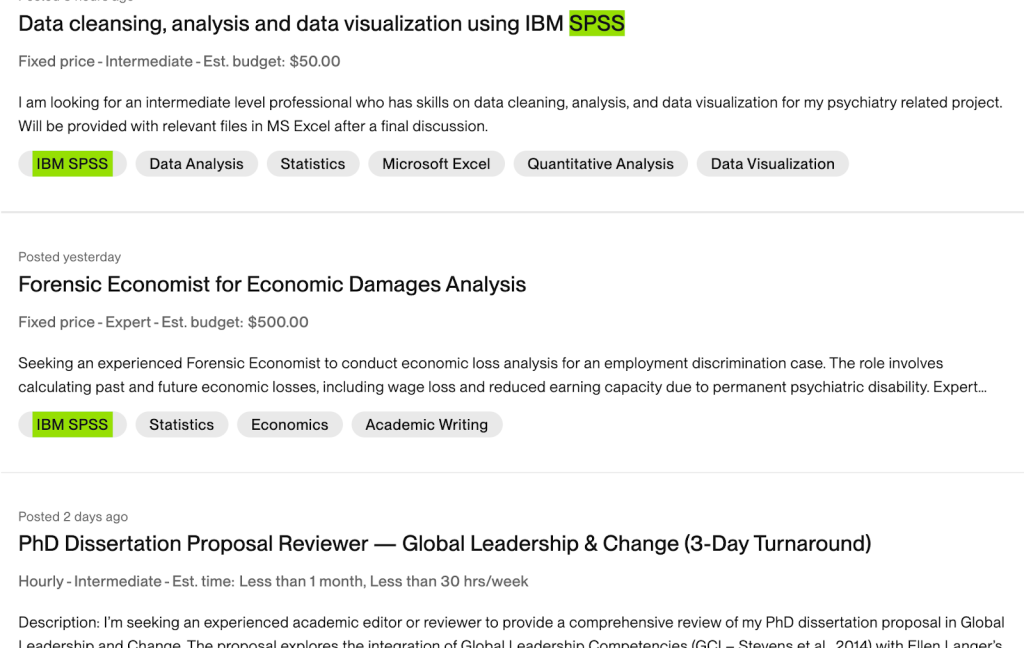
- Research software proficiency (SPSS, R, NVivo, ATLAS.ti, etc.), using tools like SPSS, R, or Stata to handle quantitative data and perform complex statistical analyses. This shows assignments worth $500.
Real Freelance Gigs Available Right Now (With Rates)
These are not hypothetical pay ranges. Here is what live gigs on Kolabtree look like in the academic writing market:
- Field research project: $240
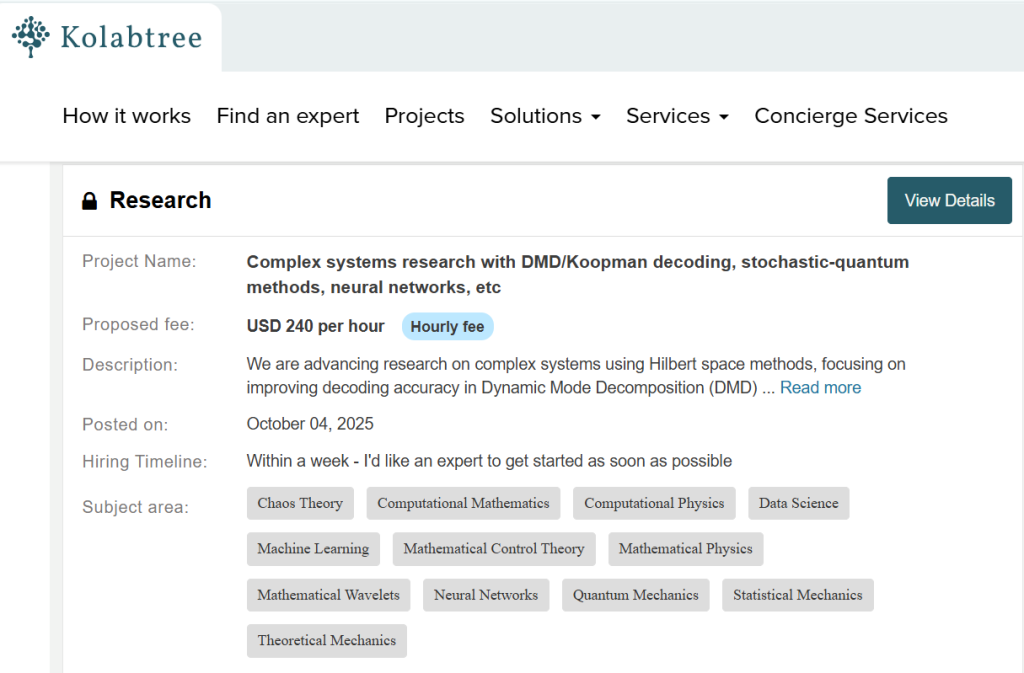
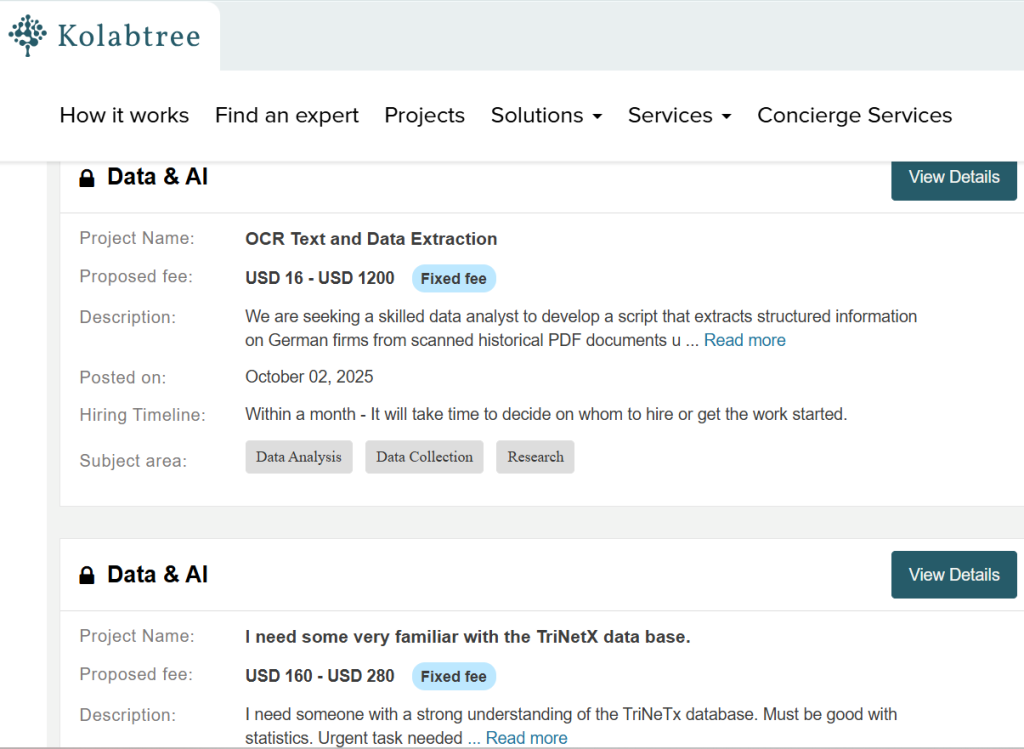
- Data collection: up to $1,200
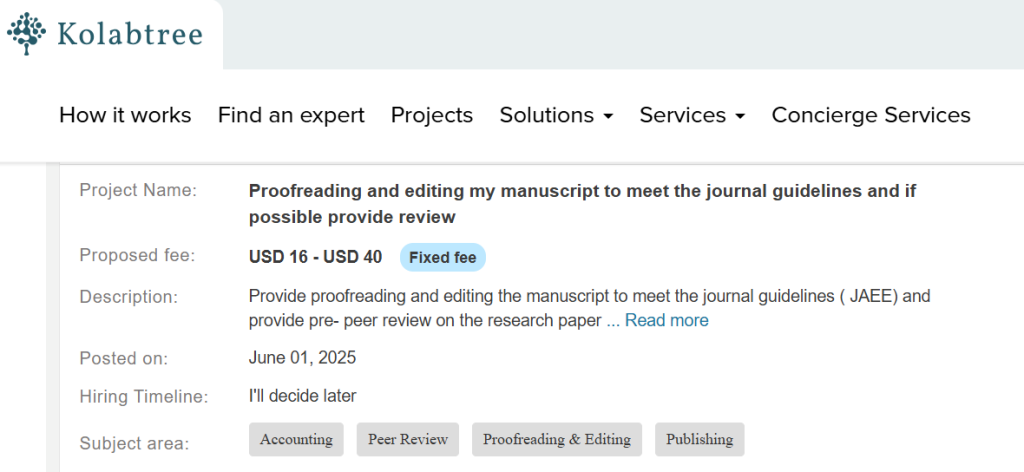
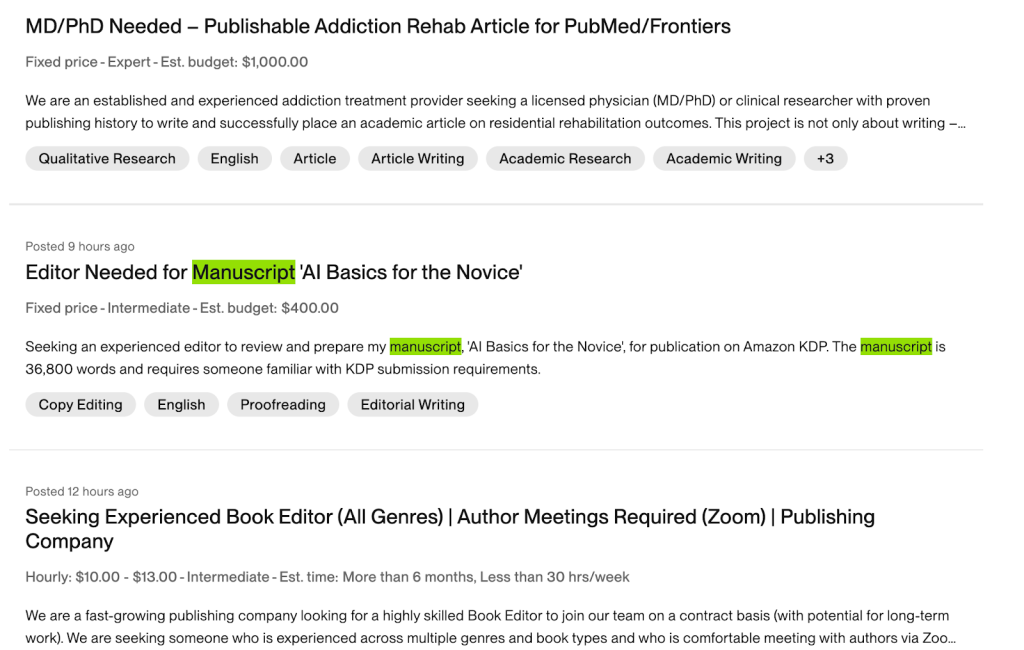
- Proofreading and peer review of manuscript: $40
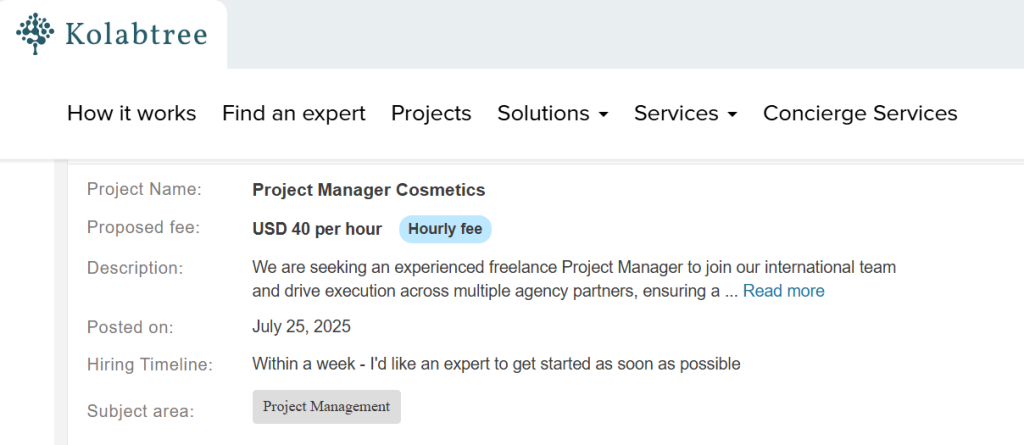
- Project management for a research timeline: $40
- Qualitative research: up to $200
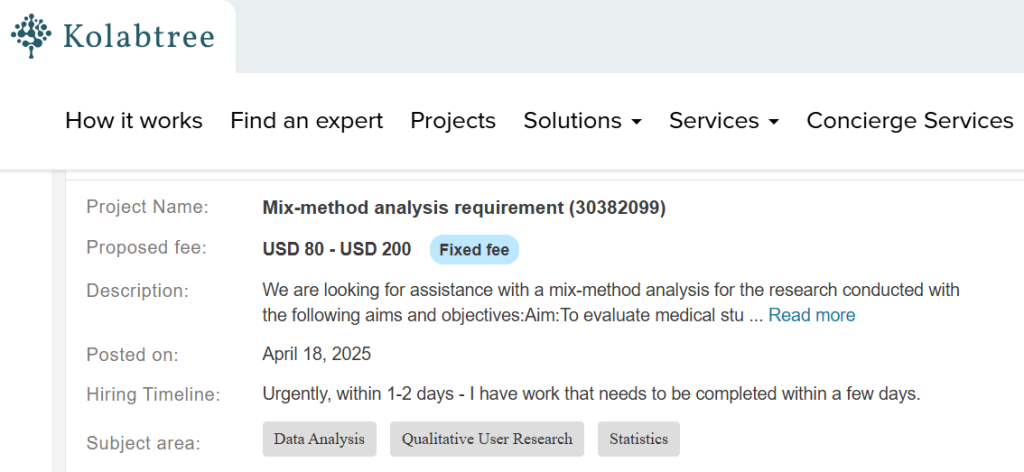
- Grant writing: up to $1,680
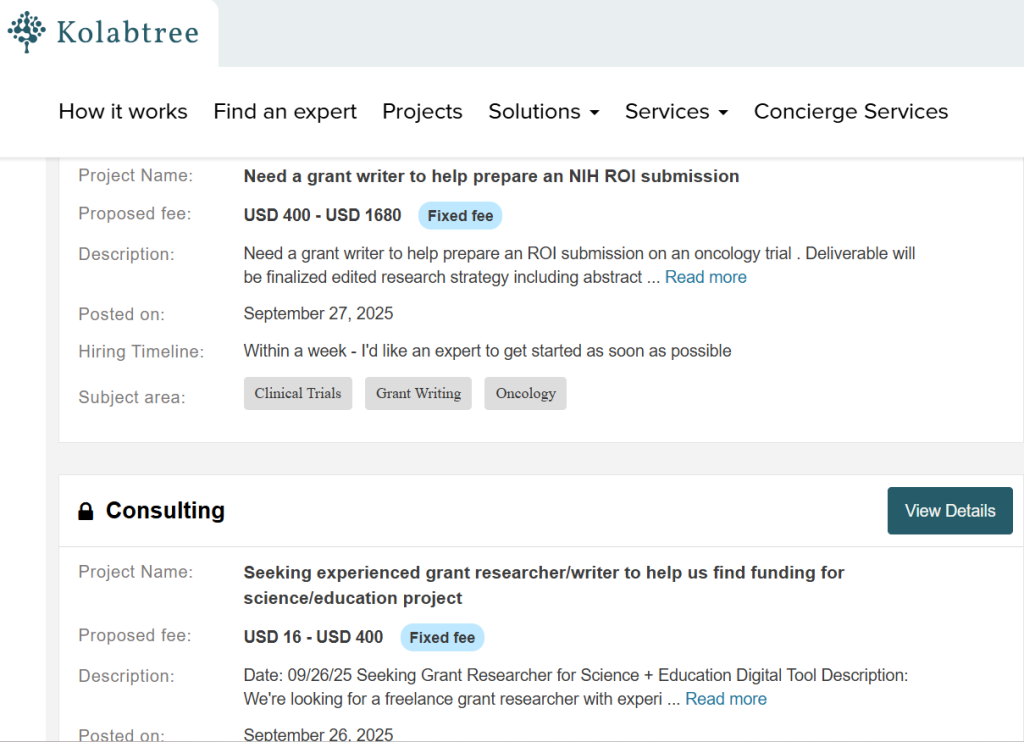
The pattern is clear: individual tasks may seem small, but they compound. A professional managing two or three concurrent projects across these categories can build a meaningful monthly income stream entirely remote, entirely on their own schedule.
Advanced Skills That Pay Even More
- Writing code (e.g., in Python or MATLAB) to automate data processing, run custom analyses, or simulate experiments. Starts at $15:

- Creating publication-quality graphs, tables, and infographics (using Excel, Tableau, or Python/R libraries) to effectively present research data. It gets you $400:

- Designing clear diagrams, schematics, or models with software such as Adobe Illustrator or CorelDRAW for inclusion in academic papers. Again $400:
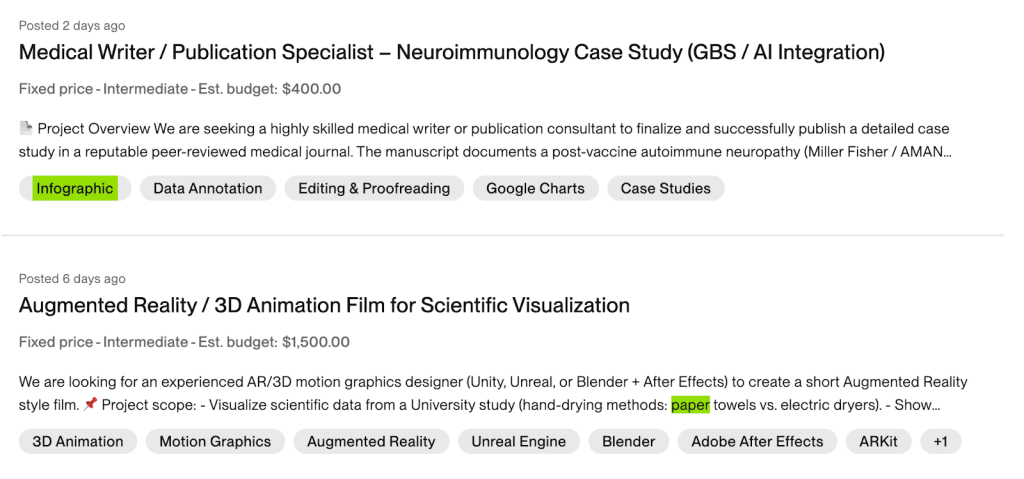
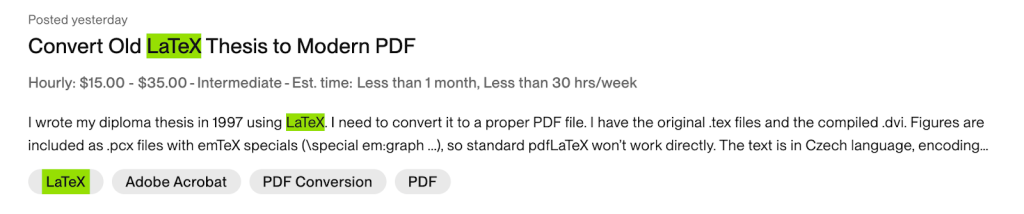
- Preparing manuscripts in LaTeX (including equations and references) for disciplines that require professional-quality formatting beyond standard word processors for $35:
- Conducting structured literature reviews and quantitative meta-analyses (following PRISMA guidelines) to synthesize findings across multiple studies. You see $125:

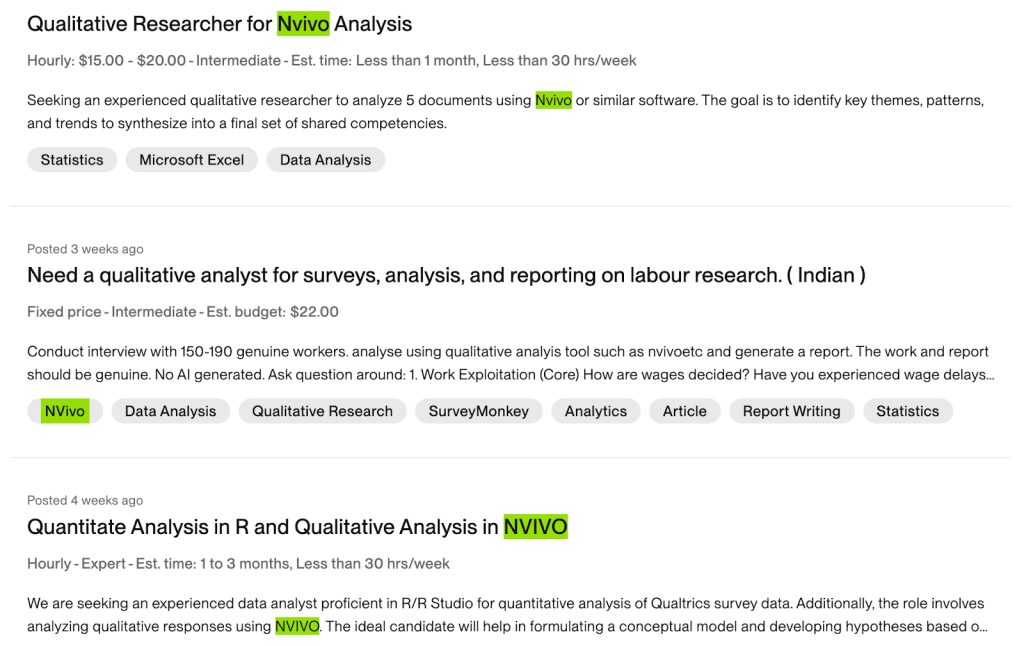
- Coding and analyzing qualitative or textual data using software like NVivo or ATLAS.ti, enabling rigorous thematic analysis in social sciences and humanities for $20:
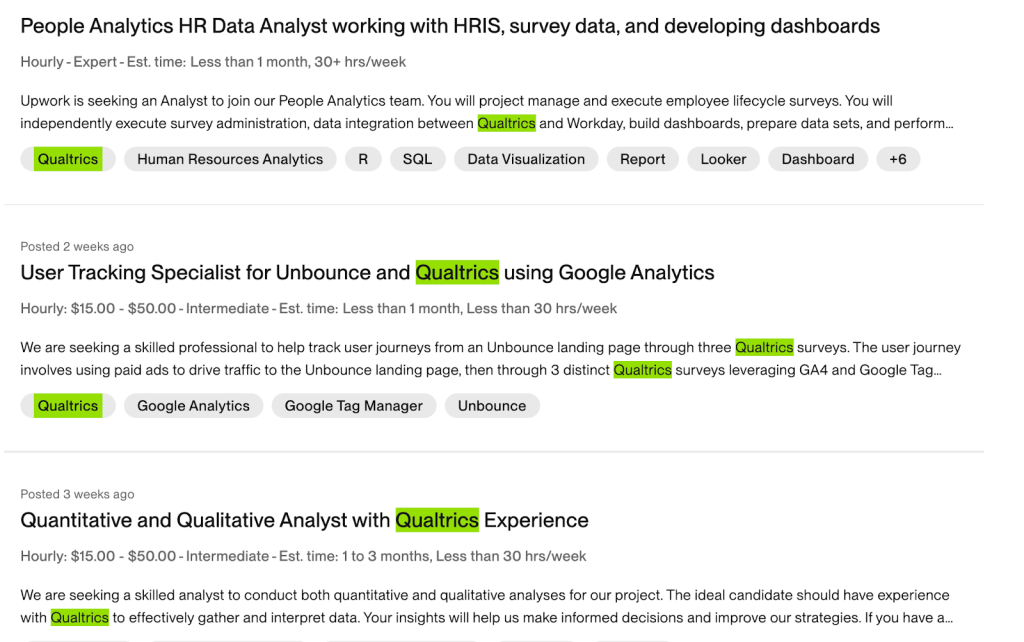
- Using platforms such as Qualtrics or SurveyMonkey to create surveys, deploy them to participants, and manage the resulting data for $50:
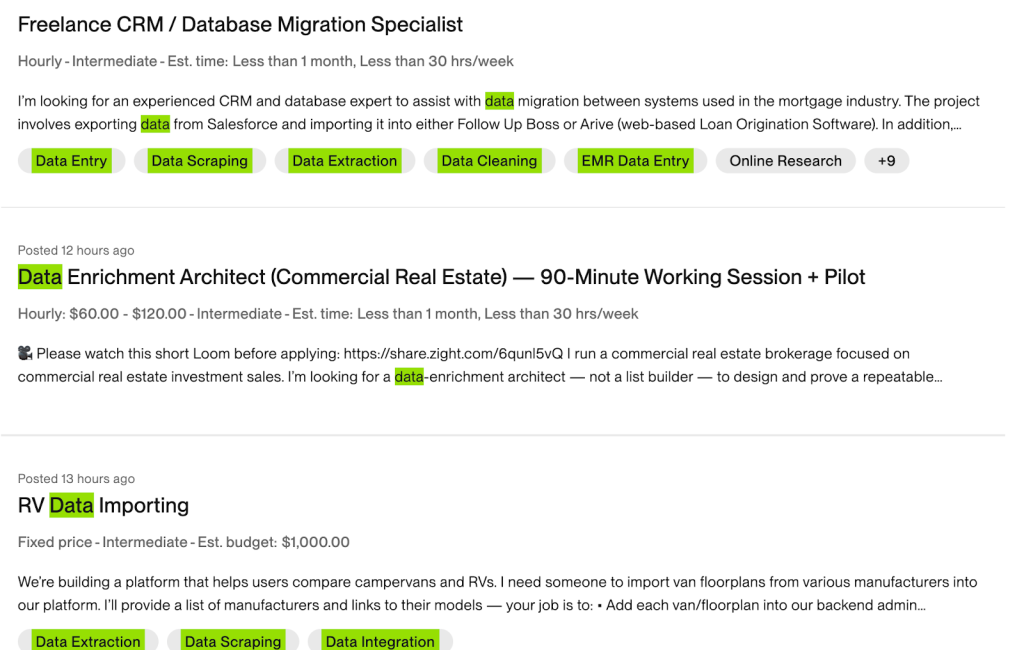
- Organizing, cleaning, and transforming raw datasets (e.g., handling missing data or outliers) to ensure accuracy and readiness for analysis for up to $1200:
- Managing large datasets with SQL databases or big data tools (like Hadoop/Spark) and performing efficient data extraction and manipulation.
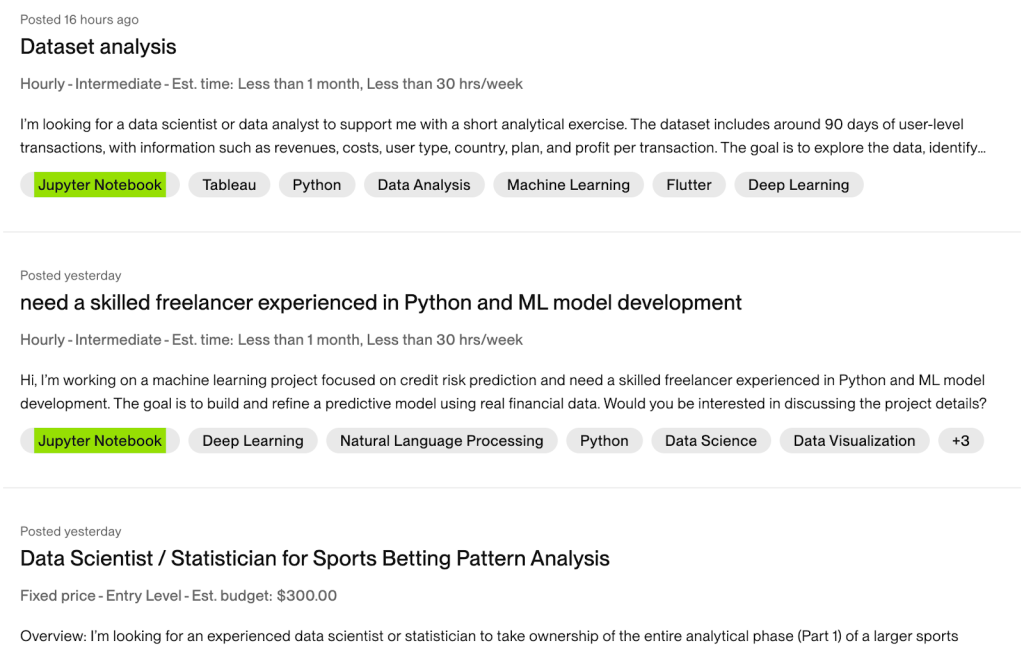
- Employing tools like Jupyter Notebooks or R Markdown and version control (Git) to ensure analyses are reproducible and well-documented for collaborators for $300:
- Refining and copy-editing manuscripts for clarity, coherence, and technical accuracy (correct grammar, terminology, and adherence to scholarly tone) for upto $1000:
- Applying machine learning algorithms or data mining techniques to discover patterns in complex datasets, which is increasingly valuable across disciplines for $200:

- Building statistical models or running simulations (for example, Monte Carlo simulations or computational models) to test hypotheses and interpret theoretical scenarios for $15
- Anonymizing sensitive data (such as interview transcripts or patient records) and handling data in compliance with privacy regulations and ethical guidelines.
- Using AI for transcribing interviews or audio recordings accurately and analyzing textual data for research insights (useful in qualitative research and oral history projects).
How Long Does It Take to Learn These Academic Writing Skills?
Here is the honest answer: most of these skills can be learned in six months if you commit to two focused hours every day. That is not a marketing claim it is a realistic timeline based on structured learning.
The path involves three parallel tracks:
- Build skills — learn tools like Zotero, R, or Qualtrics; understand citation formats; practice writing literature reviews
- Build a track record — do small projects to generate evidence of your work quality
- Do mass outreach — connect with academics on LinkedIn and platforms like Kolabtree, ResearchGate, and Academia.edu
Do not wait until you feel ‘ready’ to reach out. The first project teaches you more than six months of passive learning.




 Allow notifications