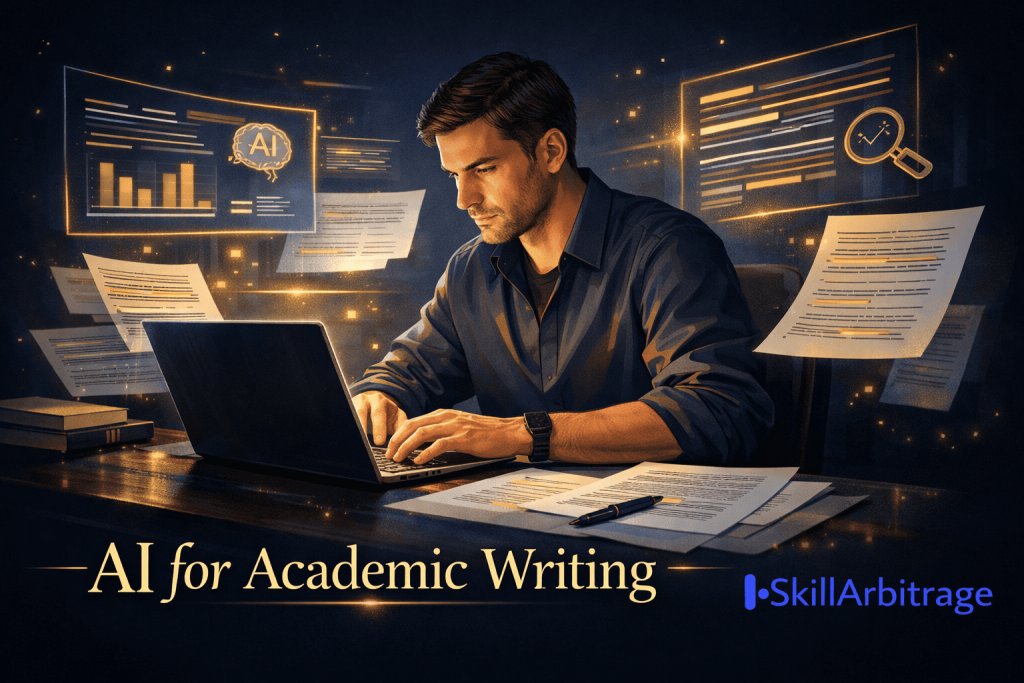

If you have typed ‘can I use AI for academic writing’ into a search bar at any point in the last year, you are not alone. Millions of researchers, freelance writers, and graduate students across India and worldwide are asking the same question and getting wildly different answers depending on who they ask.
Table of Contents
1. Your work won’t be taken by AI, but someone who uses AI more effectively than you might.
In actuality, AI is not intelligent on its own. Only a human with the ability to think, verify, and connect ideas can use it effectively. The true future is AI + people, not AI or humans. Because while AI is capable of processing data, humans are the only ones who can interpret it.
Human Tools such as ChatGPT, Claude, and Trinka.ai can already:
- In five minutes, summarize thirty research papers.
- Make recommendations for citation styles and journal formats.
- Instantly identify faults in tone or grammar.
Even though AI can summarize, you still need to:
- Include progressive concepts and stories.
- Expand on your most recent encounters with people.
- Check each source.
- Identify logical holes.
- Rewrite in a tone appropriate for the goal of the research.
AI works in the middle rather than the end. It expedites your procedure, yet you retain control over the course and the final destination. To put it another way, although AI can speed up 60–70% of the initial work, a person is still required to complete the task.
2. What AI Should (and Should Not) Do in Academic Work
Smart Use Cases: From Literature Reviews to Grant Proposals
Here is a practical map of where AI adds genuine value in academic writing:
- Literature reviews: Literature reviews:
- Summarising papers, mapping research gaps, and organising findings by theme.
- Manuscript structuring: Manuscript structuring:
- Outlining IMRAD sections, improving logical flow, and refining clarity.
- Data analysis & visualisation: Data analysis & visualisation:
- Cleaning datasets, generating preliminary charts, and identifying key patterns.
- Grant proposals: Grant proposals:
- Polishing aims statements, significance sections, and formatting per funder guidelines.
- Cross-cultural adaptation: Cross-cultural adaptation:
- Rephrasing survey instruments or content for international audiences.
- Editing & proofreading: Editing & proofreading:
- Ensuring consistent academic tone, grammar accuracy, and citation formatting.
- Reference management: Reference management:
- Integrating with Zotero or Mendeley for citation generation and reformatting.
The Red Lines-What Never to Delegate to AI
Equally important is knowing where to draw the line. Using AI inappropriately does not just risk a client complaint it can end a career in academic writing permanently.
Do not use AI to:
- Copy or lightly paraphrase full papers without source verification.
- Generate citations-AI fabricates references that do not exist.
- Produce statistical outputs without independently checking the underlying data.
- Submit AI-generated text without a substantive rewrite in your own voice.
- Summarise confidential or unpublished client data-this violates NDAs and data protection law.
- Use technical terminology outside your verified subject expertise.
3. Is Using AI for Academic Writing Ethical?
Yes, when used transparently and with intellectual rigour. The ethics conversation in academic writing is often framed as a binary: AI is either fine or it is cheating.
Here’s what global professors and journals care about:
- Original thought: Your argument, synthesis, or insight.
- Source verification: That your references and citations are accurate + verified.
- Clarity: That your writing communicates ideas cleanly.
If AI helps you format, polish, and present better, that’s not unethical. It’s efficient. You’re still the author of the idea; AI just helps you think faster, structure better, and see angles you might have missed.
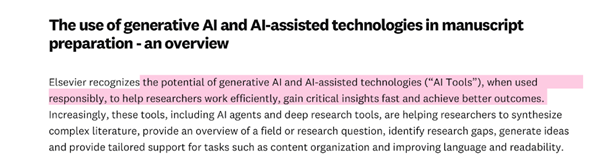
Major journals like Nature and Elsevier have published guidelines confirming this: you can use AI tools for editing and analysis, just don’t list them as co-authors or submit their text unedited.

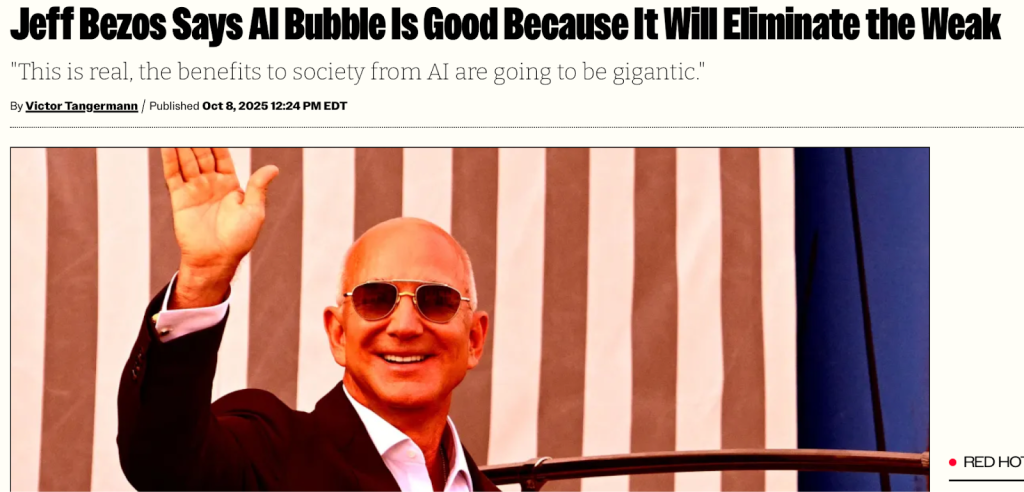
Even the most prominent voices in technology have confirmed this limit. Jeff Bezos, founder of Amazon, stated publicly: “AI will amplify your potential but it still needs your judgment.” That is not a motivational platitude. It is a description of the actual technical reality.
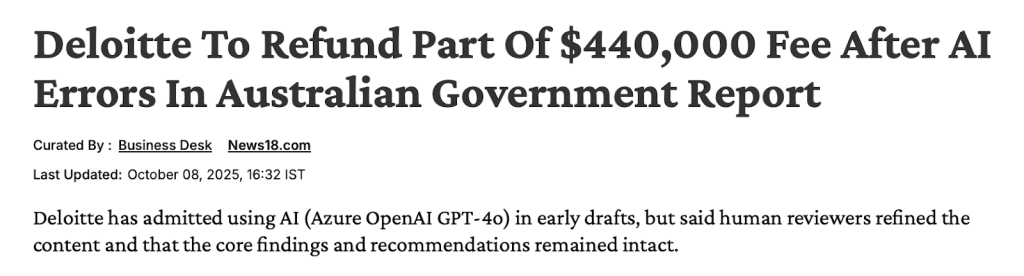
A case involving Deloitte in Australia illustrated the cost of blind automation: the firm was required to refund a portion of a $440,000 fee to the government after a generative-AI-assisted financial report contained multiple factual errors. Intelligent use of AI means verification is non-negotiable.
4. Will AI Detectors Flag Your Work?
This is perhaps the question asked most anxiously by new academic writers and it deserves a direct answer.
What Clients and Journals Actually Look For
Clients and academic institutions are not hunting for evidence that you used AI. They are looking for evidence of quality, originality, and intellectual engagement. Specifically, they care about:

- Whether your citations are accurate and verifiable.
- Whether the argument or synthesis is original.
- Whether you can speak to your own writing with academic depth.
If you use AI for drafting and restructuring but you verify every source, rewrite in your own voice, and can defend your analysis-AI was simply one of the tools in your process, no different from a word processor or a reference manager.
The Lazy Writing Problem-Not the AI Problem
AI detectors such as GPTZero and Turnitin do not flag good academic writing. They flag text that reads as machine generated: repetitive sentence structures, generic phrasing, lack of specificity, and absence of a distinct authorial voice.
Detectors do not flag good writing. They flag lazy writing. If your submission sounds like it was written by someone who cared deeply about the subject and verified everything no detector will misidentify it.
5. Best AI Tools for Academic Writing (Free and Paid)
You do not need expensive software to build a capable academic writing toolkit. Here is a comparison of the most useful tools currently available:
| Purpose | Free / Low-Cost | Paid (Optional) |
| Grammar & Clarity | Trinka.ai (free), Grammarly | Trinka Premium, LanguageTool Pro |
| Literature Review | ChatGPT (free), Claude | ChatGPT Plus ($20/mo), Claude Pro |
| Reference Management | Zotero, Mendeley | None needed |
| Data Visualisation | Google Sheets, Tableau Public | Tableau Pro |
| Plagiarism & AI Check | QuillBot, GPTZero (free) | Turnitin (institutional) |
The right tools cost less than a monthly streaming subscription and can save you several hours of work every week. Start free, upgrade only when you have identified a specific gap in your workflow.
The Bottom Line: AI won’t take your place. You use it as a multiplier.
Ignoring AI will cause writers to lag behind. The next ten years of international work will be led by writers who can work with it. So learn how to use these tools to save time, enhance quality, and increase income instead of worrying about being replaced.
To use AI, all you need is curiosity and a willingness to try new things; you don’t need to be an expert in technology. One prompt, one project, one tiny accomplishment at a time is how every outstanding writer, researcher, and educator you look up to is learning these tools.




 Allow notifications