Most people searching for freelance academic writing jobs make the same mistake.
They open Fiverr.
They apply on Upwork.
They send 100 cold emails.
And then say:
“I tried everything. Nothing works.”
A few months ago, one of our learners was struggling with this exact thing. They were tired of constantly applying for academic content writing jobs and not hearing back at all.
The missing puzzle piece? Not knowing how to strategically network with professors around the world.
So, how does one do that? Let’s dive right in!
Step 1: Stop Asking for Work. Start Adding Value.
Professors don’t wake up thinking:
“I hope someone emails me asking for freelance academic writing jobs today.”
Rather, their priorities comprise:
- Publishing their next paper
- Securing research grants
- Managing deadlines
- Handling student supervision
- Responding to journals
When someone understands that, networking becomes easier. So, instead of saying:
“Do you have writing work?”
The smarter way to pitch your skills is:
“Here’s how I can make your research life easier.”
Step 2: Use Google Scholar Strategically
Most people don’t even realise this, but every research paper published publicly contains:
- The author’s name
- Their university
- Often their email
Using Google Scholar:
- Search your topic (e.g., “carbon regulations”).
- Filter for papers from the last 3–5 years.
- Identify active researchers.
- Study their recent work.
- Reach out thoughtfully.
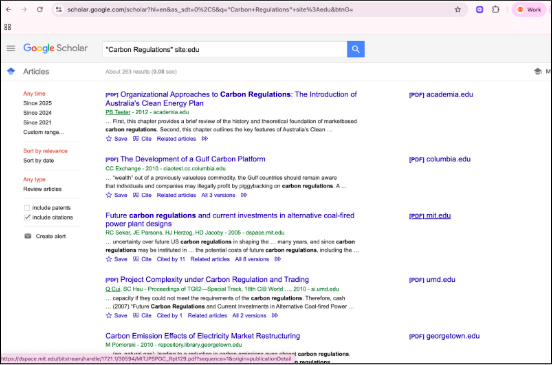
This is how someone moves from chasing remote academic writing jobs to working directly with US academics and global researchers.

Another strategy to find professors from Universities worldwide: Visit the Faculty page for any university website, which lists down contact info for actively tenured professors:
Step 3: What Professors Actually Need Help With
Many writers think professors only need help with “writing papers.” That’s just one part. A skilled academic writer can support in four major areas:
1️⃣ Research & Writing Support
- Literature reviews
- Data analysis
- Drafting manuscripts
- Citation formatting
- Journal submission prep
- Conference papers
2️⃣ Grant & Funding Support
- Identifying funding calls
- Drafting proposals
- Formatting applications
- Preparing compliance documents
3️⃣ Research Operations & Coordination
- Managing references (Zotero, Mendeley)
- Coordinating co-authors
- Tracking journal timelines
- Preparing ethics/IRB documents
4️⃣ Public-Facing Academic Content
- Turning papers into LinkedIn posts
- Drafting blogs or op-eds
- Preparing book outlines
- Creating research-based course materials
- Helping launch podcasts or newsletters
These roles aren’t limited to individual professors. Many institutions and organisations are actively hiring. Here’s a breakdown of the top clients for global academic writing today.
Most academics don’t lack intelligence. They lack time.
And that is where remote academic writing jobs at a serious level begin.
Step 4: What a Smart Outreach Message Looks Like
Instead of a generic pitch:
- Refer to their recent publication.
- Mention a specific insight from their work.
- Suggest 2–3 ways their research could expand.
- Offer concrete support.
Even better? Use AI tools to read their previous papers and propose:
- 3 potential follow-up study ideas
- A possible grant direction
- Ways to translate their research into public content
Add value first. Ask later. That is how relationships begin.
What Happens After They Reply?
If someone delivers excellent work for one professor at a reputed university, something interesting happens:
Professors talk. They recommend reliable collaborators to colleagues. One strong relationship can unlock an entire network of international academic clients.
This is very different from competing for crowded academic content writing jobs focused on student essays.
In fact, the demand for research support and global collaboration is expanding rapidly. As outlined in our guide on career opportunities for academic writers in 2026, this shift is only accelerating.
The Big Shift: From Essay Writing to Working with US Academics
Many writers in India are stuck writing college essays, statements of purpose and undergrad assignments.
That market is crowded, price-sensitive, vulnerable to AI, and, not forgetting to mention, ethically questionable.
But working with US academics, European researchers, and global scholars builds:
- Real research exposure
- Possible co-author credits
- Long-term collaborations
- Professional recognition
Some collaborations are ghostwritten and well paid.
Others may result in acknowledgements or research assistant credits.
Either way, it strengthens one’s academic profile.
And the earning potential is significantly higher than typical freelance academic writing jobs aimed at students.
If you’re curious about numbers, here’s a detailed breakdown of how much academic writers earn when working remotely with international clients.
Beyond Research: Academics Want Visibility
Professors today don’t just want journal publications. They want:
- Podcasts
- Books
- Courses
- Public influence
- Policy impact
Have you heard of Andrew Huberman?
Andrew D. Huberman is an Associate Professor of Neurobiology and of Psychiatry and Behavioural Sciences at Stanford. He built a famous podcast and is now a major health influencer and multi-millionaire as well. His sleep protocol, known as the Huberman protocol, is followed across the world.
What he successfully did was to bring esoteric scientific knowledge into the public domain in a way that it could be easily consumed.
Why do other academicians not do this? Because they don’t have the time and the bandwidth.
Many renowned bestsellers in non-fiction are written by US professors, and every professor wants to write popular books:
- Thinking, Fast and Slow was authored by Daniel Kahneman, a professor of psychology at Princeton University.
- Sapiens: A Brief History of Humankind was authored by Yuval Noah Harari, a history professor at the Hebrew University of Jerusalem.
- Steven Levitt, co-author of Freakonomics, economics professor at the University of Chicago.
- Black Swan, Nassim Nicholas Taleb, a former NYU professor.
Professors who publish books, of course, can earn a lot and even get recognition, speaking engagements that pay $1,000 to $100,000+ per talk, corporate clients for training and strategic consulting, and build courses, masterclasses, and webinars from their book content.
Did you know that LinkedIn founder Reid Hoffman wanted to be a teacher?
What motivated him to start a social network for professional networking? He wanted professionals to have a wider reach and public portfolio and remarked that “simply writing a PhD or academic book was unlikely to play much of a role in helping shape people’s lives.”
This is how real networking is done.
With strategic networking, writers can:
- Convert papers into book chapters
- Draft non-fiction manuscripts
- Turn research into viral threads
- Launch blogs and newsletters
- Prepare speaking decks
Is This Only for Science Graduates?
Not at all. This applies to:
- Law
- Economics
- Management
- Literature
- Psychology
- Public policy
- Humanities
Any domain where research exists, support is needed.
The Real Question
What if someone stopped chasing crowded freelance platforms?
What if they reached out directly to leading researchers in their field?
What if instead of applying for academic content writing jobs, they positioned themselves as:
A research collaborator.
A grant partner.
A strategic writing support professional.
The opportunity is bigger than it appears.
Networking with global professors is much more than sending mass emails.
It’s a practical, scalable career path.



 Allow notifications