


India’s IPO market is not just booming. It is reshaping Corporate India in a way that could create a major opportunity for professionals who want to become independent directors in India.
Table of Contents
A rising equity market, strong domestic liquidity, and a fast-growing listing pipeline are driving this shift. At the same time, governance requirements are creating real demand for credible board members. In this article, you will see why India’s IPO boom matters, how SME IPOs are creating a shortage of independent directors, and why REITs and fintech could open even more board opportunities in 2026.
India’s IPO Market Is Reshaping Corporate India
We are witnessing an IPO boom in India, which is being fuelled even more by a rapidly rising equity market and strong domestic liquidity.
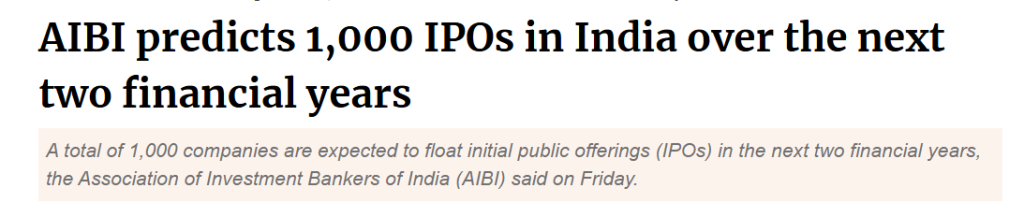
As per a prediction by the Association of Investment Bankers of India, 1000 IPOs will list on the stock market over the next two years.
India’s IPO market is poised for its strongest October 2025 ever, with companies expected to raise approximately $5 billion through public offerings during the month.

This record-breaking activity reflects:
- sustained investor confidence
- robust domestic capital markets
- a strong pipeline of companies going public across sectors
The milestone underscores India’s continued dominance as one of the world’s most active IPO markets in 2025.
India dominated global IPO volume
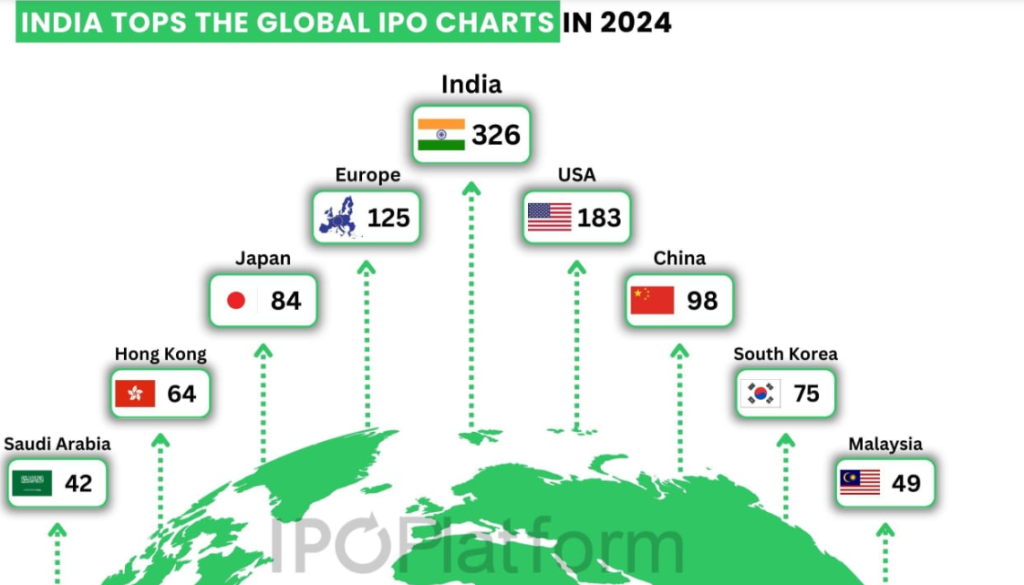
India dominated global IPO volume in 2024 with 326 listings, nearly double the US (183) and more than triple China (98), confirming its position as the world’s most active IPO market by deal count.
India also ranks fourth globally in 2025 IPO fundraising with $14.2 billion (₹85,241 crore from 74 companies), trailing only:
- the US ($52.9B)
- Hong Kong ($23.4B)
- China ($16.2B)

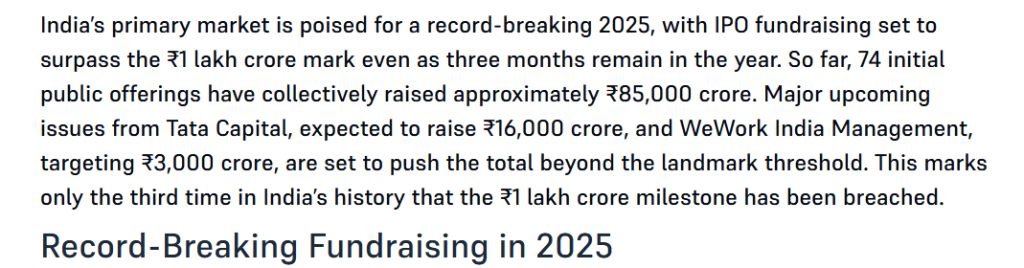
Excluding three major upcoming IPOs — WeWork India, Tata Capital, and LG Electronics India — expected to raise an additional ₹30,000 crore, the total could exceed ₹1.15 lakh crore.
So India is clearly witnessing an IPO boom, and government policies are encouraging even more companies to accelerate their listing plans.
Why this matters for independent directors
This is where the story changes.
An IPO does not only raise money. It also forces companies to upgrade governance, board composition, compliance systems, and public credibility. That is why the IPO boom is also creating a powerful opportunity for independent directors in India.
SME IPOs Are Creating a Massive Demand for Independent Directors
India’s small and medium enterprise IPO market is absolutely on fire.
By September 2025, 207 SME IPOs raised ₹9,129 crore, already a record year with three months still to go.

That’s more SME IPOs in one month than the entire decade of 2010–2020.

A rising Sensex has boosted valuations and investor appetite, which is why SMEs are rushing to capital markets faster than ever before.
Why SMEs are rushing to list
The explosion is being driven by structural change.
Post-pandemic, GST and UPI forced traditional businesses to digitize and maintain clean financial records, making them eligible for public listing.
Going public is now very simple and easy for profitable SMEs.
SME IPO eligibility is opening the market
The eligibility criteria require:
- net worth to be at least Rs. 3 crores for SME IPO for NSE listing
- BSE SME listing requires net worth to be Rs. 1 crore for the preceding two full financial years
- the company must have operating profits or EBITDA of at least Rs. 1 crore for two out of the last three financial years

This means thousands of small neighbourhood traditional businesses can now raise money from the public to scale up and grow, transforming from local shops to listed companies.
Every SME IPO needs 2–3 independent directors
Each SME IPO needs:
- 50% independent directors (mandatory)
- 1 woman director (mandatory)
- audit committee with 2/3rd independent directors
- remuneration committee with majority independent
It means, as more and more SMEs undertake IPOs, more will be the demand for independent directors.
Each SME typically needs 2–3 independent directors by SEBI mandate. That’s 600 board positions already filled in just 9 months of 2025.
How IPO-Bound SMEs Can Open Doors to Board Roles
Let me share an interesting story of how you can easily become an independent director.
Here is the story of Umang, who convinced her father, a plywood manufacturer in Haryana struggling with a 10 crore loan, to explore an SME IPO.


She showed him how raising 50 crores through equity could:
- pay off debts
- fund R&D
- unlock significant wealth
- build brand value
- strengthen operations
Her pitch worked, and he agreed to meet a merchant banker.
The strategy behind becoming a trusted advisor
By identifying IPO-worthy SMEs in your network and connecting them with merchant bankers, you become a trusted advisor in their growth journey.
When these companies need to appoint independent directors — a SEBI requirement for IPOs — they, or the merchant bankers, will remember you first. That makes this one of the most practical pathways to secure independent director opportunities.
SEBI’s 2025 Changes Have Strengthened the Role of Independent Directors
SEBI just made the independent directorship role even more lucrative with the new 2025 regulations:
- independent directors can only be removed by 75% shareholder vote
- full disclosure is required if any ID resigns
- IDs have veto power over all related-party transactions
- special resolution is needed for appointment
Tier-2 and Tier-3 Cities: The Untapped Goldmine
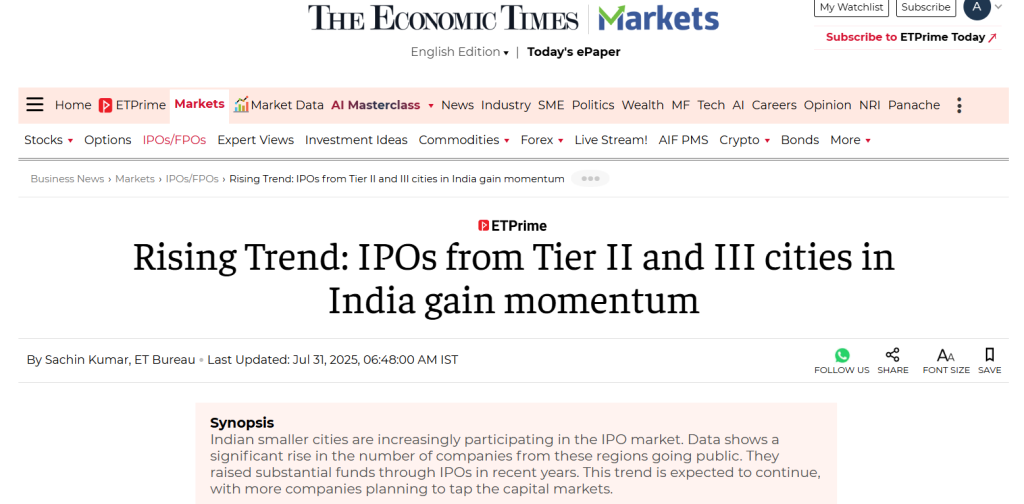
They all need independent directors
More job security
These changes improve the position of independent directors by giving them stronger protection and more credibility in the role.
More authority and stronger governance
These changes also increase the practical authority of independent directors, especially in matters related to governance and board independence.
And we are only getting started.
Compensation for Independent Directors Is Rising
This opportunity is not only about access. It is also about value.
Median compensation for independent directors at Nifty 50 companies: ₹87.4 lakhs per year.
Even SMEs pay ₹20–40 lakhs annually for 8–10 days of work per year. And you can serve on multiple boards simultaneously.
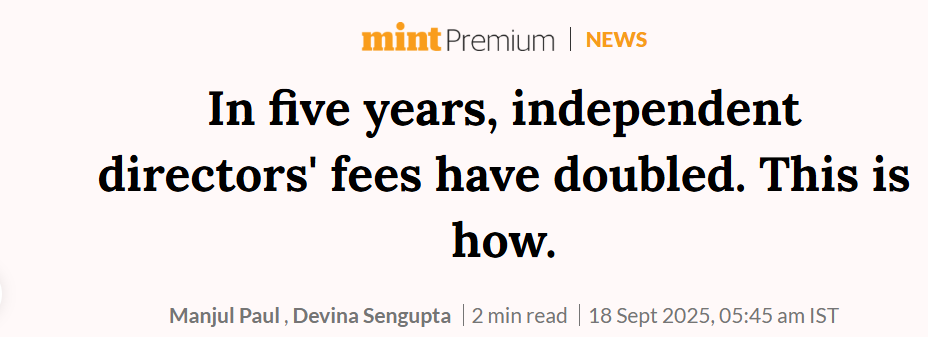
According to Deloitte India’s study, independent directors’ compensation at Nifty 50 companies nearly doubled from ₹1.52 crore in FY20 to ₹3 crore by FY25.
“But the global economy is uncertain…”
That’s exactly why India’s IPO market is thriving.
Foreign investors pulled back. So what happened? Domestic investors stepped up.
With domestic investors stepping up, India’s IPO market is insulated from global volatility. And hence, India’s IPO pipeline continues to grow thicker.
The Window Is Tightening — Companies Want Credible Directors Now
But this SME window may get smaller, with SEBI already tightening SME IPO norms:
- minimum application size doubled to ₹2 lakh
- stricter eligibility criteria
- enhanced disclosure requirements
With that, companies are prioritising credible independent directors now.
Beyond IPOs: Two New Sectors Are Expanding Independent Director Opportunities
The good news is that there are other fresh opportunities as well for becoming an independent director.
SEBI and RBI have separately unleashed the floodgates to independent director opportunities.
And if you are a professional with experience in sectors like real estate, finance, banking, and related areas, this is a massive advantage for you.
Let us understand the two biggest opportunities.
Opportunity #1: REITs Need You
SEBI’s 2024 decision to allow fractional property investments through REITs means every new REIT needs 50% of its board to be independent directors.
What SM REITs are
SM REIT stands for Small and Medium Real Estate Investment Trusts.
They are a subclass within the REIT framework that provides access to individual investors to rent yielding real estate like:
- office buildings
- retail malls
- hotels
- hospitals
These are valued between Rs. 50 and 500 crores.
Similar to REITs, SM REIT units will also be traded on the stock exchange and are regulated by the Securities and Exchange Board of India.
The content also states that micro, small and medium REITs involving property of above INR 25 crore will need at least 50% independent directors.
Why the market is still early
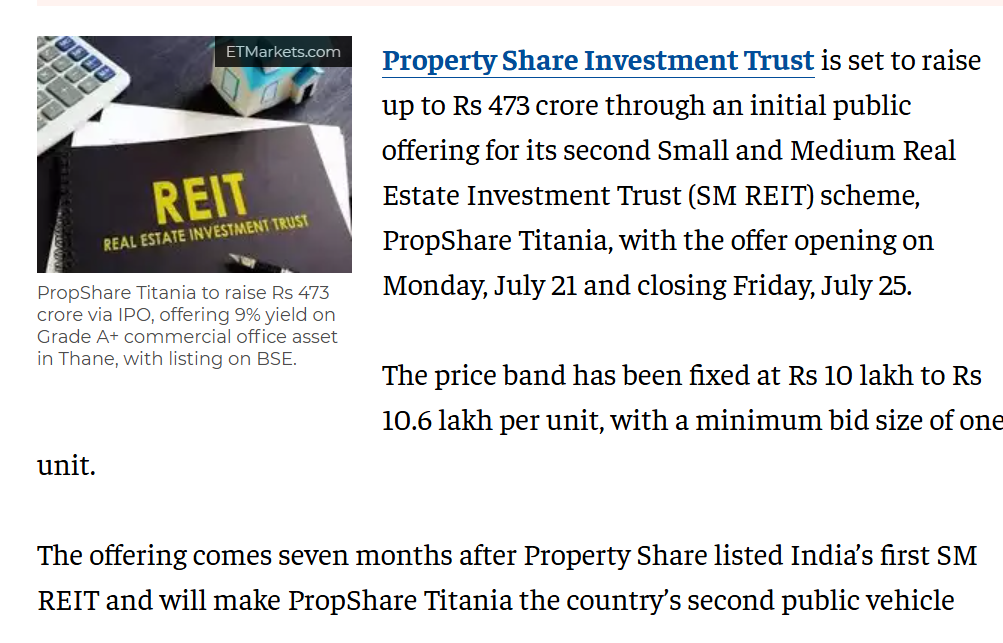
The SM REIT market launched just 18 months ago with only 2 listings so far, but 600,000+ eligible properties mean hundreds more are coming.
That gives you a first-mover advantage with virtually zero competition for independent director positions right now.
Why India’s real estate culture supports growth
Imagine owning a fraction of prime property worth INR 30 or 50 cr in Bangalore or New Delhi or South Mumbai, and then being able to trade it on the BSE or NSE.
A latest survey by Anarock shows that:
- 63% of respondents now consider real estate the best asset class for investment
- this is up 4% from last year
- it is ahead of equities (22%) and gold (7%)

This strong cultural and economic tendency toward property investments is not surprising. Real estate has long been considered a symbol of stability and riches in India.
The problem that fractional REITs solve
Until now, the problem was that real estate is very expensive and you need to save over many years or take a bank loan and pay EMIs. You also cannot easily sell your investment.
Fractional REITs change all that:
- you can invest with as little as 10 lakhs
- you can sell your investment whenever you want
Now, this allows the average middle class to invest in real estate without taking a loan or locking money.
The $1 trillion opportunity creating director positions
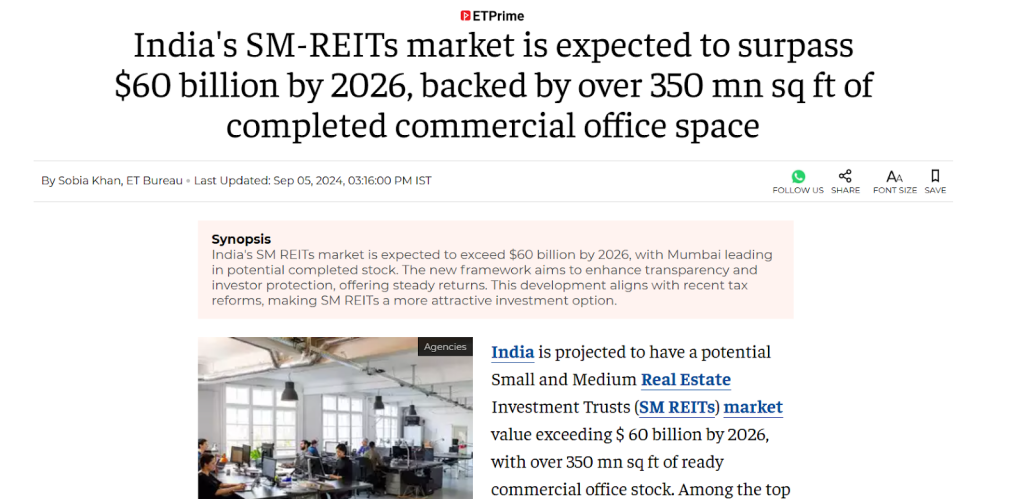
The Indian real estate sector is estimated to hit 1 trillion dollars annually, up from 200 billion in 2021, contributing to 15% of GDP by 2030, with 40% of the population living in urban areas.
This is going to lead to incredible real estate growth.
A significant proportion of the funds can be fuelled through such REITs.
We can expect at least as many REITs to emerge in the next decade as there are listed companies, if not more.
Every REIT means more board seats
SEBI requires all such REITs to ensure that 50% members in their boards are independent.
Imagine having 10k more MSM REITs, or even having 300 MSM REITs launch every year in addition to the SME IPOs.
Every REIT will need to appoint 50% independent directors.
Opportunity #2: Fintech’s NBFC Rush = Mandatory 1/3 Independent Directors
All non-banking finance companies are required to have at least 2 independent directors appointed to their boards, according to the 2013 amendment to the Companies Act.
But here’s the twist. In 2024, the RBI issued guidelines requiring fintech companies registered as NBFCs to ensure that one-third of members on their boards are independent.
What is driving the fintech surge
Fintech is a massively growing industry in India.
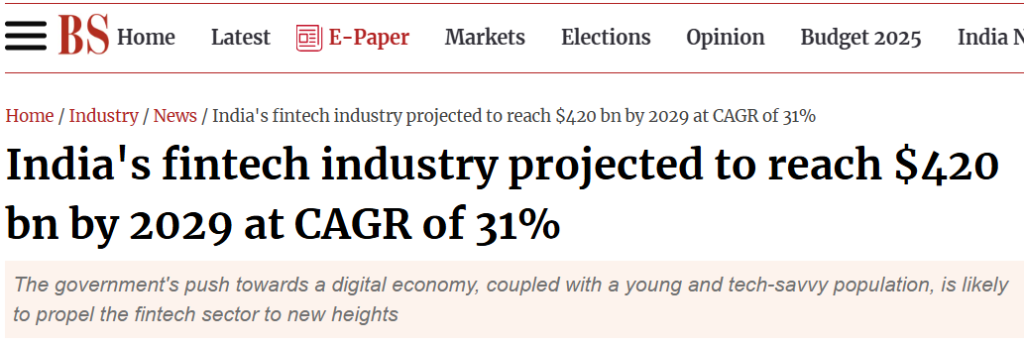
India currently has around 10,000 fintech companies, and the sector is just USD 50–60 billion in size.
India currently has 17 fintech unicorns, and is expected to have 150 by 2030, with a combined valuation of approximately $500 billion.
The content identifies three drivers:
- demand for credit is growing massively owing to the growth of the formal economy
- not all of it can be serviced by banks, so NBFCs are able to cater to a huge segment of this demand
- fintechs were leveraging the benefits of technology to enable easier access to capital, and many of them already had relationships with NBFCs
The AI revolution has just put this cycle on steroids.
Why fintechs want NBFC licenses
Over the last 3 years, hundreds of fintechs from across payments and neo-banking segments have either:
- applied for fresh NBFC licenses
- got into partnerships
- tried to acquire existing NBFCs themselves
Similarly, every fintech company wanted an NBFC license itself to have greater access to capital, and every NBFC wanted collaborations with fintech companies to benefit from the advancements of tech.
The paid-up capital requirement for NBFCs is just 10 cr, which is not very high, especially as fintechs are able to secure huge amounts of investment. Of course, you need a license from RBI.
How regulations are increasing demand for independent directors
Given the 8x–10x growth in the overall fintech market size and unicorns, we can expect a massive increase in fintechs obtaining NBFC registrations.
The number of NBFCs accordingly can be expected to at least double in the next 5–10 years, if not more, creating more opportunities for independent directors.
All such fintechs that are NBFCs will need at least 1/3rd independent directors on their boards.
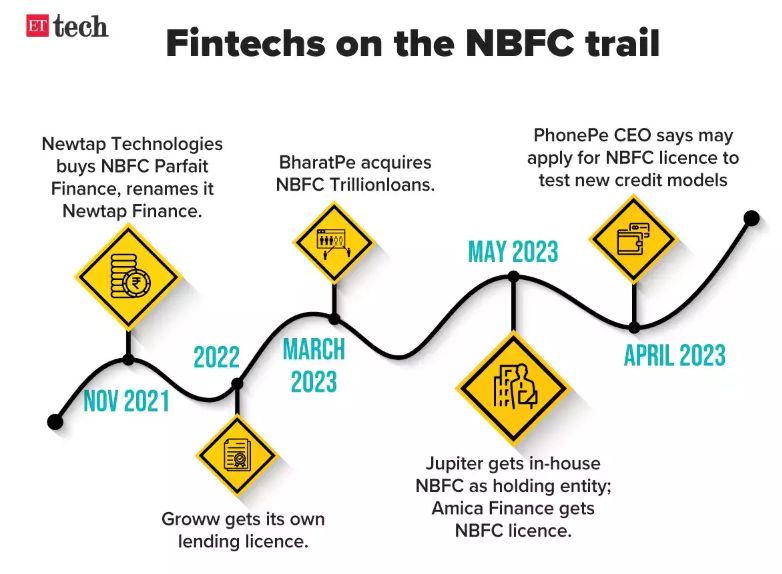
Many prominent fintech players secured NBFC licenses in the last 2 financial years — Ftcash, Cred, Fi, and more.
The wave has just begun.
Why Experience and Credibility Matter Even More Now
REITs and fintechs find it valuable to have professionals from diverse backgrounds on their boards.
SEBI’s 2023 updates for REITs aligned REIT governance with listed-company norms by requiring any new independent director to meet tests of:
- experience
- expertise
- lack of conflicts
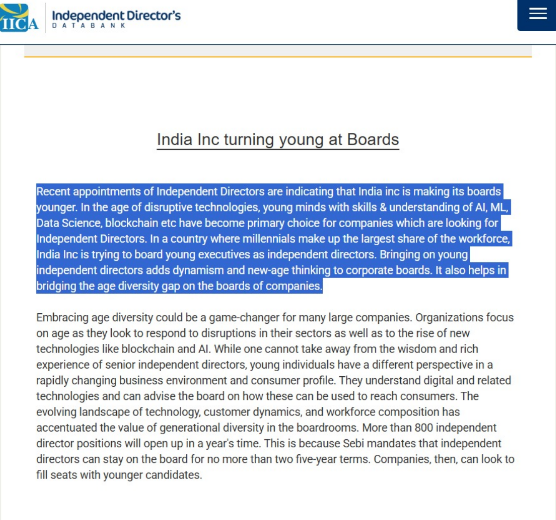
The RBI mandates that commercial banks have an independent non-executive chairperson, and banking laws require a majority of bank board members to have specialized knowledge in finance, accounting or economics.
Many fintech firms, especially those classified as NBFCs or payment banks, fall under such norms, effectively compelling them to bring in fit and proper directors with long industry experience.
Then companies heading for IPO deliberately seek non-conventional and independent voices on the board to inspire confidence among prospective investors.
Conclusion
India’s IPO boom is creating far more than listing activity. It is creating a rare opening for professionals who want to become independent directors in India.
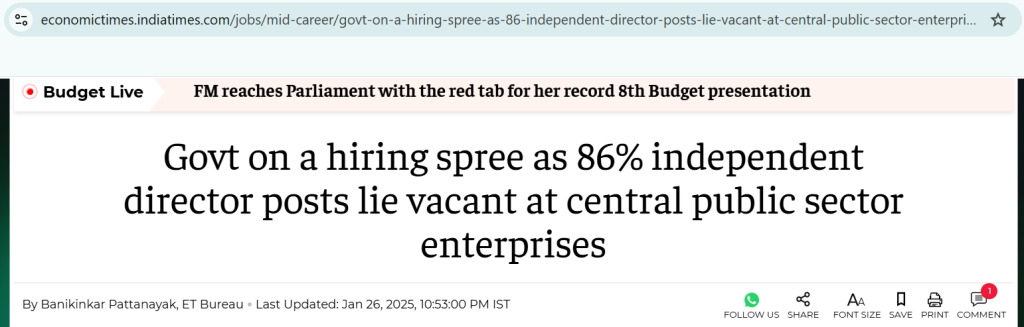
SME IPOs, REITs, and fintech NBFCs are all expanding the demand for qualified board members. At the same time, tighter regulations are making credibility, experience, and governance value more important than ever. For professionals in finance, banking, real estate, law, and leadership, this may be one of the strongest entry points into Corporate India board roles. If you want to position yourself early, now is the time to act.





 Allow notifications

I hadn’t realized how emerging sectors like fintech NBFCs and REITs are creating real board opportunities for independent directors. The emphasis on credibility and experience makes it clear that these roles are becoming strategically important, not just ceremonial. It’s exciting to see governance evolving alongside India’s IPO boom.