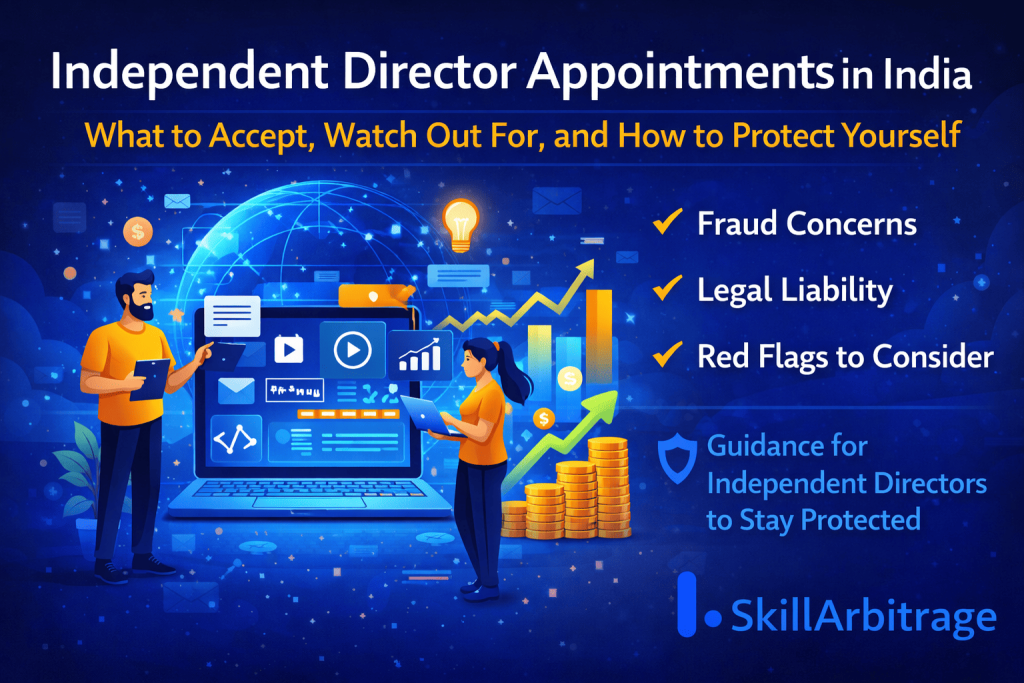

Thinking about accepting an independent director position but worried about liability? Here’s a clear, practical guide to what the law says, the risks that matter, and how to approach it with confidence.
Table of Contents
Why Most Professionals Hesitate to Accept Independent Director Appointments
Every year, qualified professionals turn down independent director (ID) appointments, not because they aren’t ready, but because they’re afraid. “What if there’s fraud I don’t know about?” “What if I’m held responsible for the promoters’ decisions?”
These are legitimate questions. But here’s the reality: the fear is almost always larger than the actual risk.
If you’re a mid to senior professional evaluating whether to accept a board appointment, this guide will walk you through what the law actually says, what protections SEBI has built in, and how to approach appointments, including ones where something doesn’t feel right.
What Is the Role of an Independent Director? (And What It Is Not)
Before assessing risk, it helps to be clear about what you’re actually responsible for.
An independent director is not responsible for running the company, managing daily operations, or catching every internal irregularity. That responsibility belongs to the promoters and officers of the company.
Your role as an ID is to:
- Bring an independent perspective to board decisions
- Ask the right governance and risk questions
- Represent shareholder and stakeholder interests
- Flag concerns when something seems off
- Vote, including recording dissent, on board resolutions
This distinction matters because many professionals overestimate their liability exposure by conflating the ID role with an executive one.
Are Independent Directors Legally Liable for Company Fraud?
This is the question that stops most professionals in their tracks.
The short answer: not unless you actively participated in or deliberately ignored the fraud.
SEBI has created specific regulatory safeguards to protect independent directors who act in good faith. The Ministry of Corporate Affairs (MCA) reinforced these protections significantly through a 2020 circular that was issued precisely because of mass ID resignations after the PMC Bank case.


What Happened at PMC Bank?
When fraud was uncovered at PMC Bank, an independent director was arrested. Within weeks, over 1,500 independent directors resigned from boards across India. The government recognised this was unsustainable and issued additional protections to ensure that IDs who acted responsibly could not be held liable simply by association.
What About the Gensol (Blusmart) Case?
Even in the high-profile Gensol Engineering / Blusmart case, no liability was imposed on the independent directors. This is consistent with how Indian courts and regulators have historically treated IDs who did not actively participate in wrongdoing.
Key takeaway: Historically, no independent director acting in good faith has been sent to jail or penalised for a promoter’s fraud.

What Protections Does SEBI Offer Independent Directors?
SEBI’s framework for independent directors includes several built-in safeguards:
- Right to record dissent in board meetings when you disagree with a resolution
- Whistleblower protection if you report concerns to SEBI or other regulatory authorities
- Resignation as a protective option, stepping down does not harm your track record and insulates you from future liability
- Regulatory acknowledgment that IDs are not responsible for the day-to-day management of the company
If you raise a concern with the board or the promoters, most promoters will address it promptly. Why? Because an independent director publicly resigning or issuing an adverse comment can tank a listed company’s stock price, it sends a negative governance signal to the market that no promoter wants.
Red Flags to Watch for Before Accepting an Independent Director Appointment
While the risks of accepting appointments are lower than most assume, it is still worth doing basic diligence. Here are the key red flags:
Financial red flags:
- Consistent unexplained losses with no strategic rationale
- Related-party transactions that appear disproportionate
- Auditor qualifications or delayed filings
- High promoter pledging of shares
Governance red flags:
- Frequent board or auditor changes
- Non-compliance history with SEBI or MCA
- Promoters unwilling to share basic information before appointment
- Past regulatory penalties or litigation involving key management
Operational red flags:
- Significant working capital stress with no clear resolution
- Revenue concentrated in a single customer with opacity around the relationship
Note: You don’t need to be a financial expert to spot these. Tools like AI-assisted financial analysis can help you review a company’s financial health in minutes, even without an accounting background.
Can You Use AI to Evaluate a Company Before Accepting a Board Seat?
Yes, and this is a genuine shift in what’s accessible to independent directors.
You no longer need deep financial literacy to assess a company’s health. AI tools can help you:
- Summarise annual reports and flag unusual items
- Compare financial ratios against industry benchmarks
- Identify audit qualifications and their implications
- Highlight governance disclosures in filings
This makes it realistic for professionals from non-finance backgrounds, engineering, law, marketing, operations, to conduct meaningful pre-appointment diligence.
What to Do If You Disagree With Promoters or Suspect Misconduct
This is where many independent directors feel stuck. Here’s a clear escalation path:
- Raise it directly with the promoters or management, most concerns get resolved at this stage. Promoters take ID feedback seriously.
- Record your dissent formally in the board minutes, this creates a documented paper trail that protects you legally.
- Escalate to the Audit Committee if the concern relates to financials, related-party transactions, or internal controls.
- File a whistleblower report with SEBI if you believe there is active fraud or regulatory non-compliance.
- Resign, if you’ve exhausted the above options and remain uncomfortable. This is always available to you and does not damage your professional standing.
Frequently Asked Questions About Independent Director Appointments
Can I serve as an independent director in an industry where I have no prior experience?
Yes. What matters is your ability to ask the right governance questions and bring an independent perspective, not domain-specific operational expertise. Many professionals have secured appointments across sectors entirely different from their career background.
Can I be an independent director while working full-time?
Yes. Board and committee meetings typically occur four to six times a year, are often held on weekends or via video conference, and can be attended remotely. You should review your employment contract for any conflict-of-interest restrictions, but working full-time is not a barrier.
Does accepting a board appointment where problems later emerge affect my reputation?
Not if you acted in good faith, raised concerns, and documented your dissent. The legal and regulatory framework specifically accounts for this. Your track record as a director is built on how you conduct yourself on the board, not on whether a company you served later faced regulatory issues.
Is there a minimum financial qualification to become an independent director?
No specific financial qualification is required by law. The Companies Act specifies criteria around independence, not domain expertise. Many independent directors come from legal, HR, technical, and operations backgrounds.
The Right Balance: Engaged Governance Without Overreach
There is an important counterpoint to all of this.
Accepting appointments with confidence doesn’t mean approaching every board meeting with suspicion. Independent directors who develop a reputation for being obstructive, adversarial, or difficult to work with will find that future appointments dry up, promoters talk to each other.
The best independent directors:
- Contribute meaningfully from their area of expertise
- Ask sharp governance questions without presuming bad intent
- Add value through insight and experience
- Flag risks, and let management decide how to handle them
Your job is not to run the company. It is to help ensure it is run well.
Should You Accept the Next Independent Director Appointment That Comes Your Way?
In almost every case: yes.
Each appointment builds your track record, expands your network, and opens the door to future board opportunities. The protections that exist for independent directors acting in good faith are substantial. The downside risk, when you conduct basic diligence and act responsibly, is far lower than most professionals believe.
The bigger risk is sitting on the sidelines while peers build board portfolios.




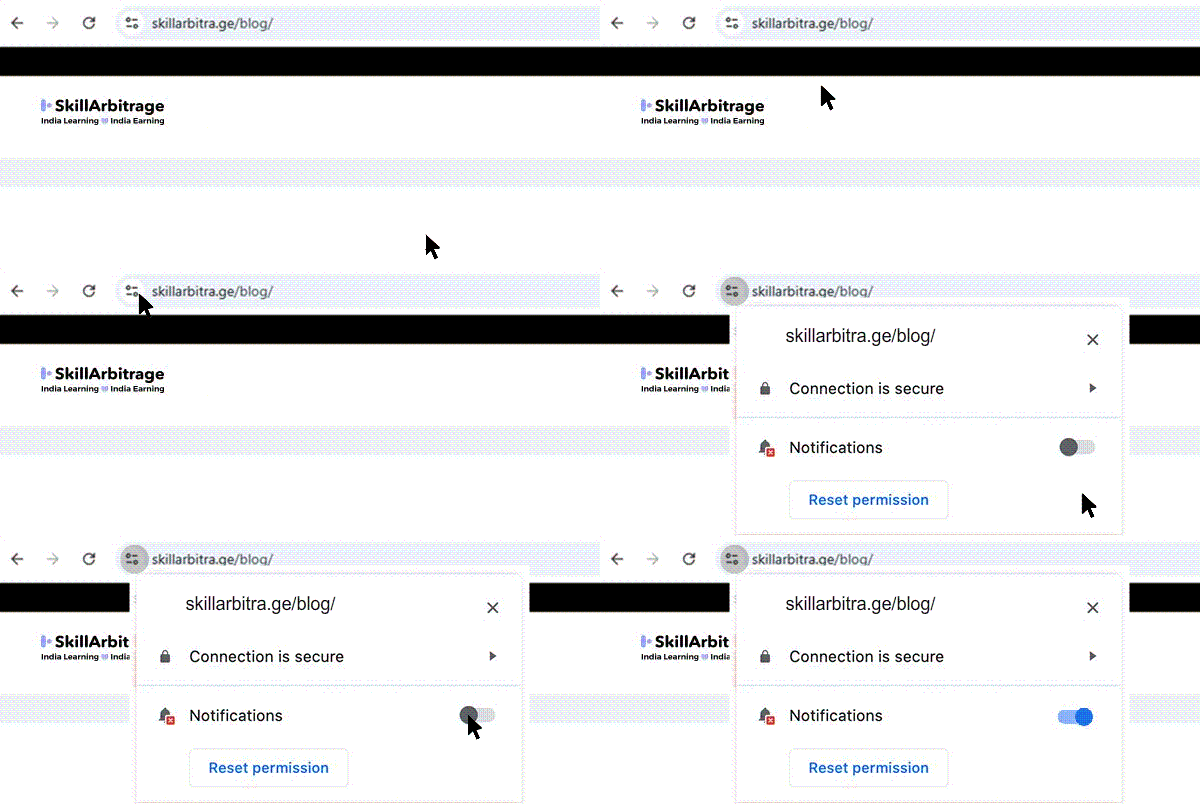
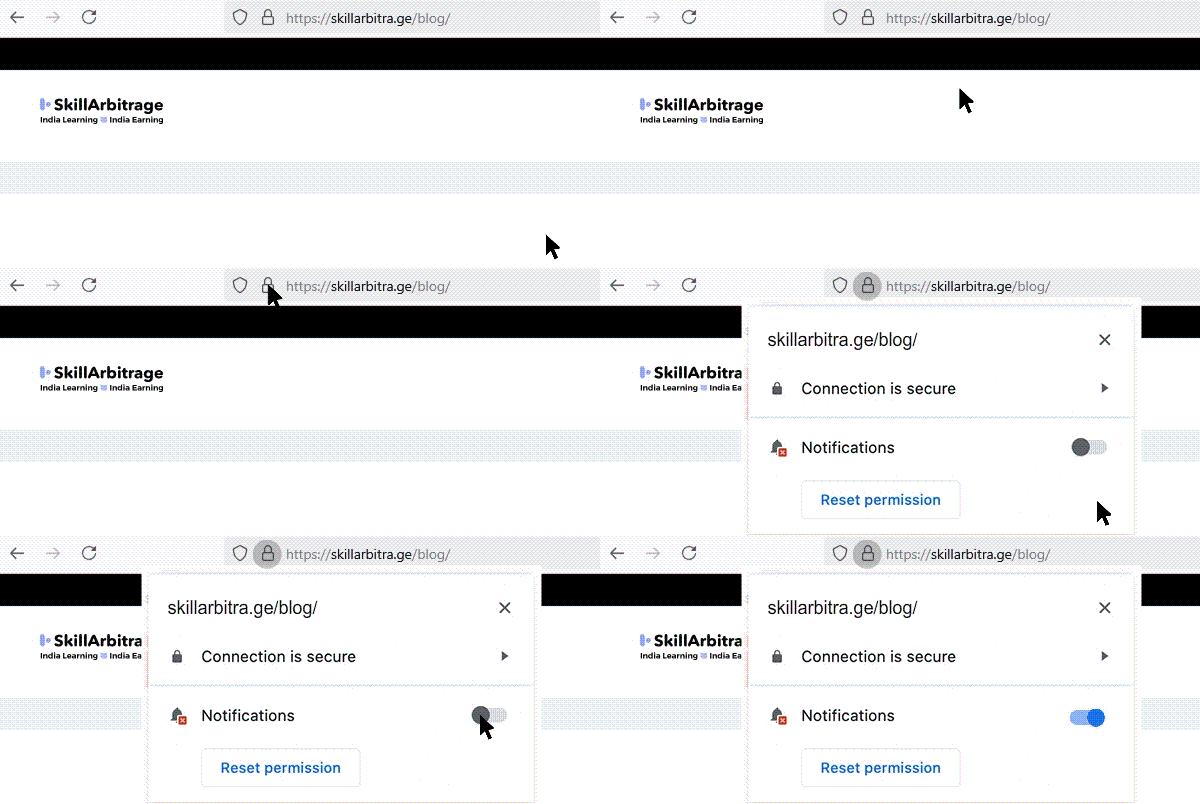
 Allow notifications