


Table of Contents
Remote jobs for women are no longer limited to local employers. Today, global startups and SMEs are actively hiring remote professionals from India and paying significantly more than local salaries.
Did you know that while you’re competing with hundreds of applicants for a ₹50,000/month job in your city, millions of businesses abroad would happily pay you ₹1.5 lakh or more for similar work?
You use the same skills. You put in the same effort.
The difference? They’re hiring remotely.
Why Global Companies Are Expanding Remote Jobs for Women
Global businesses are actively looking for remote talent because:
- Cost advantage: They get quality talent at a lower cost, while you earn 3–5x more than local salaries.
- Time zone leverage: Your workday can extend their productivity hours.
- Visa challenges: Hiring remotely helps companies avoid immigration complexities altogether.
Who could hire you?
Your potential global clients include:
- High-growth startups and founders
- Small businesses and SMEs
- Service agencies in developed economies
- Independent professionals (lawyers, doctors, accountants, consultants)
- Investors and business owners
Why This Is the Best Time for Women Seeking Remote Jobs
The next decade of work will be shaped by three major forces:
- The rapid growth of remote work
- The rise of startups and SMEs in developed economies
- Every day use of AI by small businesses and teams
These trends are no longer limited to tech roles.
Professionals from any background can participate—even if you’re restarting your career or beginning from scratch.
The Scale of the Global Market for Remote Jobs for Women
Let’s understand the size of your potential market:
- United States: 35 million small businesses
- China: 52+ million
- UK: 5.5 million
- Germany: 3.5 million
- Japan: 3.3 million
- Canada: 1.2 million SMEs
In the U.S. alone, over 5 million new business applications are filed every year.
The trend is similar across other developed economies. Most of these businesses are now comfortable with remote teams.
Compared to this, about 1.12 lakh companies were incorporated in India last year.
What This Means for Women Exploring Remote Jobs
- The global market is significantly larger than the local job market
- International employers often pay better
- Most SMEs prefer remote hiring
- Indian professionals have a strong cost advantage
- Many developed economies face talent shortages
While large corporations build offshore centres, 95% of global businesses are SMEs, and they depend heavily on remote talent.
Understanding skill arbitrage
If you could work remotely for global companies and earn in dollars, your income potential would change dramatically.
This is the idea behind skill arbitrage.
Just like traders profit from price differences across markets, professionals can earn more by offering their skills where they are valued most.
For example:
A virtual assistant in a small Indian city may earn ₹20,000–₹30,000 locally.
The same work for a U.S. or UK client could pay several times more.
Remote work removes location limits.
Geographical boundaries matter less than ever.
Today, you can work for businesses in New York, London, Dubai, Berlin, or Singapore—without leaving home.
Why Demand for Remote Jobs for Women Will Only Grow
If the global economy grows, startups and SMEs will hire more people.
If growth slows, companies will replace expensive local hires with remote professionals.
Either way, the demand for skilled remote professionals is only increasing. Millions of global opportunities exist; if you know where to look and how to position yourself.
What you need to succeed
To benefit from this shift, you need to understand:
- Which remote roles are in high demand
- What skills global employers expect
- How to reach international clients
- How women like you have already built successful global careers
The opportunity is bigger than your geography
The biggest career shift of our time isn’t happening in a city. It’s happening online.
The question is no longer “Are good jobs available near me?”
The real question is:
“Am I ready to offer my skills to the global market?”
Your location doesn’t limit your earning potential anymore.
Your skills, your confidence, and your willingness to step into the global economy do.
For women willing to take that step, the opportunity isn’t small.
It’s worldwide.





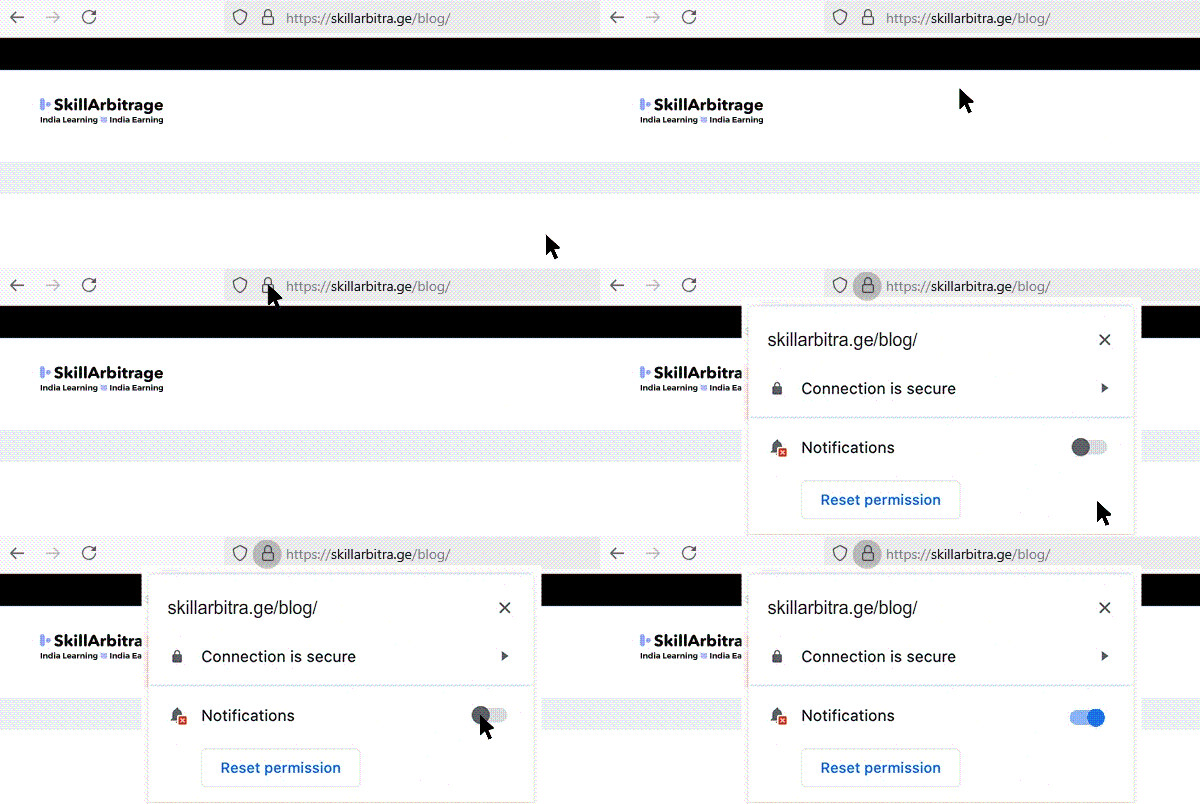
 Allow notifications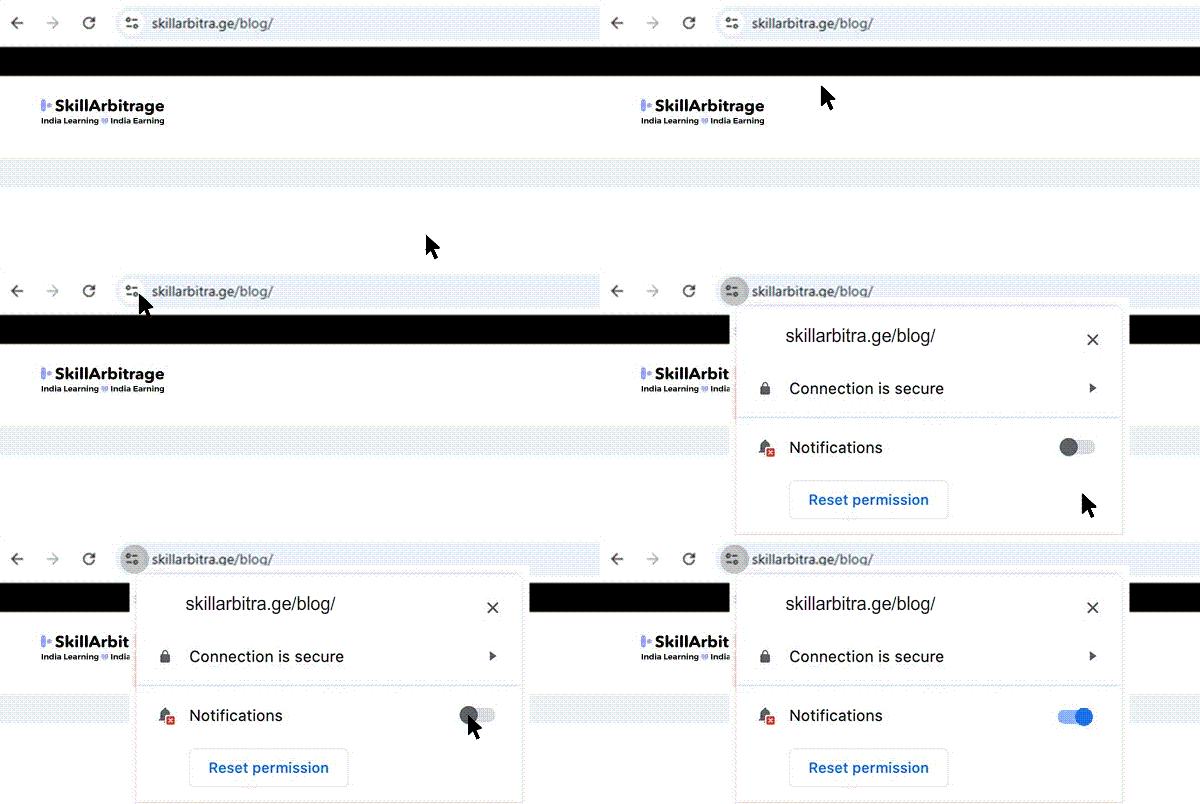
This breakdown of why global companies are turning to remote talent from India really highlights the shift in how work is being valued—especially the cost and time zone advantages. It’s encouraging to see that this isn’t just limited to tech roles anymore, which opens up opportunities for professionals from diverse backgrounds. The mention of SMEs and startups really drives home how widespread this trend is, and it’s exciting to think about the potential for more people to access higher-paying remote work.