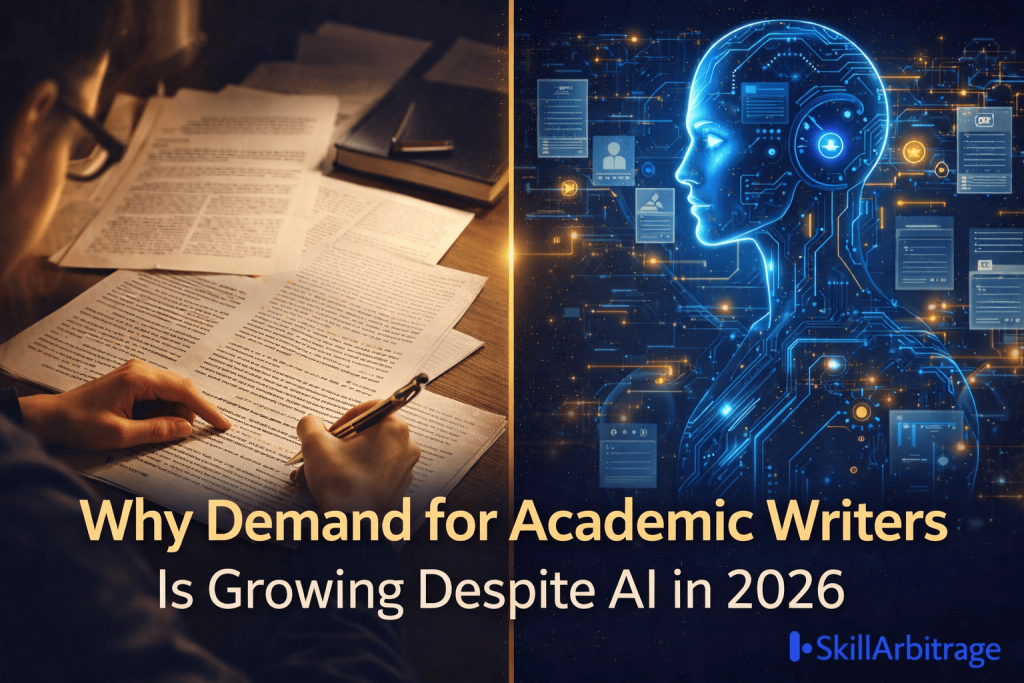

Every few months, a new AI tool arrives with claims that it can write research papers, summarise journals, and produce publication-ready content automatically. And every time, academic writers ask the same question: is my career under threat? The answer in 2026 is clear, demand for academic writers is not declining. It is accelerating, and the reasons are structural.
Table of Contents
How AI Writing Tools Actually Performed in Academic Contexts
From Hallucinations to ‘Factual Mode’ — What Changed
Two years ago, the academic community approached AI writing tools with caution. Early versions like GPT-3 and ChatGPT often invented citations, misrepresented research, and confused even experienced researchers. The common advice was “use at your own risk,” and most professionals avoided using them for peer-reviewed work.
This changed with GPT-4 in 2023, GPT-4.5 in 2025, and newer tools like Claude, Perplexity, and DeepSeek, which now offer citation-backed summaries, academic database integration, and even “factual mode” features.
At the same time, the gap between free and paid AI tools has narrowed, with newer free models producing content that looks professionally written.
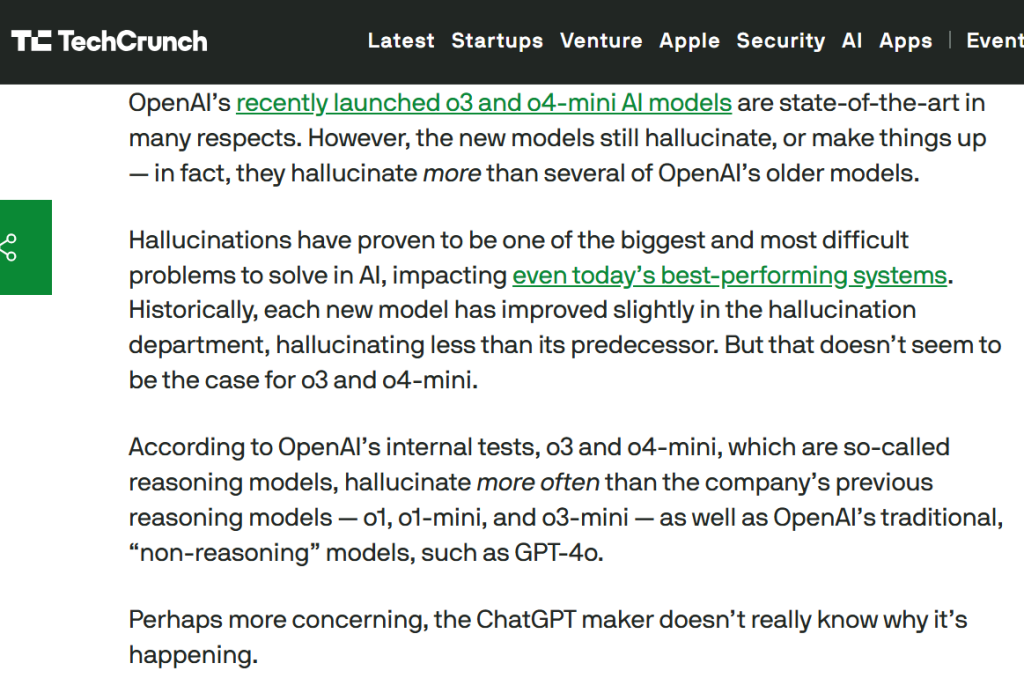
No new models are free of hallucinations:
The AI Academic Writer’s Rule: Accelerate, Then Verify
The most productive academic writers in 2026 are not avoiding AI. They are using it strategically, with a clear understanding of where it adds value and where it creates risk. The governing principle is simple: use AI to accelerate, but rely on yourself to verify.
| ✅ USE AI FOR | ❌ DON’T USE AI FOR |
| • First-draft generation and outlining • Literature summarisation and ideation • Paraphrasing and structural formatting • Language polishing (with human review) | • Fact-checking or interpreting research • Ethics or patient-sensitive documents • Drafting entire papers without human review • Bypassing plagiarism or peer review |
What Counts as Information Gain in 2026
According to Google’s updated quality guidance, content earns the information gain classification when it includes:
- Original surveys or field research data not available elsewhere.
- Primary research findings and internal case studies.
- Exclusive interviews with subject-matter experts.
- Strong, well-evidenced original argumentation or a novel point of view.
- Data visualisation or interpretation that reveals new patterns in existing data.
5 Critical Functions Only Human Academic Writers Can Fulfil
The demand for academic writers despite AI can be understood through five structural functions that AI tools cannot reliably perform, regardless of how sophisticated they become:
1. Ethical compliance & credibility checks
Science and JAMA prohibit AI-generated writing. Nature and IEEE require detailed AI-use statements. Only human writers can safely navigate compliance.
2. Nuance, context, and clarity
AI cannot understand cultural context, voice, or logic structure. Academic writers clarify intent, tailor tone, and tighten arguments reliably.
3. Multilingual and ESL editing
Millions of researchers from China, Brazil, India, and the Middle East write in English as a second language. AI grammar tools help, but human editors fix fluency.
4. Publishing pressure & quality race
Over 3.3 million academic articles published in 2022 alone. One formatting error or incorrect reference gets a paper rejected. Clients pay for expert oversight.
5. Formal journal requirements
Top journals now require proof of human editing, language check certificates, and APA/IEEE compliance. AI-assisted papers cannot be accepted without human verification.
What This Means for Your Academic Writing Career
For professionals building or considering an academic writing career, the current landscape presents three concrete advantages:
- AI will not replace you. But writers who don’t know how to use AI ethically and effectively may get left behind.
- Journals will demand more from you. If you can offer verified citations, compliance with AI policies, and high-quality editing, you will stay in demand.
- Clients will pay more for information gain. Writers who can offer field surveys, interviews, insights from Indian datasets, or structured argumentation will become trusted partners, not just vendors.





 Allow notifications