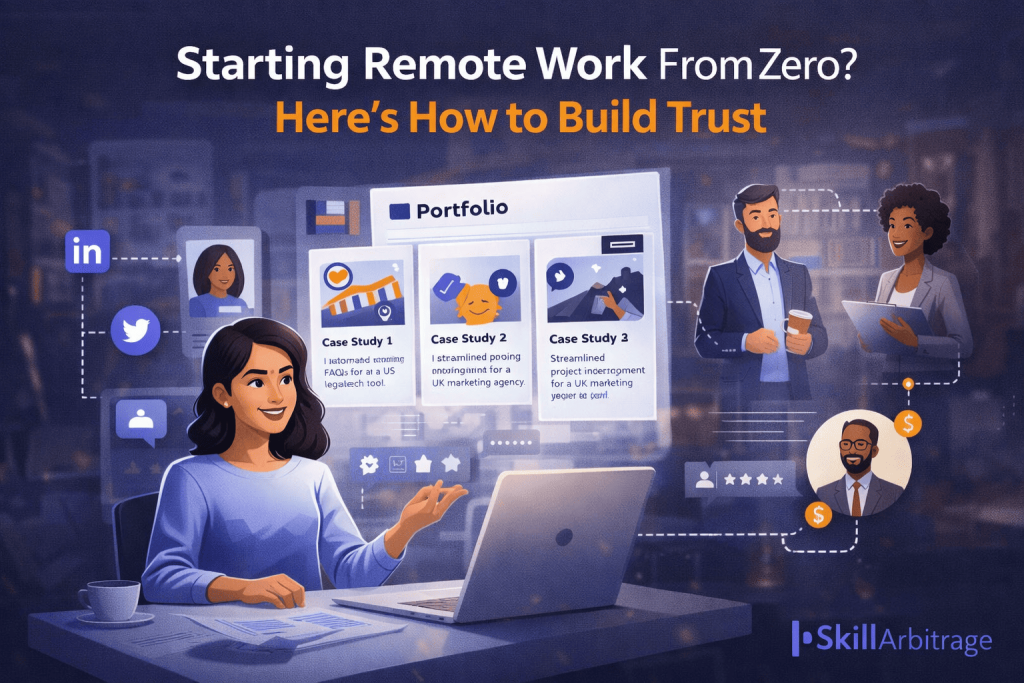

In the modern world of remote work, standing out from the crowd can feel like a challenge. But what if your work could speak for itself, even before you’ve officially worked with a client? That’s the power of building trust through a visible track record.
Table of Contents
Most professionals spend years building expertise within the walls of one company. And when it’s time to switch jobs, explore new opportunities, or consider remote work with international clients, they realize their achievements are invisible to the outside world. There’s no portfolio, no public proof, and no track record that speaks for itself. This is the hidden cost of traditional employment: Your work disappears into internal systems, confidential projects, and annual reviews that no one else will ever see.
But what if you could change that today?
Why This Matters Now More Than Ever
The remote work revolution isn’t just for freelancers or beginners; it’s for working professionals who want to build a parallel track record that:
- Makes you visible to international clients and employers
- Protects you from job insecurity and stagnation
- Allows you to charge premium rates based on proven results
- Gives you the freedom to work on your own terms
Hundreds of professionals—especially women—are already doing this, and you can start building this parallel track record right now, even while working your current job.
The Formula for Success: Skills + Track Record + Outreach
Here’s the mistake most professionals make: They focus too much on learning new skills. They take courses, earn certificates, and wonder why they don’t see any progress.
Skills without proof are just claims. And claims don’t get you hired or paid well.
Want to know what actually works?
Step 1: Start Building Your Public Track Record
Even if you’re currently employed full-time, you can start creating visible proof of your capabilities:
- Create your social media profile (LinkedIn, Twitter) and begin posting your insights and learnings frequently. Optimize your profile if you already have one.
- This helps you build a personal brand. Over time, you could receive numerous inquiries for work through LinkedIn, without even applying for projects. This happens frequently with professionals who post consistently.
What to Do:
- Add potential clients to your LinkedIn network (don’t just add school friends and classmates; add startup founders, business owners, agency heads, professionals in your target industries).
- Identify potential problems your clients face and start sharing solutions publicly.
- Each skill you learn and every problem you solve should become a case study. Share your learnings and experience on social media. This builds credibility and boosts your brand.
Example:
Start creating posts about problems in your industry and offer solutions. Over time, your expertise will attract more inquiries than you can handle.
Step 2: Build Your Portfolio (Even Without Quitting Your Job)
You don’t need to quit your job to start building your portfolio. You can do this while still employed.
Option A: Do 3 Strategic Free Assignments
The first few assignments are always the hardest. But completing 3 assignments, whether for free or at a low fee, helps you collect testimonials. These testimonials are crucial for your portfolio and future work.
- Why this works: Once you have completed these 3 assignments, getting paid clients or even a full-time remote job becomes much easier. Most clients will even give you a tip for good work, even if the project was free.
Option B: Showcase What You Already Do
If you’re experienced, you can start building relationships with foreign clients, increasing your income and reputation among your peers.
- What to Do:
- Offer help in various areas like customer support, project management, or research.
- Assist with tasks such as managing finances, preparing reports, creating training materials, or even managing calendars and travel arrangements.
Example:
You could help startups with customer support work (voice/email), project management, or even assist in hiring and performance management. This is a great way to build relationships that lead to higher-value work in the future.
If you can help clients with these tasks, they will be super happy to pay you well. This is your opportunity to build relationships for all the other generalist or specialist work you’ll do in the future.
Step 3: Capture Proof Every Single Time
Every time you help someone (even for free), ask for a testimonial.

Why It Matters:
Testimonials build trust and social proof, showcasing your results and helping you secure more work.
What to Do:
- After completing any project, ask for a testimonial from the client.
- A short case study is even more powerful:
- “I helped a Canada-based CRM startup reduce ticket clutter by 40%”
- “I automated onboarding FAQs for a US-based legal-tech tool using ChatGPT + Intercom”
Add This to:
- Your LinkedIn profile
- Your freelance profiles (Upwork, Fiverr)
- Your Notion portfolio
- Your outreach messages
Step 4: Build Your Digital Portfolio (Notion or Website)
As you gain new skills, you must also build your track record in a format that’s easy to share.
Why It Matters:
A professional portfolio makes it easier for potential clients to evaluate your work at a glance, providing a great first impression.
What to Do:
- Use Notion or a personal website to organize your case studies and testimonials.
- Your digital portfolio acts as your online resume, giving you credibility even before you speak to a client.
Here are examples of professionals who built incredible Notion portfolios:
- Kavitha’s Ghostwriting Portfolio
- Vrinda Goel’s Portfolio
- Samridhi Jain’s Portfolio (She’s a college student earning more than many full-time professionals)
These portfolios open doors, get you noticed, and make the sale before you even speak to a client.
Real-World Example:
Professionals like Kavitha and Vrinda Goel have used Notion to build stunning portfolios that attract clients and open doors for better opportunities. These portfolios provide a clear, organized view of their work, making it easier for potential clients to evaluate their capabilities.
Beyond Skills: Build a Reputation That Compounds
Beyond simply stacking skills, focus on reputation stacking.
Why It Matters:
Clients are more likely to choose well-known professionals or agencies with a reputation. A strong personal brand enables you to charge premium rates and protects you from future competition.
What to Do:
- Build your presence on social media: Share ideas, insights, and your experiences publicly.
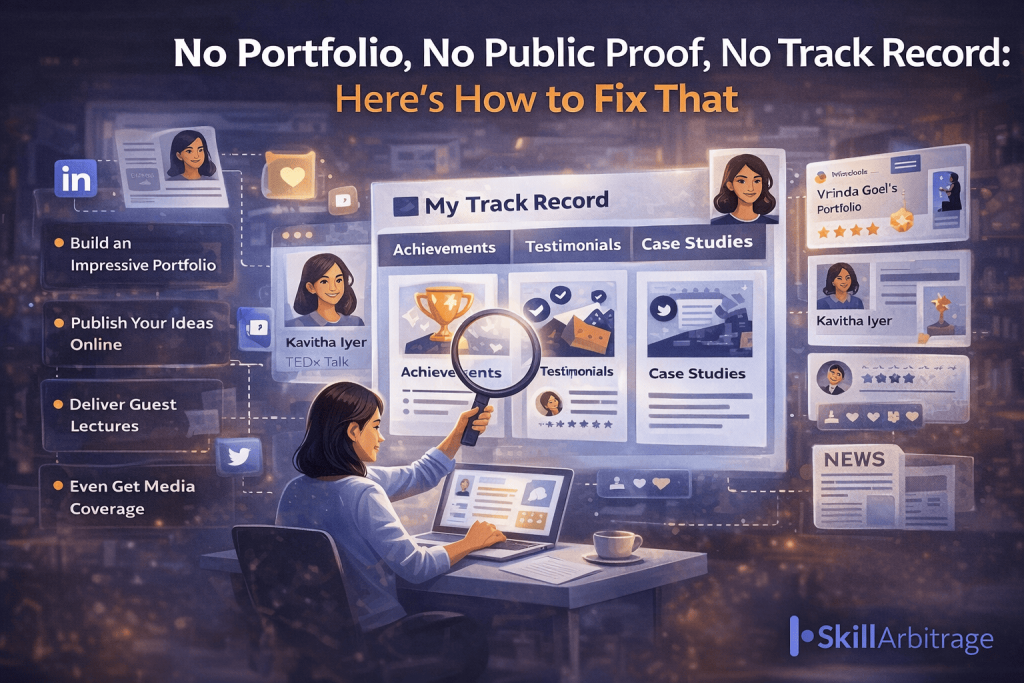
- Publish articles, get featured in interviews, or deliver guest lectures.
- Even getting media coverage or delivering a TEDx talk can significantly enhance your reputation.
This is why successful professionals:
- Build their own presence on social media
- Publish their ideas and insights publicly
- Get their interviews published online
- Deliver guest lectures
- Even get media coverage and deliver TEDx talks
You don’t have to do all of this. But even doing some of it changes everything.
What This Looks Like in Practice
If you’re already working a job or freelancing, within six months you should be able to:
- Generate a meaningful stream of side income
- Secure multiple clients who approach you directly
- Build a public portfolio that speaks for itself
- Gain the freedom to choose the projects and clients you work with
This will give you a safety net, a Plan B that could quickly become your Plan A.
Why This Matters Now More Than Ever
Traditional job security is fading. Layoffs happen without warning, promotions are delayed, and growth feels stagnant. On the other hand, professionals with a strong public track record and international client relationships are thriving.
They have:
- Multiple income streams
- Geographic arbitrage advantages (earning in USD, spending in INR)
- Freedom to work from anywhere
- Protection from local economic downturns
- Leverage to negotiate better terms with employers
The Takeaway
Trust is not built by waiting to be chosen. It’s built by showing up, documenting your work, and making your value visible consistently. You don’t need to quit your job, reinvent yourself, or go viral. You just need proof.Start small, share what you know, and capture your wins. In six months, you’ll have more than just skills you’ll have leverage. And leverage changes everything.




 Allow notifications