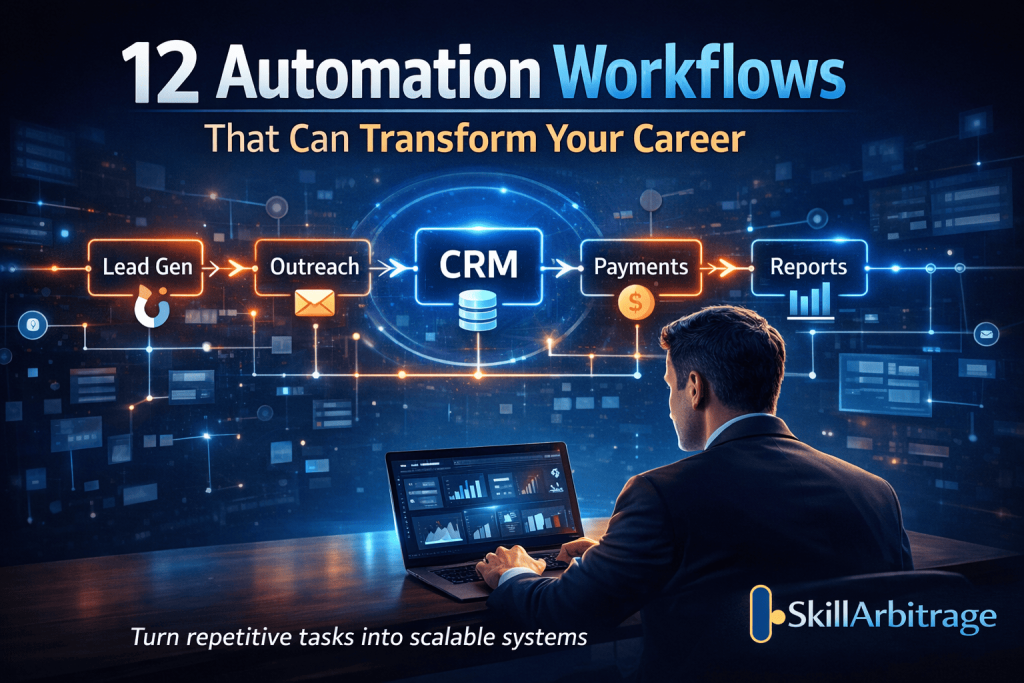

Right now, while you are manually updating CRM records, sending follow-up emails, and preparing monthly reports, a growing group of professionals has discovered something important: every repetitive task in your role is a consulting opportunity worth thousands of dollars to businesses globally facing the exact same inefficiency.
Table of Contents
Automation is not just about saving time, it becomes a turning point in your career.
This is not about learning a specific tool. N8N, Zapier, and Make are just the mechanisms, like Excel is a mechanism for analysis. The real value lies in knowing which processes to target, how to build workflows that solve them, and how to package that knowledge into consulting services that companies are actively paying for.
Here are 12 concrete automation workflow examples, with the job-level benefit and the consulting opportunity that comes with each one.
Why Automation Workflow Examples Matter More Than the Tools Themselves
Most professionals approach automation backwards. They learn a tool first, then look for problems to solve with it. The professionals seeing the biggest results do the opposite, they identify the business problem first, then choose the right tool to solve it.
Your domain expertise is the competitive advantage. You already know where the bottlenecks are in your industry, where errors typically happen, and where time gets wasted on tasks that require no real thinking. That knowledge, combined with automation capability, makes you valuable in two ways simultaneously:
- At your current job: You deliver results faster, with fewer errors, and with greater consistency
- As a consultant: You solve the same problems for companies globally who face identical inefficiencies
The tool is the implementation. The understanding of what to automate and why, that is yours already.
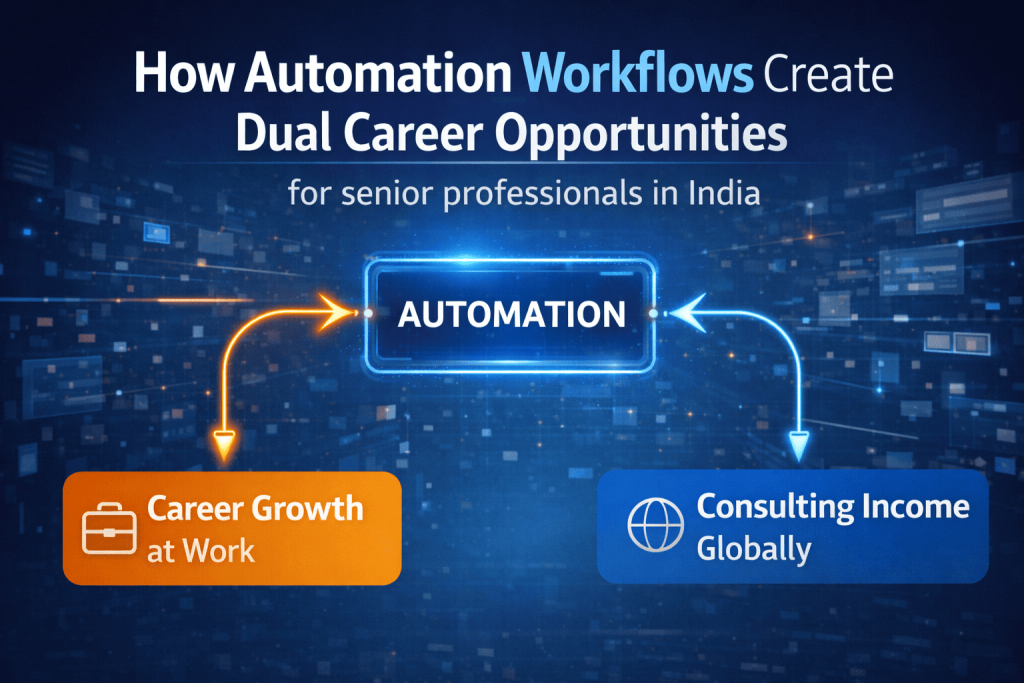
The Dual Career Opportunity Hidden Inside Every Automation You Build
When you implement an automation workflow at your job, two transformations happen at the same time.
Transformation 1 — You become more valuable to your employer. You deliver more output in less time. Error rates drop. Processes that previously required your constant attention run without you. You become the person who makes the operation smarter, which is exactly what leadership promotes.
Transformation 2 — You build a consulting product. A workflow that saves your company 10 hours per week is worth thousands to another company with the same problem. Companies in Singapore, Dubai, London, and Toronto regularly pay significant fees for automation consultants who can implement basic workflows, because they need someone who understands both the business context and the technical execution. You understand the business context deeply. The technical execution is learnable in weeks.
The key insight: Every Friday evening that thousands of managers spend manually preparing reports that automation could generate in 30 minutes is a consulting opportunity, for the professional who has already solved the same problem in their own role.
The 12 Automation Workflow Examples Every Professional Should Know
1. Lead Collection and Enrichment Automation
What it does: Instead of manually searching directories and websites, this workflow gathers prospects from multiple sources simultaneously based on criteria you define. It searches LinkedIn Sales Navigator for ideal-fit companies, scans Crunchbase for recently funded startups, monitors industry directories, then enriches each result with decision-maker contact details, recent company news, and structured outreach data, all automatically, overnight.
At your job: Sales and business development teams get a continuously updated, pre-enriched prospect database. What previously took days of manual research happens automatically.
As a consulting service: Every B2B company globally struggles with lead generation quality. Most pay agencies pay thousands monthly for inferior results. Your automation delivers better-qualified data at a fraction of the cost, and can be packaged as a recurring monthly service.
Where to spot the opportunity: Teams manually copying data from websites into spreadsheets. Prospect lists that require constant manual updating. Days spent on research before a single outreach message is sent.
2. Personalised Cold Outreach System
What it does: This workflow researches each prospect individually before crafting outreach, finding recent company announcements, identifying industry-specific challenges, pulling relevant case studies, and creating messages that feel personally written. It then sends through appropriate channels, tracks engagement, schedules follow-ups based on behaviour, and alerts you when prospects show buying signals.

At your job: Marketing and sales teams run personalised campaigns that actually convert, without spending hours on individual message crafting.
As a consulting service: Companies fail at outreach because they rely on generic templates. Your automation enables the personalisation that generates responses, and businesses pay premium prices for systems that fill their sales pipelines.
Where to spot the opportunity: Mass email campaigns with poor response rates. Sales teams spending hours on individual emails. Manual follow-up processes consuming entire afternoons.
3. Content Multiplication Workflow
What it does: You create one piece of quality content, a detailed article, a case study, or a professional insight, and the automation transforms it across all platforms simultaneously. A LinkedIn article becomes a series of scheduled LinkedIn posts, a Twitter thread, an Instagram carousel, and a YouTube script, each optimised for the platform’s algorithm and audience behaviour, all maintaining your authentic voice.
At your job: Companies maintain thought leadership across all channels without dedicating entire teams to content creation. Visibility multiplies while effort stays constant.
As a consulting service: Every professional and company needs consistent content presence but lacks the bandwidth to maintain it manually across platforms. Your automation solves this permanently.
Where to spot the opportunity: Inconsistent posting schedules that damage brand presence. Teams manually reformatting the same content for different platforms. Content backlogs that never get cleared.
4. Client Onboarding Automation
What it does: When a new client signs on, multiple processes trigger simultaneously, project folders are created with correct permissions, welcome emails are sent with all documentation, kickoff calls are scheduled based on timezone, contracts and invoices are generated with correct terms, tasks are assigned to team members with deadlines, and CRM records are updated completely. Every client receives the same premium experience regardless of how busy your team is.
At your job: Operations teams handle more clients without adding headcount. Client satisfaction improves because the onboarding experience is consistent and nothing falls through the cracks.
As a consulting service: Every service business globally struggles to scale its onboarding process. Your automation makes small companies appear as professional as large enterprises, and they will pay for that.
Where to spot the opportunity: Email chains where teams coordinate new client setups step by step. Forgotten tasks that cause early client frustration. Inconsistent onboarding experiences that damage the first impression.
5. Review and Testimonial Collection System
What it does: This workflow monitors project completions and client satisfaction signals to identify the optimal moment for a testimonial request. When it detects a positive outcome, a project delivered ahead of schedule, a client expressing satisfaction, it automatically triggers a review request while the client is most likely to respond. Happy clients are guided to public platforms. Concerns are routed privately for resolution before they become public complaints.
At your job: Your company builds a strong reputation systematically rather than hoping satisfied clients remember to leave reviews.
As a consulting service: Service providers globally miss testimonial opportunities despite knowing their importance. Your automation ensures they never miss the right moment.
Where to spot the opportunity: Completed projects with no corresponding testimonial. Manual review request processes that get deprioritised. Companies with fewer public reviews than their service quality deserves.
6. Competitive Intelligence Automation
What it does: This workflow continuously monitors competitor websites for pricing and service changes, tracks their social media for engagement patterns, analyses their job postings to understand growth plans, aggregates customer reviews to identify weaknesses, and summarises everything into regular intelligence reports — without any manual research time.
At your job: Leadership teams make data-driven strategic decisions rather than operating with outdated competitor information.
As a consulting service: Companies globally operate blind to competitor movements. Your automation provides the continuous intelligence they need to stay competitive, without building a research team.
Where to spot the opportunity: Outdated competitor information in strategy presentations. Reactive responses to competitor moves that could have been anticipated. Teams manually checking competitor websites on an irregular schedule.
7. Invoice and Payment Follow-Up System
What it does: This workflow generates professional invoices when project milestones complete, sends them with multiple payment options, tracks all outstanding payments, sends reminder sequences that escalate appropriately from friendly to formal, handles multi-currency transactions for international clients, processes compliance documentation for different jurisdictions, and updates financial records automatically when payments arrive.
At your job: Finance teams focus on strategic financial management rather than payment chasing. Cash flow becomes predictable. Client relationships stay professional throughout the payment process.
As a consulting service: Every business globally struggles with payment collection that damages client relationships. Your automation solves cash flow without the awkwardness of manual follow-ups.
Where to spot the opportunity: Finance teams spending significant time on payment reminders. Delayed collections creating operational cash flow problems. Relationships strained by aggressive or inconsistent payment follow-up.
8. Learning and Knowledge Management Automation
What it does: This workflow monitors industry publications, thought leader content, academic research, and competitor material. It uses AI to filter by relevance to specific roles and projects, summarises key insights into digestible formats, creates weekly knowledge digests with actionable takeaways, and suggests learning paths based on skill gaps and emerging industry trends.
At your job: Your team stays at the cutting edge of industry knowledge without anyone spending hours browsing for updates. Relevant information reaches the right people at the right time.
As a consulting service: Professionals globally struggle with information overload while simultaneously missing critical updates. Your automation solves both problems simultaneously.
Where to spot the opportunity: Outdated knowledge bases guiding poor decisions. Teams missing important industry developments. Hours spent browsing for relevant content with no systematic outcome.
9. Operations and Delivery Workflow Automation
What it does: This workflow ensures projects move smoothly from one stage to the next without manual handoffs, automatically updating project management boards, notifying team members of dependencies, allocating resources based on real-time availability, and triggering alerts for potential delays before they become missed deadlines.
At your job: Delivery becomes consistent. Bottlenecks surface before they affect clients. Your team spends time solving problems, not tracking them.
As a consulting service: Every company delivering projects or services faces coordination and delivery challenges. Your automation helps them achieve consistency and scale without adding headcount.
Where to spot the opportunity: Manual status update meetings that consume hours. Missed deadlines caused by dependency gaps. Teams spending more time tracking progress than making it.
10. Networking and Decision-Maker Data Collection
What it does: This workflow gathers and continuously enriches data about key decision-makers — CFOs, COOs, CEOs, and relevant department heads, aggregating contact details, tracking recent public activities, and providing context about their company’s current challenges. Outreach becomes targeted, relevant, and timed to the right moment.
At your job: Business development and sales teams reach the right person with the right message, rather than guessing through org charts.
As a consulting service: Businesses pay high retainers for accurate decision-maker data. Your automation reduces their dependency on expensive data providers while delivering more current information.
Where to spot the opportunity: Sales teams reaching the wrong contacts repeatedly. Research time consuming more hours than actual outreach. Expensive data subscriptions delivering outdated information.
11. Peer and Colleague Feedback Automation
What it does: This workflow sends structured feedback surveys to colleagues and peers at key project milestones, analyses responses for recurring patterns, and generates performance insights that remove bias from evaluation. Every team member gets consistent, data-driven feedback rather than ad hoc impressions.
At your job: Managers get reliable inputs for performance evaluation. Teams develop faster because feedback is systematic rather than occasional.
As a consulting service: Companies struggle with consistent peer feedback collection, especially in distributed teams. Your automation creates a reliable, scalable system that improves team performance measurably.
Where to spot the opportunity: Annual reviews that rely on recency bias. Feedback processes that feel inconsistent or unfair to team members. Managers who avoid giving feedback because the process is cumbersome.
12. Market Problem Discovery via Reddit and Social Media Automation
What it does: This workflow continuously scans Reddit communities, Twitter threads, LinkedIn discussions, and industry forums to identify pain points that clients have with existing service providers. It categorises problems by theme, highlights frequently mentioned frustrations, and surfaces opportunities for new or improved services, in real time, without manual monitoring.
At your job: Your company gains real-time insight into customer dissatisfaction trends before they affect your own client relationships.
As a consulting service: Senior professionals can use this system to identify market gaps faster than competitors and develop new service offerings that directly address unmet needs. It positions you as a consultant who spots opportunities others miss.
Where to spot the opportunity: Strategy decisions based on internal assumptions rather than market signals. Companies discovering client dissatisfaction only after they have already lost the client. Product or service gaps that customer complaints reveal too late.
How to Identify Automation Opportunities in Your Own Role
You do not need to implement all 12 workflows at once. Start with the one task that frustrates you most, the one that consumes hours but requires no real strategic thinking.
Ask yourself three questions about that task:
- Does it follow a predictable, repeatable pattern every time?
- Does it require information from multiple systems that you manually consolidate?
- Would the output be identical (or better) if a system handled it instead of you?
If the answer to all three is yes, you have found your first automation opportunity. Build it. Document the time it saves. That documentation becomes both your performance case at work and your consulting portfolio piece for international clients.
The Consulting Value: What Companies Pay for These Workflows
Here is the market reality that makes this opportunity significant for Indian professionals specifically.
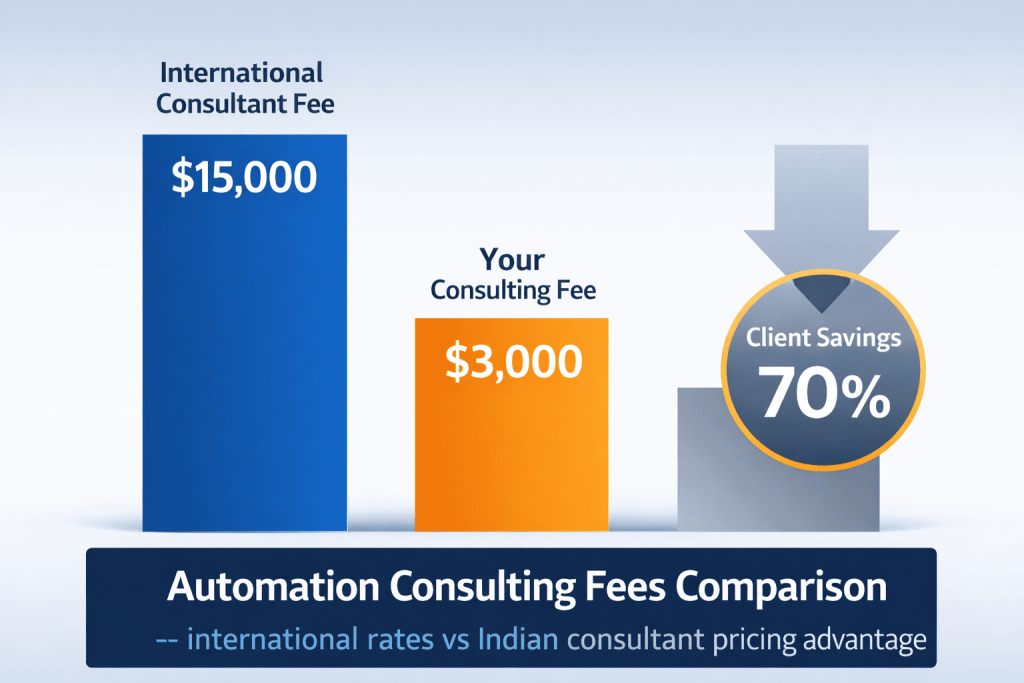
Companies in Singapore, Dubai, London, and Toronto routinely pay substantial fees for automation consultants to implement basic workflows, because they need someone who understands both the business context and the technical execution. Most technical specialists understand the tools but not the business. Most business professionals understand the problem, but not the tools.
You already understand the problem deeply, from a decade of living inside it. Learning the tools, Zapier, Make, or N8N, takes weeks, not years.
That gap between what international clients pay and what it costs you to deliver is where the consulting opportunity lives. You bring genuine domain expertise. The automation tools are the mechanism that lets you deliver it at scale.
Conclusion
Every automation workflow example in this list represents two things simultaneously: a way to reclaim hours in your current role, and a consulting service that businesses globally are actively paying for.
The professionals who understand what to automate and why will always outperform the technical specialists who know tools but lack business context. Your domain expertise, built over a decade of real professional experience, is the competitive advantage that no tool proficiency alone can replicate.
Pick the workflow that matches your biggest frustration right now. Build it. Measure it. Then ask yourself: how many other companies have this exact same problem?
The answer is usually thousands. And most of them do not have anyone who understands it the way you do.





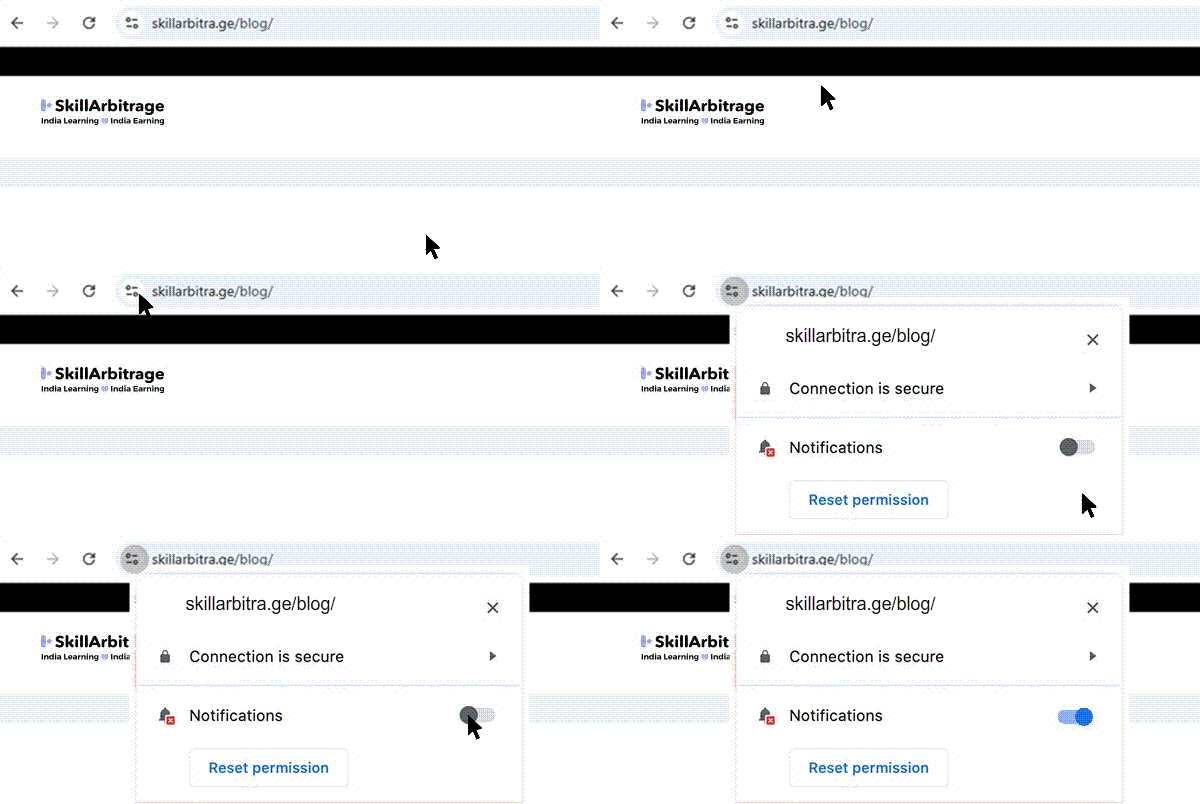
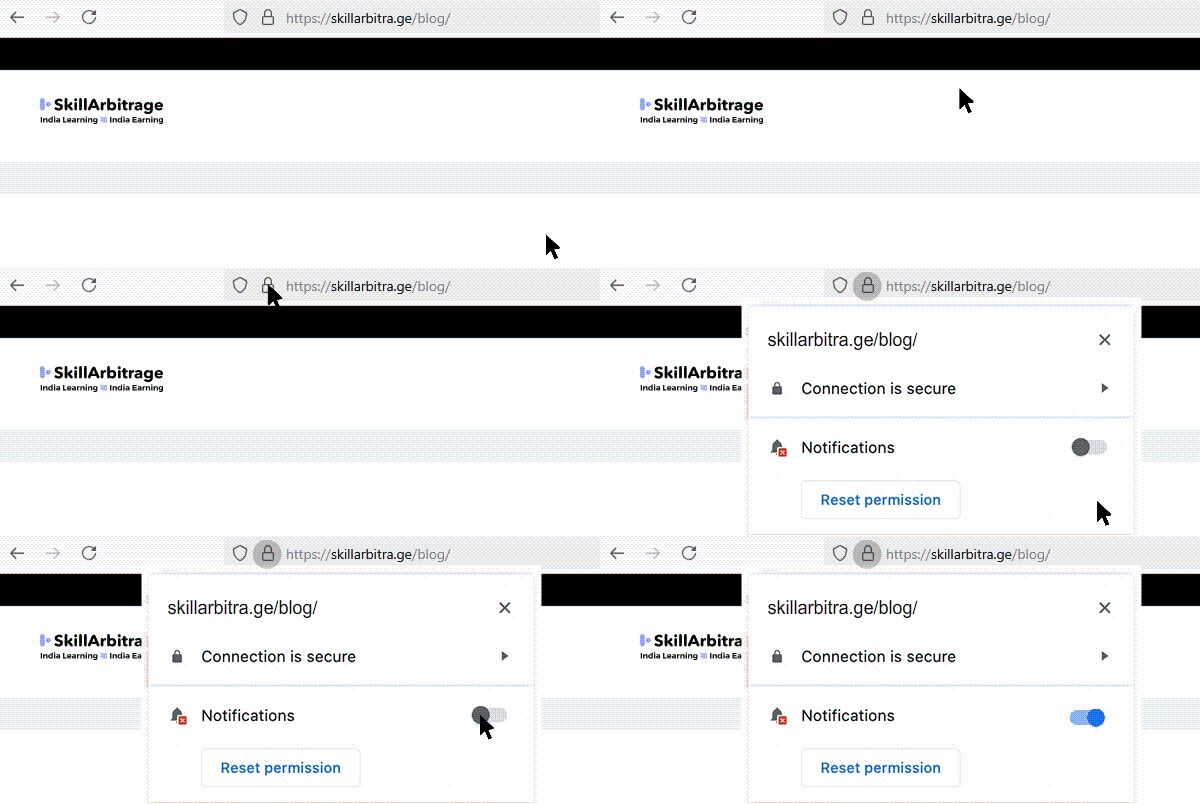
 Allow notifications