Academic writing is no longer limited to universities or short-term research contracts. In 2026, skilled academic writers are working remotely with professors, EdTech companies, research labs, healthcare firms, and global organisations, often earning in dollars while working from anywhere in the world.
For professionals with strong research, writing, and analytical skills, academic writing now offers multiple career paths with global demand, remote work flexibility, and long-term income potential. Below are the most relevant and high-growth career opportunities for academic writers in 2026.
1. Research & Scholarly Writing
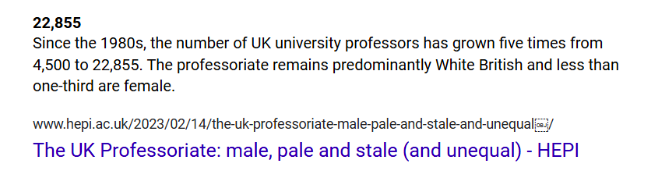
Research and scholarly writing are the biggest opportunities for academic writers in 2026 because professors worldwide face intense pressure to publish, secure funding, and advance their careers, while lacking the time to handle drafting, editing, and journal compliance themselves.
A typical tenure-track professor is expected to publish one to two papers per year to meet promotion and tenure requirements. Beyond tenure, publications remain critical for research funding, academic leadership roles, and institutional reputation.
Read also: Why professors across the world are hiring academic writers
As global research funding continues to expand, the demand for publication support has become structural rather than temporary.
Why professors hire academic writers
- Promotion, tenure, and grant funding depend on consistent publications
- Heavy teaching, administrative, and supervision workloads
- Increasing pressure to publish in high-impact international journals
Two major professor markets academic writers serve
Professors in English-speaking countries
- Hire writers for bandwidth, speed, and reliability
- Outsource literature reviews, drafting, formatting, figures, and revisions
- Often seek long-term collaborators rather than one-off editors

Professors in non-English-speaking countries
- Hire writers for language fluency and structural expertise
- Need support aligning manuscripts with English-language journal standards
- Value end-to-end manuscript transformation and resubmission support
Both markets represent a massive global opportunity.
The difference lies in positioning: English-speaking professors prioritise time-saving and reliability, while non-English-speaking professors prioritise language accuracy, structure, and journal targeting.
Academic writers who deliver consistent results often secure recurring contracts, authorship or acknowledgements, and long-term collaborations. This demand spans disciplines: from law and economics to AI, biology, and the humanities.
2. Grant & Proposal Writing
Think of grant writing as fundraising for academia.
Grant and proposal writing is one of the most lucrative career paths for academic writers because it sits directly at the intersection of research and funding. Universities, research labs, NGOs, and think tanks compete globally for grants worth thousands to millions of dollars.
Grant writers help institutions translate research ideas into persuasive proposals that align with funder priorities, demonstrate social or policy impact, and present clear budgets and timelines.

Who hires grant writers
- Universities and research institutions
- NGOs and international foundations
- Policy think tanks and public-sector organisations
Why grant writing pays well
- Direct link between writing quality and funding outcomes
- High-stakes deadlines and competitive selection processes
- Limited supply of experienced grant writers
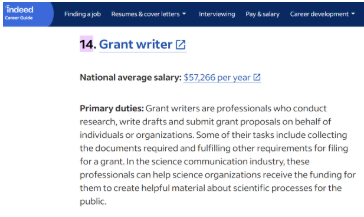
In the United States, grant writers earn an average of around $57,000 per year, while in the UK, typical salaries are approximately £38,000 annually. Freelance grant writers often charge $75–150 per hour or work on project-based retainers, making this a highly attractive remote opportunity.
Read also: How Much Can You Earn as an Academic Writer Working Remotely with International Clients in 2026
Many organisations prefer remote grant writers, as what matters most is the quality of the proposal, not location. Skilled writers frequently work with international clients on short-term or recurring projects.
3. EdTech & E-Learning Writing
The global EdTech and e-learning market is expanding rapidly as universities, online platforms, and training companies shift toward digital and hybrid education models. Every new course, module, assessment, or learning product requires writers who can translate academic knowledge into structured, engaging learning content.

Academic writers in this space contribute far beyond traditional textbooks. They help break complex concepts into teachable units, design assessments, write scripts, and ensure pedagogical flow across courses.
Who hires EdTech writers?
- Universities offering online or hybrid programmes
- Online coaching and test-preparation platforms
- Corporate training and upskilling companies
- EdTech startups and independent course creators
Why is this role in demand globally
- Continuous launch of new courses and certifications
- Strong overlap between academic expertise and instructional design
- High acceptance of remote and outsourced content teams
Read also: Top 5 clients for global academic writing
Closely related roles, such as instructional design, also offer strong compensation. In the US, instructional designers earn an average of over $90,000 per year, with comparable opportunities in the UK and Australia. Many academic writers transition into these roles or work on contract with global EdTech firms.
4. Technical & Business Writing
Academic writers are highly valued in technical and business writing because of their ability to research deeply, structure arguments, and explain complex ideas clearly. This is a truly global opportunity, spanning technology, finance, consulting, and engineering sectors.
Who hires technical and business writers?
- Software and IT companies
- Fintech and financial services firms
- Engineering and renewable energy companies
- Consulting firms and research-driven agencies
Common types of work
- Product documentation and user guides
- White papers and investor reports
- Research and policy reports
- Standard operating procedures (SOPs)
Freelance white paper writing has become especially lucrative, with projects often paying $3,000-5,000 due to the depth of research and clarity required. As industries such as AI, climate tech, and clean energy expand globally, demand for skilled technical writers continues to rise.
5. Science Communication & Knowledge Translation
Science communication and knowledge translation focus on making research accessible, actionable, and impactful for non-academic audiences. This niche sits at the intersection of academia, media, and public policy and is growing rapidly worldwide.

Where science communicators work
- Government agencies and research councils
- Universities and public policy institutions
- NGOs and international organisations
- Technology companies working on ethics and transparency
Typical responsibilities
- Converting research papers into policy briefs or public explainers
- Writing outreach content and impact reports
- Supporting evidence-based decision-making in government and NGOs
Countries such as Canada, the UK, and Australia have formalised “knowledge translation” roles, particularly in healthcare and public policy. Globally, organisations value writers who can bridge the gap between expert researchers and the broader public.
6. Medical & Scientific Writing
Medical and scientific writing is among the highest-paying academic writing careers and continues to grow as pharmaceutical research, clinical trials, and regulatory requirements expand worldwide.
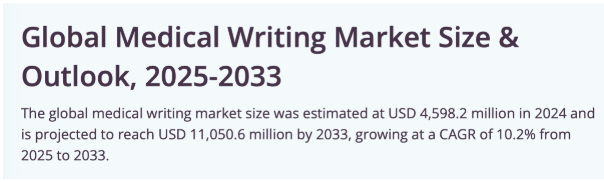
Medical writers typically work with pharmaceutical companies, biotech firms, contract research organisations (CROs), and healthcare agencies.
Why demand is growing
- Expansion of global drug development and clinical trials
- Increasing regulatory and documentation requirements
- Strong preference for clear, compliant scientific communication
In the US, medical writers earn an average of over $118,000 per year, while in the UK typical salaries are around £45,000 annually. Many medical writers work remotely on a freelance or contract basis.
Importantly, a medical degree is not always required. According to professional bodies such as the American Medical Writers Association, individuals from humanities and social science backgrounds can enter this field by combining scientific fundamentals with strong writing skills.
Looking to build a global academic writing career?
Across research writing, grant proposals, EdTech, technical documentation, science communication, and medical writing, one pattern is clear: academic writing skills are now globally marketable.
Writers who align their existing strengths with the needs of international clients can build remote careers that offer stability, flexibility, and strong earning potential. As research, education, and innovation continue to globalise, academic writers are becoming indispensable partners across industries in 2026 and beyond.




 Allow notifications