

If you’ve ever considered serving on a corporate board, 2026 may be the most opportunity-rich year you’ll see in a long time. Annual board refreshes, a record IPO pipeline, stricter SEBI rules, and new sector-level demand are converging to create a wave of fresh independent director openings, many of them tailored for first-timers.
Table of Contents
Here are the 13 key shifts shaping independent director appointments in 2026, and what each one means for senior professionals exploring board roles.
1. Annual Board Refresh of 2026
The great board refresh of 2024 created new opportunities for first-time board directors, as there was a massive exodus of independent directors whose second term had expired (one re-appointment is permitted).
Interestingly, this “board refresh” occurs every year, it happened in 2025 and will happen again in 2026 as the second term of existing independent directors expires and a cooling-off period begins.
New independent directors must be appointed by the company for this cooling-off period, creating opportunities for first-time independent directors.
2. Extended Cooling-Off Period for Re-Appointment
The cooling-off period for re-appointment has been increased to 3 years from 2 years by SEBI pursuant to amendments of the listing rules.
This means existing board directors cannot be re-appointed for a longer period of time after expiry of their second term (one re-appointment is permitted), again creating more opportunities for first-timers.
3. The IPO Surge Driving Director Demand
The number of IPOs is rapidly increasing every year. 1,000 IPOs are expected to happen in the next 2 years. This is going to be much bigger than the past two years.

Ten months of 2025 have already witnessed more than 300 IPOs. Such a huge wave of IPOs is going to create fresh opportunities for first-timers who wish to become independent directors.
4. Cap on Multiple Directorships Creates Room for Professionals
An individual can serve as an board director in at most 7 listed companies at once (with a tighter limit of 3 if they are a whole-time director in any listed company).
This is going to limit existing business owners from appointment to multiple directorships, again creating opportunities for experienced professionals who are not promoters or business owners.
5. SEBI’s Tighter Rules on Independent Director Appointments
SEBI has been tightening the rules for board director appointments so that “truly independent” professionals get a chance.
As per currently amended rules, appointment (or re-appointment) of an independent director in a listed company must be approved by shareholders via a special resolution (75% votes in favour).
This discourages promoters from appointing people from their close networks if they have material relationships, giving first-timers an opportunity to get appointed.
Bonus: Professionals who build a personal brand have an advantage.
6. First-Time Board Opportunities for Proven Leaders
Fast-growing businesses are opening board positions for senior professionals who have never served on a board earlier, but have demonstrated high value in managing teams, auditing, analyzing, and building outcomes.

7. Independent Director Pay Is Rising
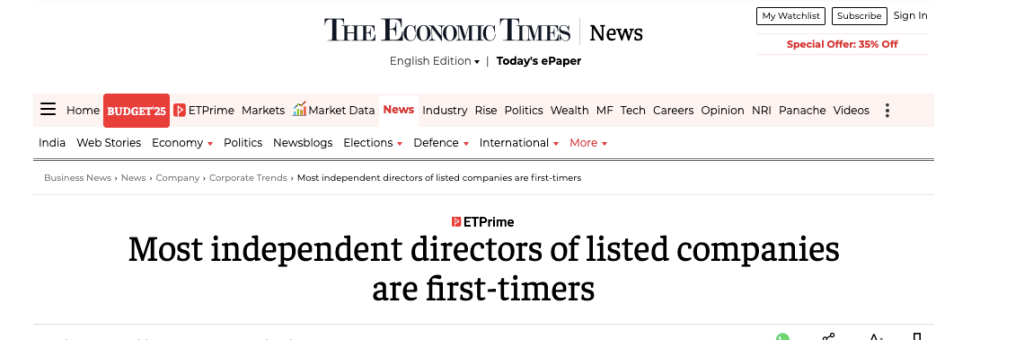
Pay for independent directors has been increasing and will continue to increase due to high demand for independent directors with the right expertise.

You can read more here.
8. Demand for Diversified Skills and Backgrounds
There is a requirement of professionals from diversified backgrounds and skill sets, owing to focus on:
- AI and automation
- International expansion of Indian businesses
- Cybersecurity and privacy
- ESG (Environmental, Social, Governance)
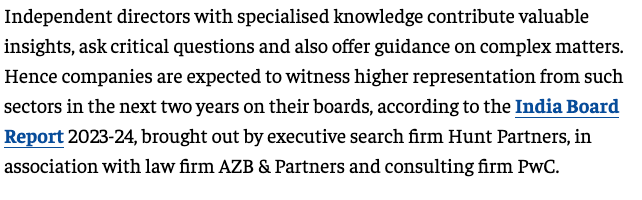
Although you will not provide any services as an independent director, this will lead to higher quality of discussions and more valuable inputs in board meetings.
You can read more about it here.
9. Regulated Industries Driving Director Demand
Increasing regulatory framework in banking, fintech, insurance, and other regulated industries is going to lead to a demand for directors who have worked in these industries.
10. Expansion Beyond Listed Companies
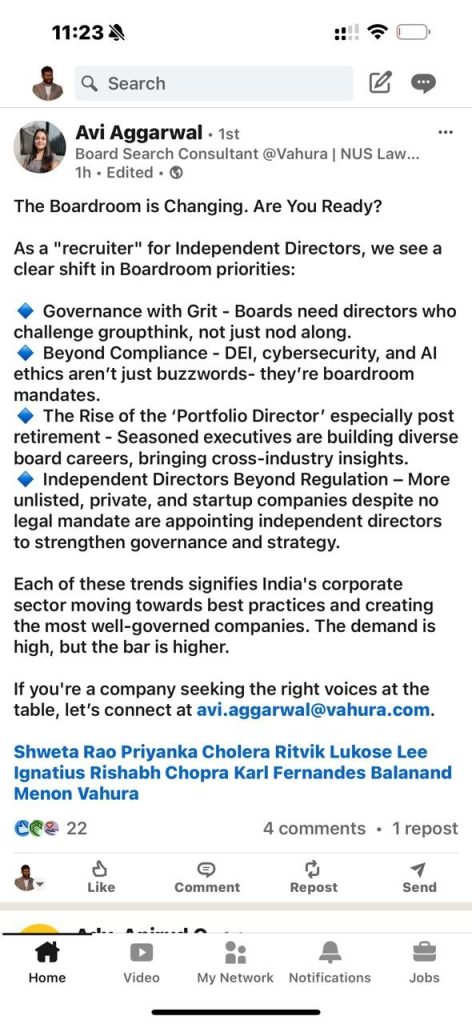
Apart from listed companies, several other entities will also appoint independent directors:
- Companies which are issuing real estate investment securities
- Private companies with venture capital investment
- Unlisted companies
11. The Role of Executive Search Agencies
Executive search agencies will also find themselves receiving more mandates for independent director appointments. IICA has started collaborating with several of them already.
However, while promoters may rely on references to interview, ultimately they will appoint independent directors whom they can “trust” and who will back them during hard times. They do not want to appoint investigators or sceptical professionals who eject suspicion behind every boardroom decision.
Therefore, securing appointments purely on the basis of such referrals is going to be unlikely. Professionals who build relationships and add value over a longer period of time will have an advantage in securing appointments.
12. New Avenues for Independent Director Appointments
New avenues will open up for independent director appointments.
- REITs: In 2024, SEBI allowed micro, small, and medium REITs to do any IPO. Many such REITs have launched since then. This trend is likely to gain momentum next year.
- Asset Reconstruction Companies (ARCs): RBI allowed asset reconstruction companies to access public capital to meet their net owned fund requirements, all these asset reconstruction companies will also need to appoint independent directors.
- Fintech NBFCs: A few years back, RBI had also required all fintechs which are NBFCs to appoint independent directors to their board.
13. Rising Overall Demand for Independent Directors
Several private equity and venture capital investors have started insisting on independent director appointments on the boards of their investee companies.
All these trends are going to increase the demand for independent directors.
Conclusion
The landscape for independent director appointments in 2026 is shifting decisively in favour of first-time entrants. The annual board refresh, an unprecedented IPO pipeline, stricter SEBI norms around cooling-off periods and shareholder approvals, and the cap on multiple directorships are collectively widening the pool of available board seats, while narrowing the pool of professionals eligible to fill them through the old promoter-network route.
At the same time, demand is expanding well beyond traditional listed companies. REITs, asset reconstruction companies, fintech NBFCs, PE/VC-backed businesses, and unlisted companies are all opening up new avenues. With rising compensation, growing demand for diversified skills like AI, ESG, and cybersecurity, and the increasing weight given to personal branding, 2026 stands out as a defining year for senior professionals ready to step into the boardroom.





 Allow notifications

The 2026 board refresh cycle is really creating a unique window for experienced professionals to step into independent director roles, especially with the extended cooling-off period and increased demand from the IPO surge. It’s exciting to see how the evolving regulatory landscape and sector-specific needs are opening up more diverse opportunities for first-time directors. This shift not only benefits professionals looking to expand their impact but also helps companies access a broader range of skills and perspectives.