


International startups are actively seeking talented women like you, offering the opportunity to earn ₹1.5 lakhs/month for the same work that would typically pay ₹50,000/month in cities like Pune or Indore. The best part? You’ll be leveraging the same skills and putting in the same effort, yet you can earn five times more. The only difference is that these international startups are hiring remotely, allowing you to tap into global job opportunities that offer a far more lucrative paycheck.
Table of Contents
In this blog, we will explore the incredible opportunities available to women in India who are looking to work remotely for international companies, earning higher salaries than local employers can offer.
Why Would International Companies Hire You?
International startups and SMEs are actively seeking skilled talent from India for remote roles. The reasons are simple:
- Cost Advantage: International companies can hire you for a fraction of the price it costs them to hire local professionals. For you, it means 3-5x the pay you would earn in India for the same job.
- IST Advantage: Since you work in IST, you can take advantage of time zone differences. When it’s midday in India, companies in the US and Europe are winding down their business day.
- Remote Hiring Benefits: As work visas and permit renewals become increasingly complex, especially in the US, many companies prefer to hire remote workers and bypass visa issues entirely.

Who Will Hire You?
The potential clients who would hire you are not limited to one or two sectors. Here are the top clients hiring remote workers:
- High-Potential Startups & Founders
- Small Businesses and SMEs
- Service Agencies, particularly those that operate in developed economies
- Professionals – lawyers, doctors, dentists, accountants, architects, realtors
- Investors & Wealthy Professionals
These clients are actively looking for affordable and skilled talent from India to help them grow and streamline operations.
The Forces Shaping the Next Decade
The economy of the next decade will be shaped primarily by three major forces:
- Growth of Remote Work: The demand for remote workers will continue to rise. This trend is not going away, and it’s only going to get stronger.
- Rise of SMEs & Startups in Developed Economies: Small businesses and startups in developed economies cannot afford the high costs of hiring local talent or setting up offices in India like multinational corporations. Instead, they are turning to remote talent from countries like India to fill that gap.
- How Humans and Small Businesses Use AI on a Day-to-Day Basis: You don’t need to be a tech expert to use AI in your job. Small businesses are increasingly using AI tools, and you can be part of that growing market by offering your services remotely.
None of these trends are limited to tech professionals. Whether you have prior work experience or not, these opportunities are open to everyone.
The Global Market for Remote Work
While the US is home to 35 million small businesses, the global market for remote work is far larger, and it’s easier to access than ever before. Let’s take a look at the small business landscape in some of the world’s largest economies:
- US: 35 million or 3.5 crore small businesses
- China: Over 52 million small businesses
- Japan: Over 3.36 million small businesses
- UK: 5.5 million small businesses
- Germany: 3.5 million small businesses
Even beyond these numbers, after the pandemic, businesses across the globe have embraced remote work, and they are reaping the benefits four years on.
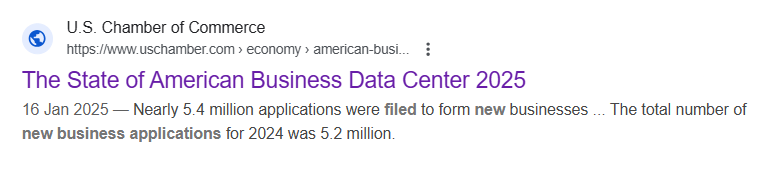
In fact, more than 5 million new business applications are filed annually in the US alone!
The Growth of SMEs in Other Economies
Other countries are also seeing a rise in small businesses:
- Canada: 1.2 million SMEs

- UAE: Over 94% of businesses in the UAE are SMEs, contributing to over 60% of the non-oil GDP. The country is targeting to double this number to 1 million SMEs by 2030.

With these numbers, it’s clear that the global market for remote work is vast and expanding. But how does India compare?
India vs. Global Market
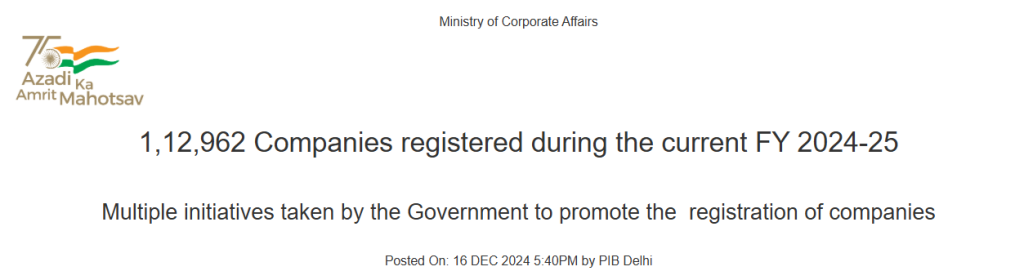
While the number of SMEs in the US alone is in the tens of millions, in India, only 1.12 lakh companies were incorporated last year, according to the Ministry of Corporate Affairs (MCA). This comparison highlights the massive size of the international market.
The Real Opportunity: 95% of Global Businesses Are SMEs
It’s important to note that 95% of global businesses are SMEs, and these companies are the ones that need remote workers. Top 5% MNCs, which are benefiting from offshoring work to local BPOs in India or setting up their own global capability centres (GCCs) in India, but SMEs cannot do that, so they will hire remote workers to compete with MNCs.
These businesses are desperate for good talent, and that’s where you come in.
Why International Employers Need You
The best local talent has already moved to top firms in Silicon Valley, Wall Street, and consulting firms, leaving SMEs with a significant talent shortage. As a result:
- These businesses need skilled professionals to help them stay competitive, but they can’t afford local hires.
Instead, they turn to India for a cost-effective solution, allowing you to earn more than you would in India while working remotely.
Furthermore, the US has created an even bigger opportunity for Indians. With the new H-1B visa restrictions, international startups and SMEs are increasingly turning to remote workers. These restrictions will exponentially increase the hiring of remote workers from countries like India, making it easier for you to find opportunities with international startups.
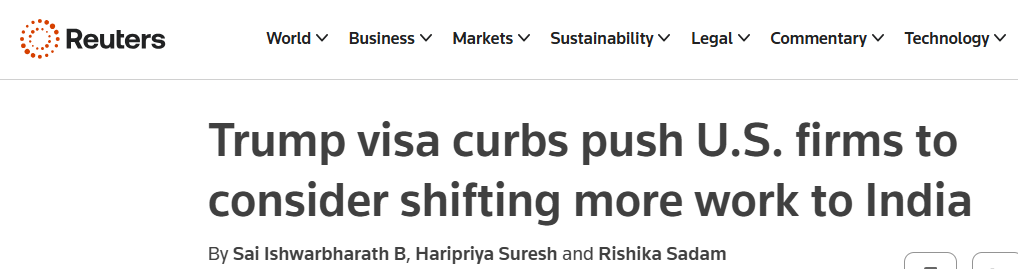
Available domestic talent in developed economies is extremely expensive to hire—top talent has already moved to prestigious firms like those in Wall Street and Silicon Valley, leaving SMEs hungry for good talent. You have a significant cost advantage working from India, enabling these companies to access skilled professionals at a fraction of the cost.
This means that, regardless of the economic environment, companies are always in need of talented professionals, especially from countries like India.
The Role of AI in Small Businesses
AI has become an essential tool for small businesses across the globe. You don’t need to be a tech expert to use AI, small businesses are adopting AI tools to help streamline operations. Whether it’s for customer service, data analysis, or content creation, the demand for skilled workers to manage and optimize AI tools is growing.

The Power of Skill Arbitrage
The concept of skill arbitrage can seem complex, but it’s a simple idea. Think of it like stock market arbitrage buying a stock at one price in one market and selling it at a higher price in another. This same principle applies to remote work. Here’s how it works:
- Local Scenario: If you work as a virtual assistant in Nagpur, you might earn ₹25,000/month.
- City Comparison: In larger cities like Pune or Bangalore, you can earn ₹50,000/month.
- Global Opportunity: But if you take your skills and work for companies in New York or London, you might earn ₹2-5 lakhs/month.
This is the essence of skill arbitrage finding a high-paying remote job in countries where your skillset is in high demand, and earning significantly more than you would locally.
Always in Demand: Remote Work Will Continue to Grow
No matter how the global economy fares whether it grows or slows companies will always need skilled workers. Here’s why:
- Economic Growth: When the economy grows, businesses hire more people to fuel their growth.
- Economic Slowdown: If the economy slows, businesses may replace expensive local talent with more affordable remote workers.
In short, the demand for remote talent will always be there, and you can take advantage of it by working for international employers.
One of the most exciting aspects of remote work is that it’s creating a borderless economy. In the past, physical borders and geographical locations limited the opportunities available to professionals. Now, thanks to remote work, those boundaries are melting. You can work for anyone, anywhere, and earn a global salary from the comfort of your home.
Conclusion
The global market for remote work is vast, and women in India have a unique opportunity to tap into this growing demand. By embracing the trends of remote work, skill arbitrage, and leveraging the global talent pool, you can earn more, work flexibly, and access opportunities that were once out of reach. The world is your workplace, and now is the time to seize that opportunity.





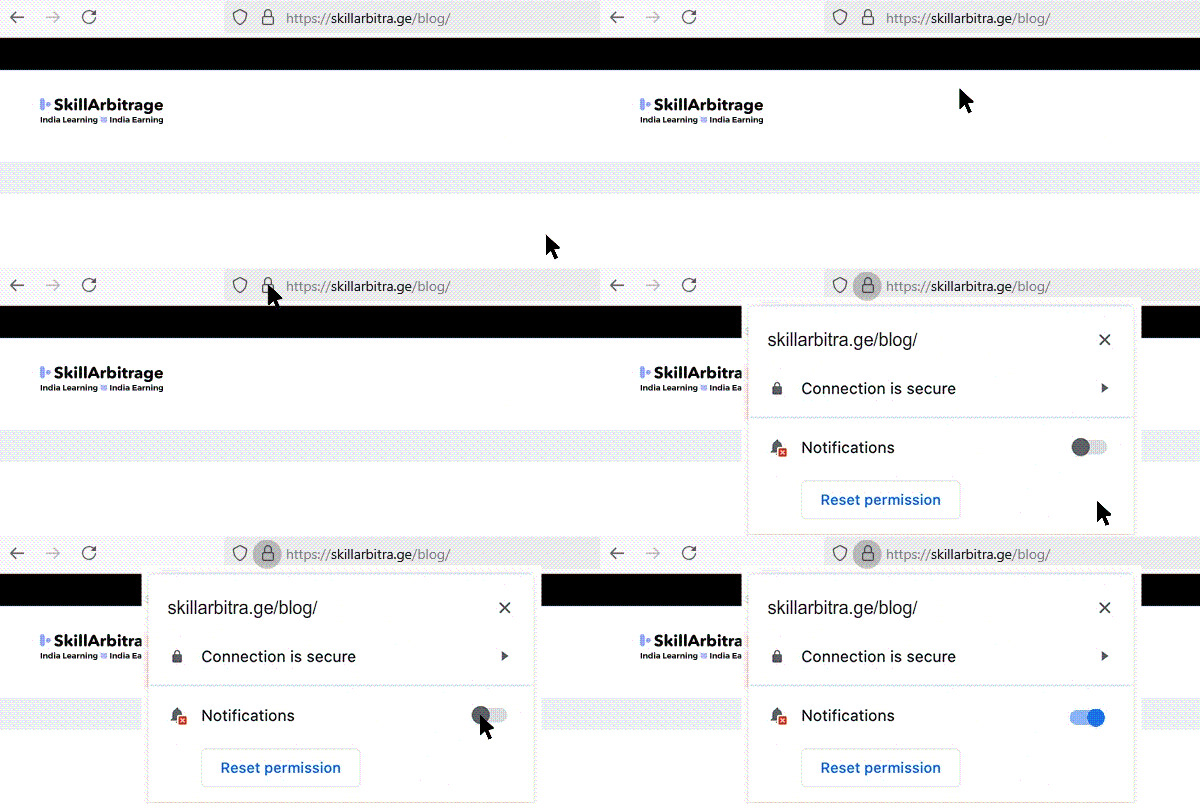
 Allow notifications
This breakdown of why global companies are turning to remote talent from India really highlights the shift in how work is being valued—especially the cost and time zone advantages. It’s encouraging to see that this isn’t just limited to tech roles anymore, which opens up opportunities for professionals from diverse backgrounds. The mention of SMEs and startups really drives home how widespread this trend is, and it’s exciting to think about the potential for more people to access higher-paying remote work.
This insight into how international startups are leveling the playing field for Indian women in remote work is really empowering. It’s great to see a focus on the real value women bring—skills that are in high demand globally, not just locally. The cost and time zone advantages make this a win-win for both employees and employers, especially as more SMEs recognize the potential of remote talent.