Ever wondered what a day in the life of a college professor looks like?
Lectures. Students. Publications. Grants. Conferences. Fieldwork. Reports. Data.
Sounds like a lot, doesn’t it? Because it is a lot. What most people don’t realise is that they don’t do it alone.
Behind many successful academicians and researchers is a small ecosystem of skilled academic writers and research professionals working remotely. And this is why global academic writing opportunities are increasing manifold.
Academic writers can support professors in four powerful ways
A professor anywhere in the world usually needs help in four broad areas:
- Research and writing work
- Administrative, operational, and liaison work
- Grant pitching and government projects
- Public-facing work: podcasts, social media threads, books, research summaries
Most aspiring writers focus on just one. But the real opportunity opens up when someone can add value in at least three of these areas. That’s when they become indispensable.
Professors have budgets. The question is: what value can you add?
A common doubt is: “Will professors really pay for this?”
Yes. Many senior researchers easily allocate $10,000 or more annually toward research support, publications, and project acceleration.
And as their careers progress, these expenses are often included in grant budgets. So they are not paying from their own pockets.
What an aspiring academic writer needs to ask themselves is, what skill can they offer that genuinely makes their life easier?
Simply saying, “I have a degree, please give me work,” goes nowhere. Value first; work follows.
High-demand skills that open global academic writing projects
Now this is where things get interesting.
There isn’t just one way to earn. There are dozens.
Research and writing skills
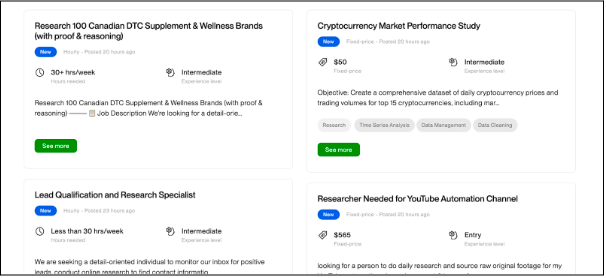
Conceptualising field research

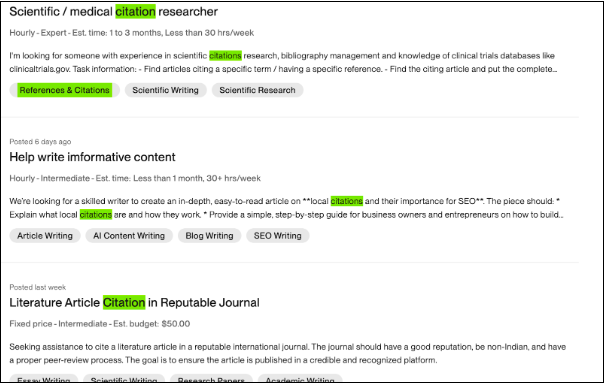
Meeting citation standards and stylesheet guidelines for journals, manuscript formatting, and submission processes for target journals. This can pay you anywhere between $50-100.
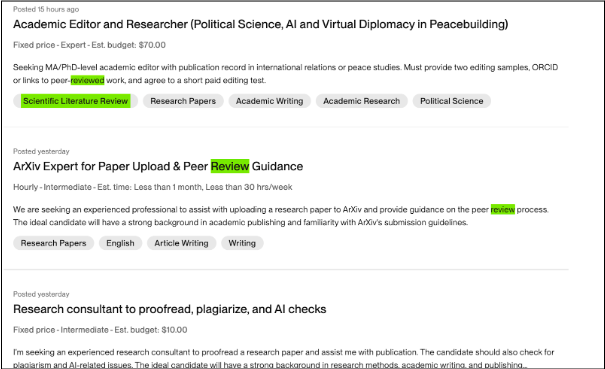
Conducting literature reviews that pay up to$50-$70
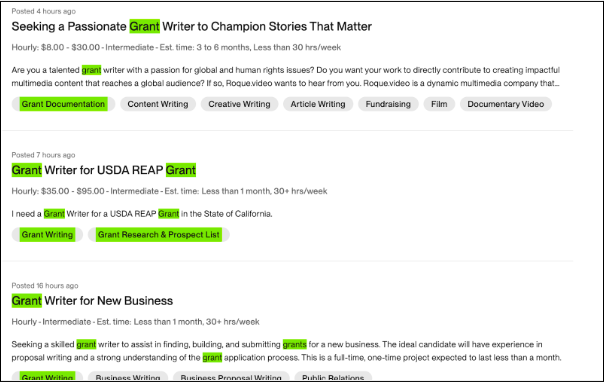
Writing grant proposals that meet the technical requirements of prospective donors and funding agencies can pay around $95
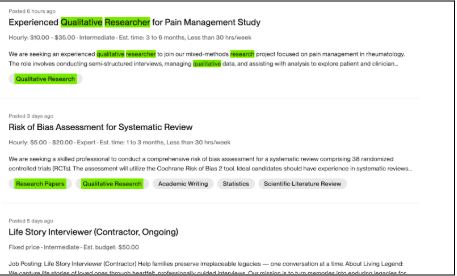
Qualitative research (interviews, focus groups, etc.) pays around $50.
- Preparing manuscripts for submission
- Pre-publication peer review (up to $70)
- Writing grant proposals (up to $95)
- Research ethics documentation and IRB applications
Each of these skills alone can become a paid project. For example:
- Literature reviews often bring consistent assignments.
- Grant writing can become one of the highest-paying specialisations.
- Manuscript formatting and journal compliance are recurring needs.
These are not one-time gigs. They are repeat services.
Data and analysis skills
If someone understands data, opportunities multiply even faster.
- Data collection and analysis
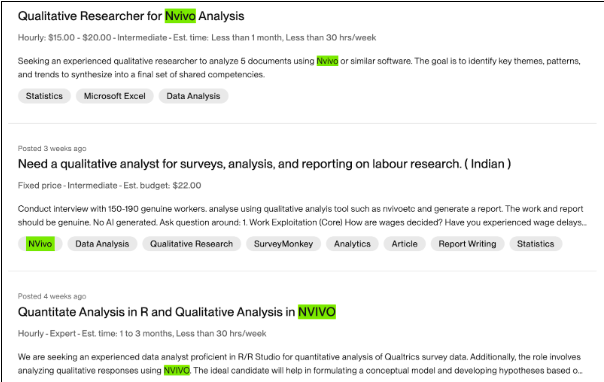
- Coding and analyzing qualitative or textual data using software like NVivo or ATLAS.ti, enabling rigorous thematic analysis in social sciences and humanities for $20:
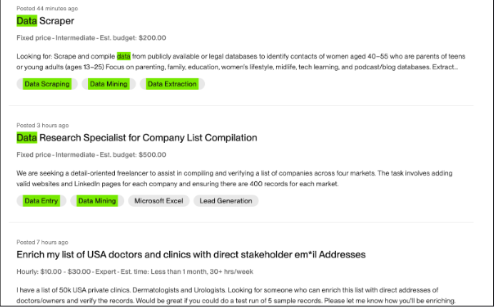
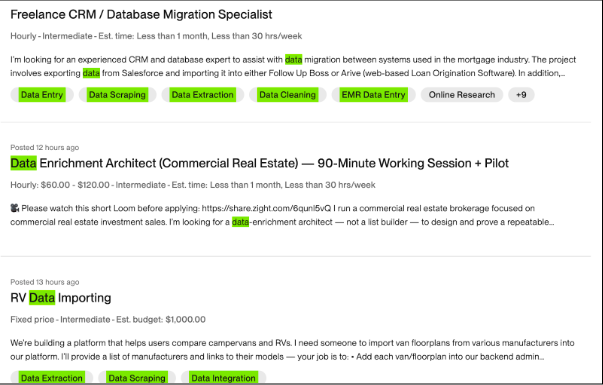
- Organizing, cleaning, and transforming raw datasets (e.g., handling missing data or outliers) to ensure accuracy and readiness for analysis for up to $1200:
- Conducting structured literature reviews and quantitative meta-analyses (following PRISMA guidelines) to synthesize findings across multiple studies. You see $125:

- Machine learning applications for research

- Building statistical models or running simulations (for example, Monte Carlo simulations or computational models) to test hypotheses and interpret theoretical scenarios for $15:
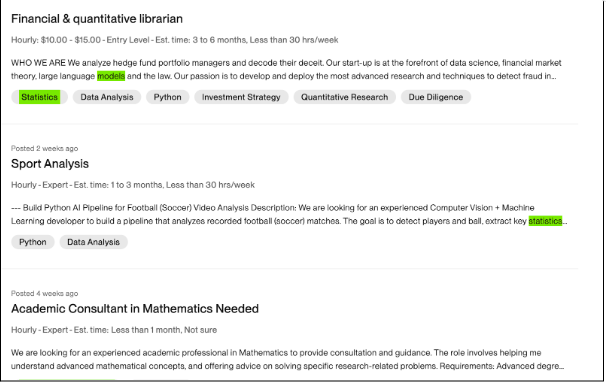
Platforms like Kolabtree regularly list live projects across these categories.
Some assignments go into the hundreds or even thousands of dollars; many of them are remote.
Research software and technical proficiency
Academic writers who know how to use tools stand out immediately.
- Reference managers like Zotero, Mendeley, or EndNote
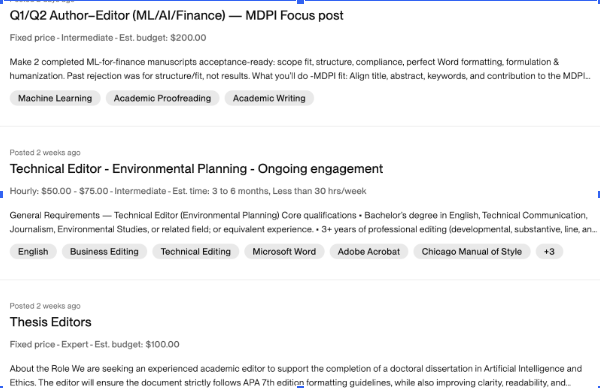
- Research software proficiency (SPSS, R, NVivo, ATLAS.ti, etc.), using tools like SPSS, R, or Stata to handle quantitative data and perform complex statistical analyses. This shows assignments worth $500.
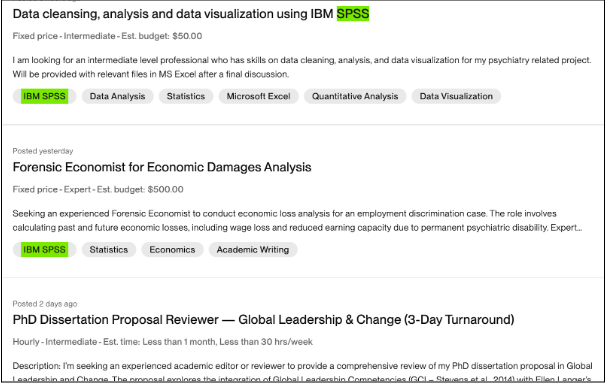
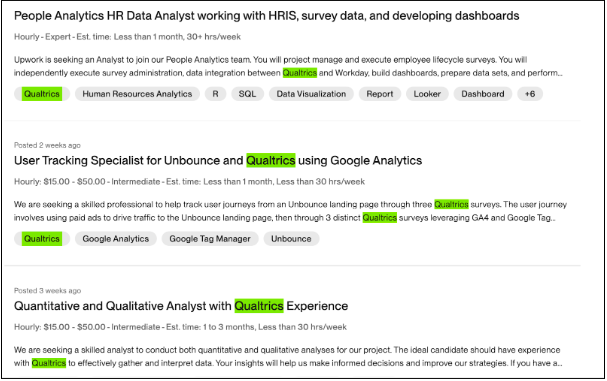
- Using platforms such as Qualtrics or SurveyMonkey to create surveys, deploy them to participants, and manage the resulting data for $50:
Even knowing how to prepare clean LaTeX manuscripts or publication-quality graphs can open specialised, high-value projects.
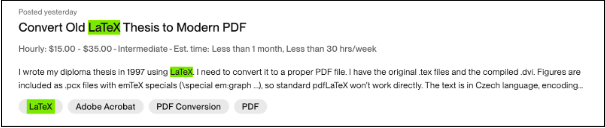
The more tools someone can confidently use, the higher their positioning in the global academic writing market.
Advanced and emerging skills
Academic writing is no longer limited to Word documents. Advanced writers are now:
- Writing Python scripts to automate data analysis
- Creating research infographics
- Managing reproducible workflows using Jupyter Notebooks
- Applying AI tools for transcription and qualitative coding
- Anonymising sensitive datasets for compliance
These skills are becoming increasingly valuable across disciplines. They’re still relatively niche, which means less competition.
The real opportunity most writers miss
Many writers compete in crowded markets, writing generic blog content. But global academic writing projects operate differently.
They reward depth over volume, precision over speed, skill over guesswork
When someone builds competence across research, writing, and data skills, they stop chasing work.
Work starts finding them.
So what should an aspiring global academic writer focus on?
Not everything at once, but at least three strong areas.
For example:
- Literature reviews + grant writing + journal formatting
- Data analysis + research design + manuscript drafting
- Qualitative research + transcription + thematic analysis
This layered value is what makes someone globally employable.
Remember: Skills create Freedom
Academic writing is not a single job, but a collection of specialised services.
And each skill adds another income stream.
For anyone wondering how to build a global academic writing career, the answer isn’t just “write better,” but instead, learn skills that researchers already pay for.



 Allow notifications