
Support and operations teams are changing faster than ever before.
Table of Contents
New tools, higher customer expectations, and the rise of AI are transforming how companies handle customer experience. While many people fear that AI will replace support jobs, the reality is different.
AI is not replacing support professionals.
It is replacing the professionals who don’t know how to use it.
Today, the top 1% of support and operations professionals are not working harder. They are working smarter with AI-driven automation.
According to a recent McKinsey report, 78% of companies are attempting to implement AI and automation, but most organizations have solved less than 1% of their real operational problems.
Another major shift is happening in customer support technology:
- 80% of companies plan to implement AI solutions for customer support by 2025
- This number has increased dramatically from 31% in 2023
Yet despite this rapid adoption, only a small number of companies are implementing AI correctly.
Let’s explore why.
What AI Implementation Looks Like for Most Support & Operations Teams
Many companies believe they have implemented AI, but in reality, they have only installed tools without building proper systems.
Here are common examples:
- A chatbot is installed but provides robotic responses that frustrate customers.
- A ticketing tool is purchased but workflows are never automated.
- An FAQ section exists but is outdated and rarely used.
- AI tools like ChatGPT are used for email templates but response quality doesn’t improve.
- CRM or helpdesk software is purchased but only 20% of the features are used.
This leads many teams to believe that AI doesn’t work for support.
The truth is different.
Most companies have tools but no working systems.
Why Most Companies Fail With Support Automation
Organizations typically follow this pattern:

- They purchase AI tools because vendors promote them well.
- Employees attend a short training session.
- Leadership expects the system to work automatically.
- When it fails, teams become frustrated.
- They revert back to manual workflows.
- The organization concludes that “AI doesn’t work for support and operations.”
But the problem isn’t the technology.
The real problem is that teams don’t know how to design and implement automation systems correctly.
How AI Automation Solves Major Support & Operations Problems
Below are real examples of how modern AI-powered systems are transforming support and operations.
Problem 1: Repetitive Support Tickets and Slow Responses
Traditional approach
- Hiring more agents to handle queries
- Copy-pasting responses into emails
- Installing chatbot templates that don’t understand context
AI-powered support automation
- Build a custom AI chatbot that resolves 70–80% of customer queries
- Train the chatbot using company FAQs and historical ticket data
- Connect the chatbot to platforms like WhatsApp, Intercom, or Crisp
- Automatically route unresolved issues to the correct human agent
Result:
- Up to 60% faster response times
- Happier customers
- Fewer refunds and complaints
Problem 2: No Visibility Into Support Team Performance
Traditional process
- Manual updates in spreadsheets
- Slack messages and email threads for reporting
- Managers chasing delayed reports
AI-powered operations dashboards
- Create a live MIS dashboard showing ticket load, resolution rate, and CSAT
- Identify recurring queries and automate them
- Automatically generate agent performance scorecards
Result:
- Managers gain real-time insights
- Teams identify bottlenecks instantly
- Productivity increases across support operations
Problem 3: Customers Leaving Due to Poor Onboarding
Old process
- Sending generic welcome emails
- Manual follow-ups from agents
- Customers leaving before fully adopting the product
AI-powered onboarding automation
- Build onboarding journeys using automation tools like Make or Zapier
- Personalize communication during the first 7 days of the user journey
- Automatically send reminders, product education, and upsell messages
Result:
- Up to 40% higher product adoption
- Lower cancellation rates
- Better customer engagement
Why AI Skills Matter for Support & Operations Professionals
Most support teams still operate reactively.
But modern companies require professionals who can design scalable systems rather than simply respond to tickets.
AI-enabled support and operations teams can:
- Reduce operational costs without layoffs
- Improve customer satisfaction through automation
- Save managers 10+ hours per week
- Generate revenue through retention and upsell opportunities
When you learn how to build these systems end-to-end, you move from being a support agent to becoming an architect of customer experience.
25 AI-Powered Support & Operations Skills That Put You in the Top 1%
- Chatbot setup and automation (WhatsApp, Intercom, Crisp, Manychat)
- Voice bot creation for 24/7 support
- Customer onboarding flow design
- Sentiment analysis dashboards
- Predictive analytics for churn prevention
- Review and reputation management (Google, Trustpilot, Facebook)
- Customer support audits using call and ticket data
- SOP and playbook creation for team training
- Automated CSAT and NPS collection
- Self-service knowledge base setup
- Workflow automation using Make, N8N, and Zapier
- MIS dashboards for support performance metrics
- Refund and complaint tracking automation
- Ticket routing and escalation systems
- Cross-tool integrations (Sheets, Notion, CRM systems)
- AI productivity analysis for support teams
- Customer communication personalization
- Chat and voice tone calibration with AI
- Onboarding training systems for support representatives
- Customer sentiment classification models
- Data visualization dashboards for executives
- Support process mapping and redesign
- Predictive triggers for refund prevention
- Automated follow-up campaigns for reviews and renewals
- Freelancing and remote work setup for operations automation
These are real and in-demand skills that startups, agencies, and global companies are actively hiring for.
Why AI Support Professionals Will Become Irreplaceable
Over the next 2–3 years, companies of all sizes will expect support and operations teams to deliver more output with fewer resources.
Professionals who can:
- Automate workflows
- Analyze customer data
- Build scalable support systems
will become essential members of every organization.
Instead of simply doing support tasks, these professionals will lead the future of customer experience.




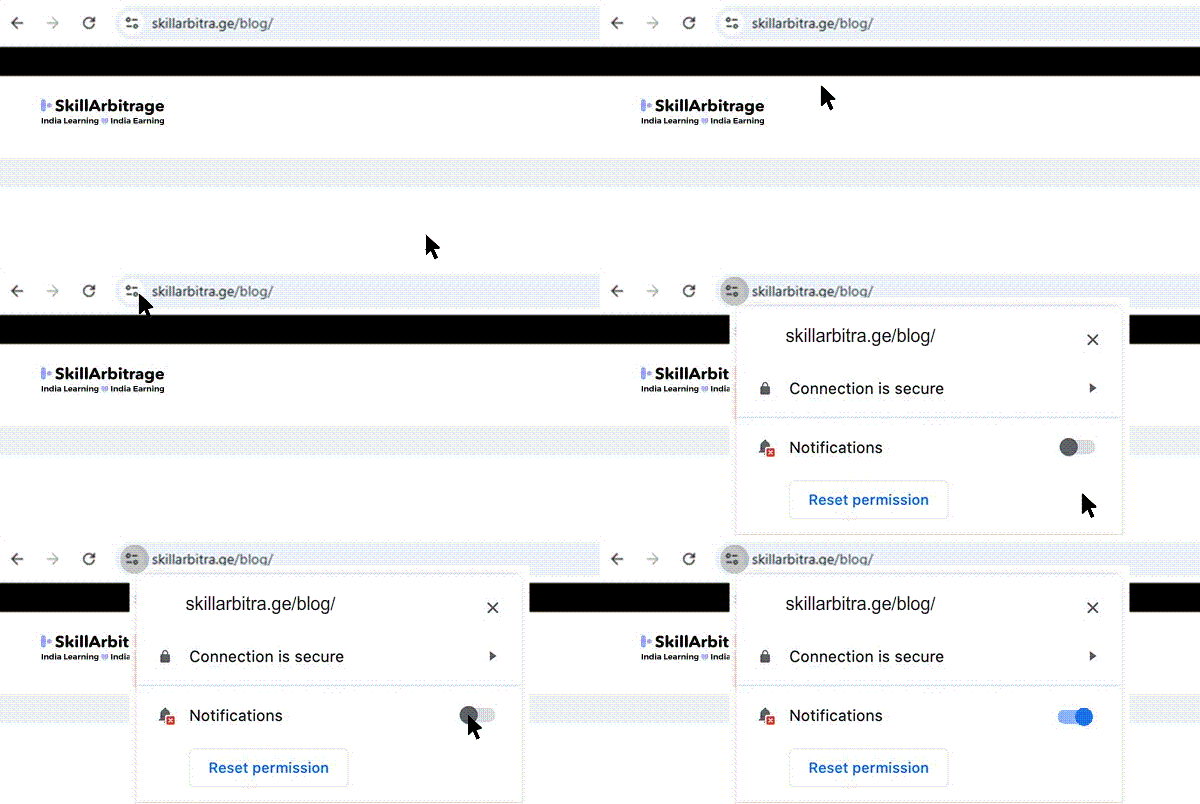
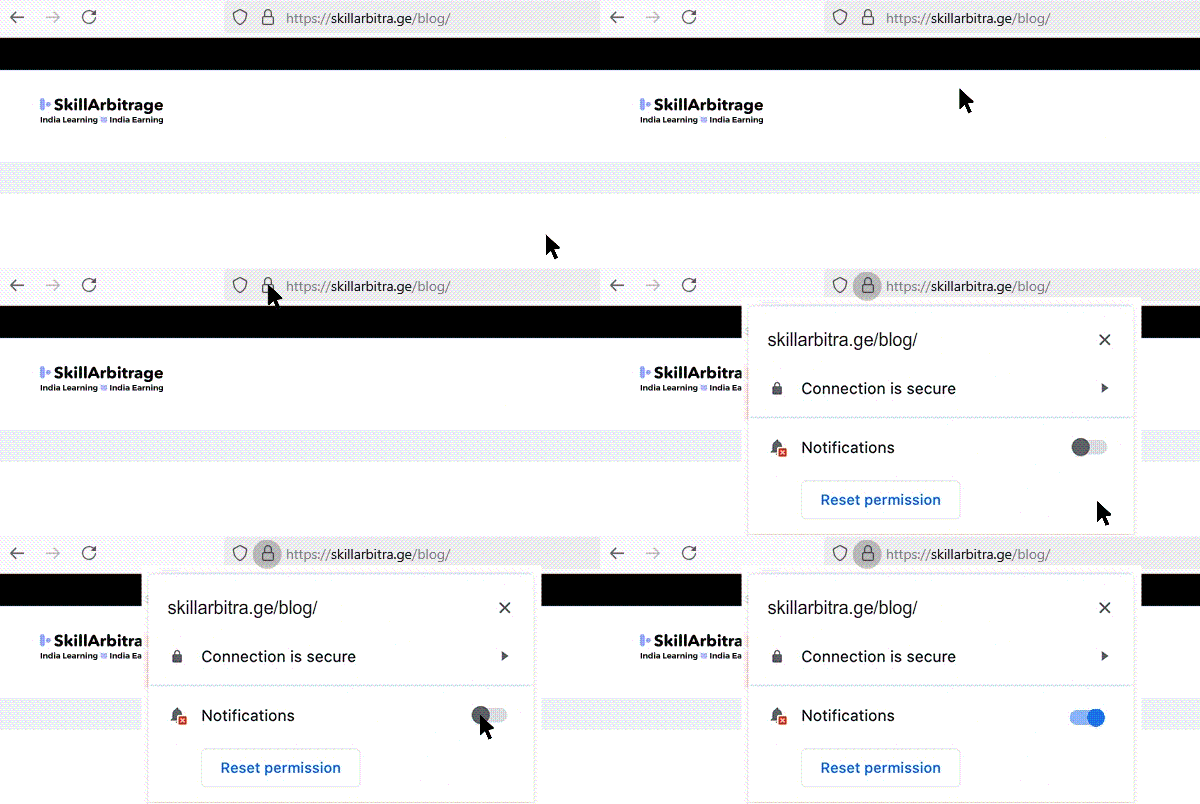
 Allow notifications