


“Investment Banking Career is a dealmaker. They connect capital with ambition, and they earn a percentage of every deal they close. That’s why a single transaction can pay more than an entire year’s salary.”
Table of Contents
Introduction
An investment banking career is widely considered the most exciting, high-paying, and intellectually stimulating path in the world of finance, and for good reason. Investment bankers don’t just crunch numbers. They make deals happen, help companies raise millions, and earn fees that can run into crores from a single transaction. Yet most finance professionals have no idea how to break into this world.
In this guide, we pull back the curtain on what investment bankers actually do, how they earn so much, what the funding ecosystem looks like, and most importantly, how you can enter this career in 2025 without a CFA, IIM, or Goldman Sachs on your resume. Whether you’re a CA, MBA, financial analyst, or simply a finance enthusiast, this post will show you exactly why an investment banking career is worth pursuing, and how realistic it is to get started today.
1. What Is an Investment Banking Career, And What Do Bankers Actually Do?
Most people think investment bankers just sit behind Bloomberg terminals all day. The reality is far more dynamic, and far more lucrative. Investment bankers are dealmakers. Their core job is to connect businesses that need capital with the investors and lenders who have it.
Here are the 4 core functions of an investment banker:
- Find potential investors — VCs, angels, private equity funds, institutional lenders, and public markets
- Find investees seeking capital — startups, SMEs, and large corporations looking to raise equity or debt
- Structuring the deal — creating pitch decks, financial models, projections, and term sheets
- Closing the transaction — facilitating negotiations and ensuring the deal is completed successfully
💡 Key Insight: Investment bankers are involved at every stage of a company’s financial journey from a ₹5 crore Seed round to a ₹1,000 crore IPO. Their role doesn’t end at large corporations; the 95% of businesses that are SMEs and startups need them just as much.
What makes an investment banking career particularly exciting is the variety. No two deals are the same. You might be working on a tech startup’s Series A fundraise one week and arranging a debt facility for a manufacturing company the next. The combination of financial analysis, storytelling, relationship building, and negotiation makes this one of the most multi-dimensional careers in finance.
2. How Businesses Raise Capital: Debt vs Equity Explained
Every business, from a two-person startup to a ₹10,000 crore corporation, needs capital to start and grow. That capital comes in exactly two forms: debt and equity. Understanding this distinction is fundamental to understanding what an investment banking career involves.
Equity: Selling Ownership for Capital
When a business raises equity capital, it sells a portion of its ownership to investors in exchange for cash. The investor bets on the company’s future growth. If it succeeds, they make outsized returns, like Sequoia Capital and Kleiner Perkins, who exited Google at over 300x their initial investment.
Equity investors do not need to be repaid like a loan. But they do take ownership rights, and often demand special shares, veto powers, and governance protections.
Debt: Borrowing Capital Against Security or Cash Flows
Debt financing means borrowing money that must be repaid with interest. For most startups, traditional bank loans are difficult to access because lenders require security or proven cash flows. Common forms of debt in the investment banking world include:
- Working capital facilities — overdraft, cash credit lines
- Secured term loans — backed by company assets
- Revenue-based financing — repayments tied to monthly revenues
- Bond issuances — large loans broken into tradeable instruments sold to institutional investors
- Unsecured loans — based on creditworthiness, typically for established businesses
Investment bankers operate on both sides of this equation, helping companies raise equity from VCs and PE funds, and helping them arrange debt from banks, NBFCs, and institutional lenders. This dual expertise is what makes an investment banking career so versatile and valuable.
3. The Startup Funding Ladder: From Pre-Seed to IPO
One of the most important frameworks in an investment banking career is understanding how startups progress through funding rounds. Each stage has different investors, different deal sizes, and different roles for the investment banker.
| Funding Stage | Silicon Valley (USD) | India (INR) | Who Invests? |
| Pre-Seed | $0.5M – $1M | ₹75L – ₹2 Cr | Friends, Family, Angels |
| Seed | $2M – $4M | ₹2 Cr – ₹8 Cr | Angel Investors |
| Series A | $10M – $15M | ₹15 Cr – ₹60 Cr | Venture Capitalists |
| Series B | $20M – $40M | ₹40 Cr – ₹150 Cr | VCs, Growth Funds |
| Series C | $30M – $60M+ | ₹80 Cr – ₹300 Cr+ | Late-stage VCs, PE |
| Series D+ | $50M – $100M+ | ₹150 Cr – ₹800 Cr+ | Private Equity |
| IPO | $100M+ | ₹500 Cr+ | Public Markets |
Sources: Crunchbase, Tracxn India Startup Report 2024, SEBI. All figures are indicative and vary by sector and geography.
The IPO: The Ultimate Exit for Investors
An Initial Public Offering (IPO) is the final milestone in most startups’ funding journeys, and one of the most significant transactions an investment banker can work on. When a company goes public, it raises capital from the general public by listing its shares on a stock exchange.
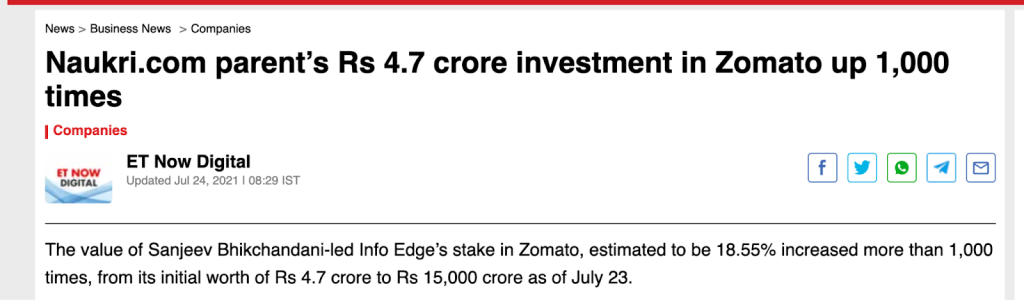
For investors who got in at the Seed or Series A stage, an IPO represents the exit event, the moment they realize their returns. InfoEdge’s investment in Zomato is a celebrated Indian example: what began as an early stake grew into an extraordinary return as Zomato went public.

📊 Real Example: Sequoia Capital and Kleiner Perkins exited Google post-IPO at more than 300x their initial investment. In India, InfoEdge’s early stake in Zomato generated life-changing returns for its investors, and the investment bankers who facilitated those rounds earned significant fees at every stage.
4. How Investment Bankers Earn: Fees, Deals, and Real Numbers
This is where an investment banking career becomes truly compelling. Investment bankers typically earn a success fee or finder’s fee of 2%–10% of the total capital raised.

For larger transactions like IPOs, merchant banks can charge up to 15% of the funds raised. Here is what that looks like in practice:
| Deal Type | Typical Fee % | Example Deal Size | Estimated Earnings |
| Seed Round (India) | 3% – 5% | ₹5 Crore | ₹15L – ₹25L |
| Series A (India) | 2% – 4% | ₹30 Crore | ₹60L – ₹1.2 Cr |
| IPO (Merchant Bank) | 2% – 15% | ₹100 Crore | ₹2 Cr – ₹15 Cr |
| Debt Arrangement | 1% – 3% | ₹50 Crore | ₹50L – ₹1.5 Cr |
| US Deal (Mid-Market) | 2% – 5% | $5M | $100K – $250K |
Understanding the Real Earning Potential
Let’s make this concrete. Imagine you are working on a Seed-stage deal in India, a startup raising ₹5 crore. At a 4% success fee, your earnings from that single deal are ₹20 lakh. At 2%, that’s ₹10 lakh from one transaction.
Now consider that experienced investment bankers close 4–8 deals per year. At those volumes, annual earnings of ₹50 lakh to ₹2 crore are entirely realistic, for professionals working independently, not just those at large investment banks.
“On a ₹5 crore Seed transaction, a 4% success fee earns ₹20 lakh. That’s from a single deal. Once you’ve done this a few times, clients pay a retainer just to engage you, before the transaction even closes.”
💰 Income Model: Once established, investment banking professionals charge a retainer fee (₹1–5 lakh/month) simply to be engaged, plus a success fee on deal completion. This creates multiple income streams from every client relationship.
5. The Buy Side vs Sell Side: Two Career Paths in Investment Banking
One of the most important distinctions in an investment banking career is understanding whether you want to work on the buy side or the sell side. Both offer strong earning potential and interesting work; they simply approach deals from opposite directions.
The Sell Side: Representing Businesses Raising Capital
Sell-side professionals represent companies that are raising capital, startups seeking VC investment, SMEs looking for debt financing, or large corporations going public. Their job is to prepare the company for investors: building the pitch deck, creating financial models, preparing due diligence materials, and finding and approaching the right investors.
- Who you work for: Startups, SMEs, growth-stage companies
- What you do: Pitch decks, financial models, investor outreach, deal negotiation
- How you earn: Success fee as % of capital raised
The Buy Side: Representing Investors and Funds
Buy-side professionals work for investors, venture capital funds, private equity firms, family offices, NBFCs, and institutional lenders. They source deal flow (finding investable companies), perform due diligence, and make investment recommendations.
- Who you work for: VCs, PE funds, family offices, banks, NBFCs
- What you do: Deal sourcing, due diligence, valuation, investment memos
- How you earn: Salary + carried interest (share of fund profits)
💡 Pro Tip: Many successful investment banking professionals start on the sell-side (easier to enter independently), build a track record, and then transition to buy-side roles or start their own boutique investment banking firm.
6. How to Enter an Investment Banking Career Without CFA or IIM
Here is the most important thing to understand: you do not need a CFA, an IIM degree, or a Goldman Sachs internship to build a successful investment banking career. There are faster, smarter paths that thousands of finance professionals in India are already taking.
- Step 1: Get the Right Certifications Fast
For Indian markets: NISM Series Certifications (available via SEBI‘s NISM portal, completable in 3–6 months) cover securities markets, investment advisory, and research analysis, all highly relevant to investment banking work. For US and global markets: FINRA Series 63, 65, or 79 certifications can be completed remotely and give you credibility with international clients.
- Step 2: Master the Core Technical Skills
Financial modelling, company valuation (DCF, comparable company analysis, precedent transactions), pitch deck creation, and term sheet negotiation are the technical skills that close deals. These can be learned through targeted courses and practice, not years of institutional experience.
- Step 3: Build Your Deal Pipeline
Your first deal is the hardest to find. Start with your network: CAs who work with growing businesses, startup incubators and accelerators, business associations like CII, FICCI, and NASSCOM are all excellent sources of deal flow for early-stage investment banking professionals.
- Step 4: Work on Your First Transaction
Take your first deal at a reduced fee, or even for free, to build a track record. A completed transaction and a satisfied client are your most powerful marketing tools. Document the outcome and build a case study from it.
- Step 5: Build Relationships With VCs, Angels, and Merchant Bankers
The best investment bankers are relationship machines. Attend startup events, VC meetups, and finance networking events. Join LinkedIn groups where deal flow is discussed. Over time, your relationship network becomes your competitive moat, and your primary source of recurring business.
Conclusion: Is an Investment Banking Career Right for You?
An investment banking career is not for everyone, but for those who are drawn to deal-making, financial strategy, and the excitement of working on transactions that shape businesses and industries, there is no more rewarding path in finance.
The numbers are compelling: a single Seed-stage deal in India can earn ₹10–25 lakh in fees. A Series A can earn ₹60 lakh to ₹1.2 crore. An IPO mandate can earn multiples of that. And the barrier to entry is lower than most people think, no CFA, no IIM, no Goldman Sachs required. The path begins with the right certifications, the right skills, and the first deal. The investment banking world is not a closed club. It is an open market, and the professionals who understand this are already building careers that most of their peers can only dream about.





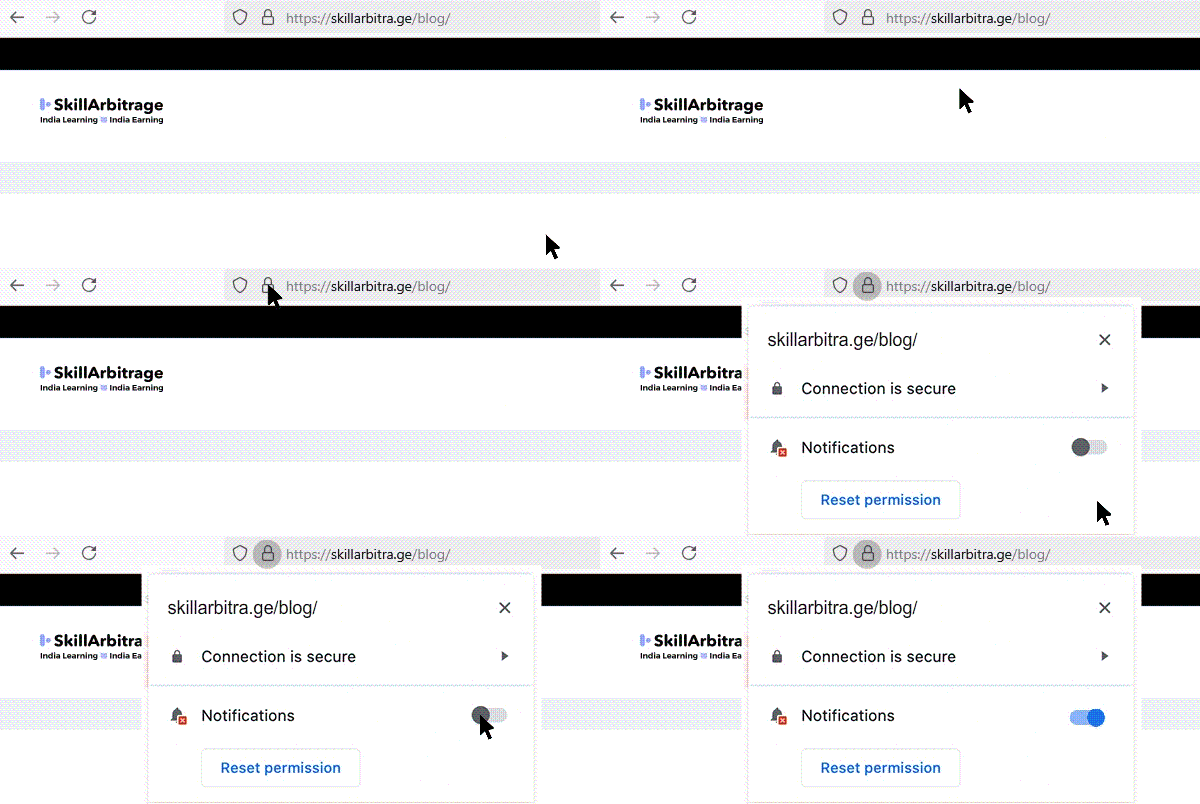
 Allow notifications
I hadn’t realized how nuanced the startup funding ladder is before this—your explanation of pre-seed to IPO really demystifies the process and shows the strategic role investment bankers play at each stage. It makes me think differently about how capital and ambition are connected in the real world.