

When we talk about the rise of AI, most people immediately think of automation, disruption, and fear. But the real story is very different. If you look at what is happening inside businesses today, you will realize that AI has not closed doors.
Table of Contents
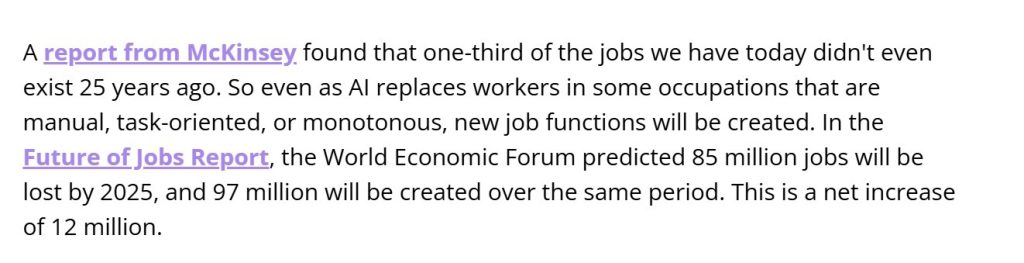
AI is transforming industries, but many still fear that it will take away jobs. However, AI is not closing doors, it’s opening a world of opportunities. According to the World Economic Forum (2023), AI is projected to create 97 million new jobs, while only displacing 85 million. Furthermore, McKinsey predicts that automation will increase global productivity by 1.4% annually, creating more demand for roles involving AI.
In this article, we will explore how AI can be used as a virtual assistant, the essential skills you need, and why learning AI can unlock global career opportunities in remote work.
Why AI Needs a Human: The Critical Insight
While AI offers powerful tools that can automate many business processes, it does not run businesses automatically. AI needs a human to manage and guide its actions. A virtual assistant (VA) plays a critical role in this process by:
- Structuring Inputs: You need to input the right data, frame questions, and ensure AI receives the correct instructions to achieve meaningful outcomes.
- Refining Outputs: After AI generates results, the VA must refine them by improving language, checking accuracy, and aligning the content with business goals.
- Ensuring Context: AI doesn’t understand context in the same way humans do. A VA is required to oversee AI’s work, making sure it aligns with the business’s specific needs, tone, and objectives.
Without this human touch, AI would simply churn out raw data that may lack the nuance or understanding required for real business impact. The virtual assistant ensures AI works strategically, making it a highly valuable asset for any business.
The Two Core Engines of Business: Revenue and Delivery
Understanding how AI fits into business operations requires an understanding of the two key “engines” that drive business success:
- The Revenue Engine:The Revenue Engine is the part of the business that brings in customers and generates income.
It includes everything from getting noticed, attracting leads, nurturing them, and converting them into paying customers, while also keeping them engaged for repeat business. - The Delivery & Operations Engine:The Delivery & Operations Engine is the part that fulfills what was promised to customers.
It ensures smooth execution—delivering products or services on time, maintaining quality, handling support, and managing internal processes like HR, finance, and operations.
As a virtual assistant, AI can enhance both of these engines, making you a highly sought-after resource in today’s business landscape.
How AI Enhances Revenue Generation
AI plays a crucial role in optimizing the revenue generation process. With AI tools, virtual assistants can increase efficiency and improve outcomes in several key areas:
- Lead Generation
AI can automatically optimize landing pages, ads, and websites to target the right audience. Additionally, AI can help create organic content, such as blogs, videos, memes, and infographics, that drives traffic and engagement. - Lead Nurturing
AI can automate lead nurturing by managing email funnels, WhatsApp messaging, and providing personalized content like videos, podcasts, and blog posts. - Conversion/Sales
AI supports virtual assistants by providing sales call scripts, tracking customer interactions, and creating high-conversion copy for emails, ads, and landing pages. Additionally, AI can manage and automate webinars (live or recorded), engaging prospects and turning them into customers.
How AI Optimizes Delivery & Operations
On the operations side, AI helps streamline business processes, enabling virtual assistants to automate tasks that were once time-consuming and labor-intensive:
- Product & Service Creation
AI-powered tools can help with market research, data analysis, and brainstorming ideas, assisting in the creation and prototyping of new products or services. - Delivery Logistics
AI tracks orders and ensures timely deliveries, streamlining logistics and maintaining customer satisfaction. - Customer Support & Troubleshooting
Automated AI systems like chatbots can handle common customer queries, freeing up time for human customer support teams to focus on complex issues. - HR, Finance & Administration
AI can assist virtual assistants with recruitment, tracking employee performance, managing payroll, ensuring compliance, and handling other administrative duties. - Technology Automation
AI helps automate routine processes like data entry, customer inquiries, and internal communications, improving overall business efficiency. - Leadership & Alignment
AI tools support business leaders by automating reporting, monitoring workflows, and aligning team objectives with business goals.
Key Skills You Need to Succeed as a Virtual Assistant with AI
To be effective in the role of an AI-powered virtual assistant, you need a broad set of skills. These skills will allow you to manage both the revenue and operational engines of a business. Here are 15 essential AI skills for virtual assistants:
- Lead Generation: Master AI-driven lead generation tools for WhatsApp, SMS, email, and social media (with or without ads).
- Content Creation: Use AI tools to launch blogs or newsletters for clients and automate content creation.
- High-Converting Ads & Copywriting: Use AI to create and test high-converting ads, organic videos, and write compelling copy.
- Landing Page Optimization: Create and optimize landing pages designed to convert visitors into customers.
- SEO Automation: Use AI to streamline SEO tasks, enhancing search engine rankings and driving organic traffic.
- Lead Nurturing: Automate lead nurturing via personalized marketing funnels.
- Personal Branding: Use AI to assist in building personal brands through social media content, blog posts, and more.
- Onboarding Systems: Automate customer and employee onboarding systems, including training workflows.
- Customer Support Automation: Implement AI tools like chatbots to streamline customer support.
- Remote Talent Management: Assist businesses in hiring, managing, and retaining remote talent using AI-driven recruitment tools.
- AI-Driven Project Management: Automate project management tasks for both tech and non-tech teams.
- Review & Testimonial Management: Use AI to manage business reviews and collect testimonials.
- Data Analytics & Reporting: Analyze business data and generate reports using AI tools.
- Sales Process Automation: Set up and monitor AI-driven sales processes, including training AI, creating voice agents, and conducting AI audits.
- Bookkeeping & Budgeting: Handle basic bookkeeping, financial tracking, and budget management tasks.
Bonus Skills
- Internal Documentation: Use AI to create internal documentation that speeds up employee onboarding.
- Training Materials: Build automated internal training programs to onboard new hires quickly.
Why Virtual Assistants Are Becoming High-Value Generalists
As AI continues to reshape the business landscape, virtual assistants are transitioning from specialized roles into generalist positions. A generalist is a VA who can handle multiple functions across a business, making them highly valuable and capable of earning a higher income.
By becoming proficient in a wide range of AI-powered tasks from content creation and marketing to operations and customer support you position yourself as a multi-functional expert. This flexibility not only enhances your income potential but also opens doors to more job opportunities and clients who need comprehensive support across various business functions.
Real-Life Case Study: Success with AI-Powered Virtual Assistance
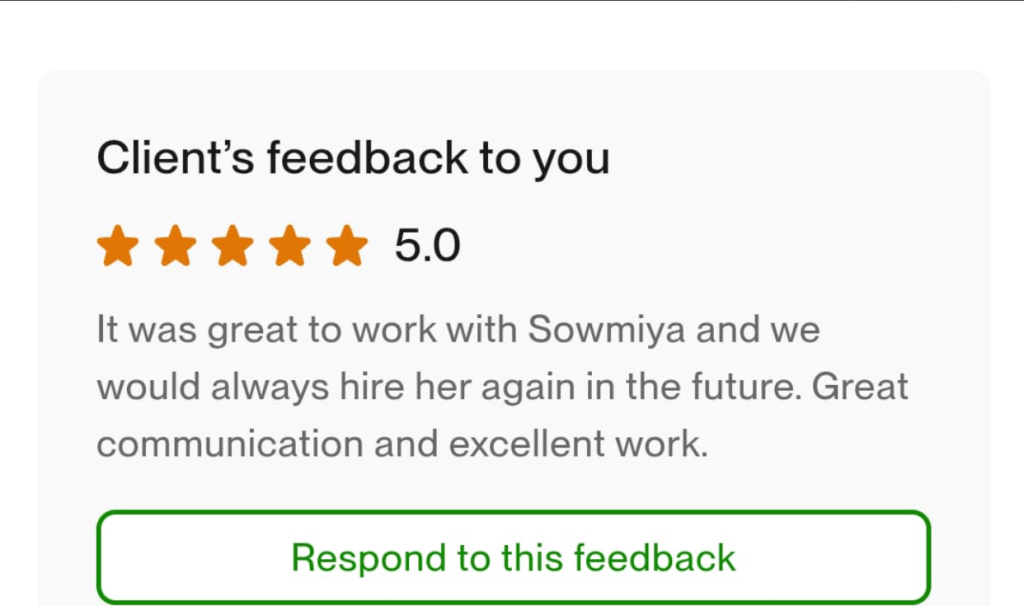
Sowmiya R, a graduate from Chennai, India, is a prime example of how AI can help someone start and succeed as a virtual assistant. After a career break due to family commitments, she joined a bootcamp to learn how to use AI and soon started working with international clients.

Sowmiya earned INR 20,000 within just a month by showcasing her AI-driven projects. She landed her first freelance job on Upwork as a Tamil & English-speaking Virtual Assistant, earning USD 820 from an Estonia-based client. She expanded her career further, securing multiple freelance jobs and building her income to INR 37,000 per month with two steady clients. Profile
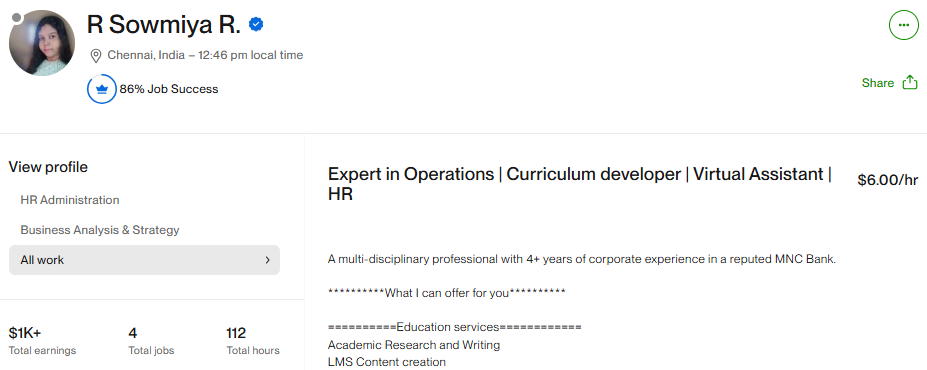
Her story demonstrates the real potential AI offers, allowing anyone , irrespective of their background to start and succeed as a remote virtual assistant.
Global Demand for AI-Literate Virtual Assistants
There is an increasing demand for AI-literate virtual assistants in global markets like the US, UK, Canada, Australia, Singapore, and Dubai. Companies are looking for skilled VAs who can leverage AI tools to drive business efficiency and growth. With the ability to work remotely, you can tap into these opportunities regardless of your location.
Conclusion
AI is revolutionizing the role of virtual assistants, transforming them into high-value generalists who can manage both business revenue and operations. By mastering AI tools and skills, virtual assistants can significantly enhance their income and career prospects. Whether you’re looking to start a remote career, transition from a traditional job, or return to the workforce after a break, learning AI can help you build a flexible, lucrative career as a virtual assistant.
AI does not replace the human element it enhances it, creating opportunities for virtual assistants to perform roles that once required specialized knowledge. Embrace the future with AI, and unlock your potential as a highly valuable, multi-functional virtual assistant today.





 Allow notifications
The idea of AI creating new jobs, like AI trainers and hybrid managers, is particularly intriguing. It really underscores how AI will enhance human potential rather than replace it. The impact on lead nurturing through AI-driven email funnels is also a game-changer.