

Table of Contents
Work from home jobs have been consistently growing since the pandemic, and one of the top roles emerging globally is that of a virtual assistant.
From startup founders to lawyers, realtors, and investors, they all need virtual assistants to scale their time.
The demand for virtual assistants (VAs) is growing globally, and there has never been a better time to enter this field.
The global intelligent virtual assistant market is predicted to soar from $13.5 billion in 2024 to nearly $119.9 billion by 2033, growing at an impressive compound annual growth rate of 26.07%.
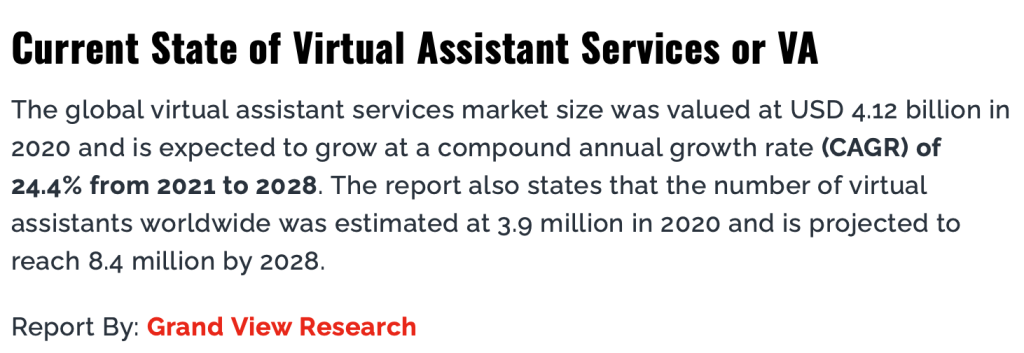
In fact, VA job postings have increased by 35% in the last year alone.
Business owners need to save time and move faster, so they delegate routine and repetitive work to virtual assistants.
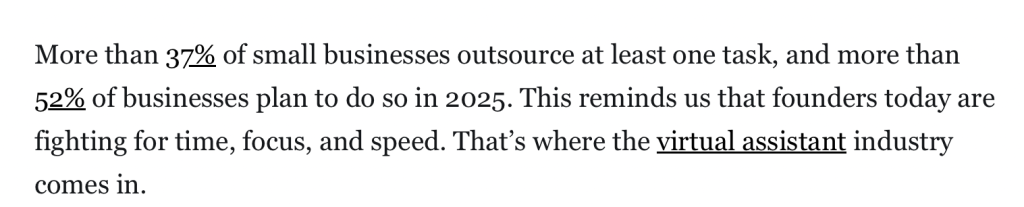
That’s exactly why this industry is expanding so rapidly.
What do you do as a Virtual Assistant?
There is demand for 3 kinds of roles as a virtual assistant:
1. Administrative roles
Here are some of the tasks that you could perform:
- Administrative support, calendar, travel & meeting management
- Basic accounting & bookkeeping
- Recruitment-related assistance
- Project management
- Customer support
- Data Entry
- Basic social media management
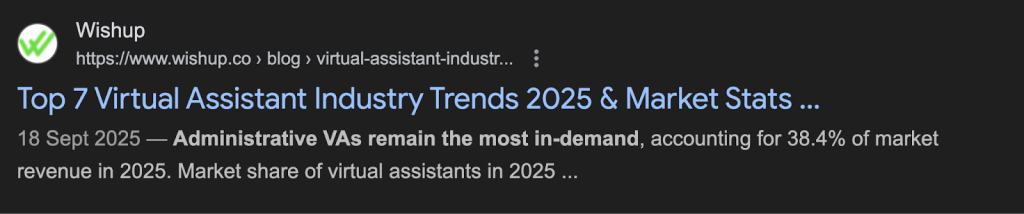
These tasks still require human judgment and reliability; they can’t be fully automated.
2. Content Creation
If you are a creative person, you may like to do content creation, which has quite a few subfields:
- Content writer, copywriter, content marketer
- Video producer and editor, Instagram and YouTube producer
- Infographic creators
- Podcast producer, podcast content support
- Graphic designer
- Technical and niche writing
Thanks to AI, you can also harness your creativity without any prior experience needed.
3. Specialised skills pertaining to what you are doing
Companies, founders, and businesses also want VAs to take on specialised roles tailored to their niche.
For example, they could perform specialized tasks in digital marketing, project management, real estate transaction coordination, bookkeeping & accounting support, fashion, tech & SaaS customer support, e-commerce store management, multilingual virtual assistance, cybersecurity, and several other niches.
If you’re interested in fashion, you could offer remote assistance to fashion designers, do market research, calendar management, article writing, marketing campaigns, etc., for leading global designers and brands.
If you are a creative person working in fashion, you can do content creation, graphic design, and marketing work for major events like fashion weeks, etc.
The demand for VAs with domain-specific expertise is only growing, and you can position yourself accordingly.
In fact, a survey indicated that 72% of businesses using VAs now prioritize industry-specific skills.
And the same concept applies to any other sector that you may be passionate about, like:
- Techies, developers, IT professionals (you could give tech support, testing, product management, or other support to tech startups).
- Lawyers (do document prep and case filing support for foreign lawyers).
- Accountants (create financial reports, manage budgets, or have expertise in platforms like QuickBooks, Xero, and Wave).
How is remote work fueling more opportunities for you as a VA?
This is the perfect time for VAs with specialized skills, thanks to the boom in remote work. It’s like the world is your oyster now.
You’re not just limited to Indian clients; you can work for international companies and clients located in advanced economies like the U.S., UK, Canada, Dubai, Singapore, etc., and earn in dollars.
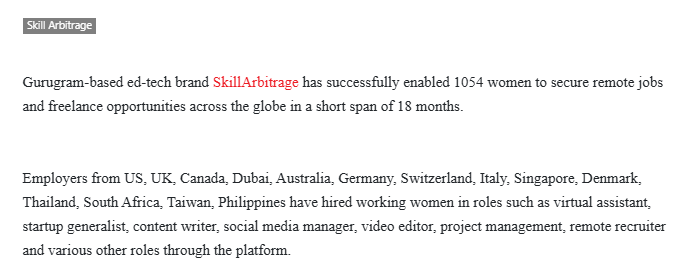
After the pandemic, all these businesses have learned the benefits of remote work. It has been 4 years since, and they are reaping the benefits!
More than 5 million new business applications are filed on average every year in the US, with similar numbers in several other advanced countries. The UK boasts 5.5 million SMEs, and Canada reportedly has 1.2 million SMEs.
SMEs also make up over 94% of the UAE’s businesses and contribute more than 60% to non-oil GDP, with ambitions to double their number to one million by 2030.
All these employers can pay far more than Indian employers!
The UK and Canada have massive labor shortages. Australia needs skilled workers. They all turned to remote hiring as the answer.
Hiring locally costs them 4000-6000 dollars monthly.
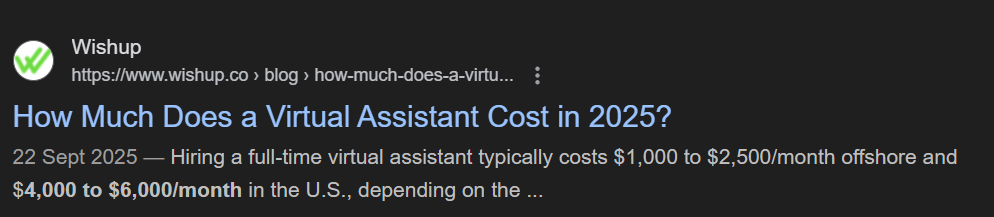
Hiring from India costs between $1000- $2000, saving these businesses thousands of dollars per month.
The key takeaway? You can earn 40,000 rupees annually sitting at home, even if you work part-time. This economic equation benefits both sides and will only expand.
Moreover, there is another unique advantage that Indians have with respect to the time difference.
The time difference between India and other countries allows for round-the-clock productivity, as tasks can be completed during their off-hours.
This is particularly valuable for global companies that need to manage tasks across different time zones.
Before the pandemic, companies were a bit wary of remote or hybrid work setups. But since COVID, businesses realized that remote and hybrid work models are a game-changer.
The World Economic Forum predicts that by 2030, the number of global digital jobs that can be performed remotely will increase by 25%, reaching 92 million worldwide.
So, this is your chance to capitalize on the booming remote job market.
Why AI Is Transforming Work From Home Jobs
Now, you can ALSO take advantage of AI to produce work that people with years of experience can – because lots of knowledge is no longer a differentiator!
Until now, you needed specialised knowledge and a degree from a high-profile institution or university to earn well – IIT, IIM, NLU, AIIMS, Harvard, Oxford.
You had to be a doctor, engineer, lawyer, banker, writer, designer – the more specialised you were, the more you earned. A good degree gave you a huge head start.
It took a person years of practice and experience to get good at one thing – legal, HR, ops, tech, marketing, sales, or any other area of work.
Since proficiency took so long, it was not possible to do multiple things.
Today, you can use AI to virtually do anything that you can imagine without having prior experience or expertise.
As long as you can clearly imagine it, you can do it.
Want to make a social media post, video, a meme, or reel? That happens in no time.
Rookie-level stuff. You still get paid well, though 🙂
Want to analyse data into meaningful insights from an Excel sheet?
Or do customer support work?
Maybe design a process that beats a Six Sigma black belt in operations?
You can churn it out in under 30 mins. The black belt guy will struggle to justify why he should be paid for 10 hours when ChatGPT can do 90 percent of his job in 53 seconds!
Want an employee or client onboarding doc? You’ll get a first draft in minutes.
You can even create an HR handbook that someone with 10 years’ experience would create, or an operational handbook, as well as a Six Sigma black belt in operational excellence would perhaps do.
He would have to do a lot of extra value-added work because the non-value-added work is now gone, thanks to automation.
And you will do it faster using AI, if your first principles thinking is strong.
All of that is possible.
Which means one person can comfortably wear more hats.
AI is levelling the playing field between experienced professionals and those without experience, as long as they are willing to work hard and solve problems.
It means that if you are a beginner, or you took a career break and were afraid to get started because you were not sure if you are in touch with the times, you don’t have to worry anymore.
AI has enabled people to do things that they could not do before. One person alone can do what it took a hundred people to produce earlier.
That is why you can learn to use AI so that you can do all these tasks and become the boss of all of these professionals.
If you’re beginning without prior remote experience, this guide explains how to build trust as a beginner.
Your Next Move
Virtual assistance is no longer about answering emails or scheduling meetings. It’s about becoming indispensable to business leaders who value speed, clarity, and execution.
You don’t need a perfect resume. You need reliability, curiosity, and the willingness to grow. Start small. Build skills. Serve well. Because once you become the person someone depends on, opportunities don’t just appear; they compound.





 Allow notifications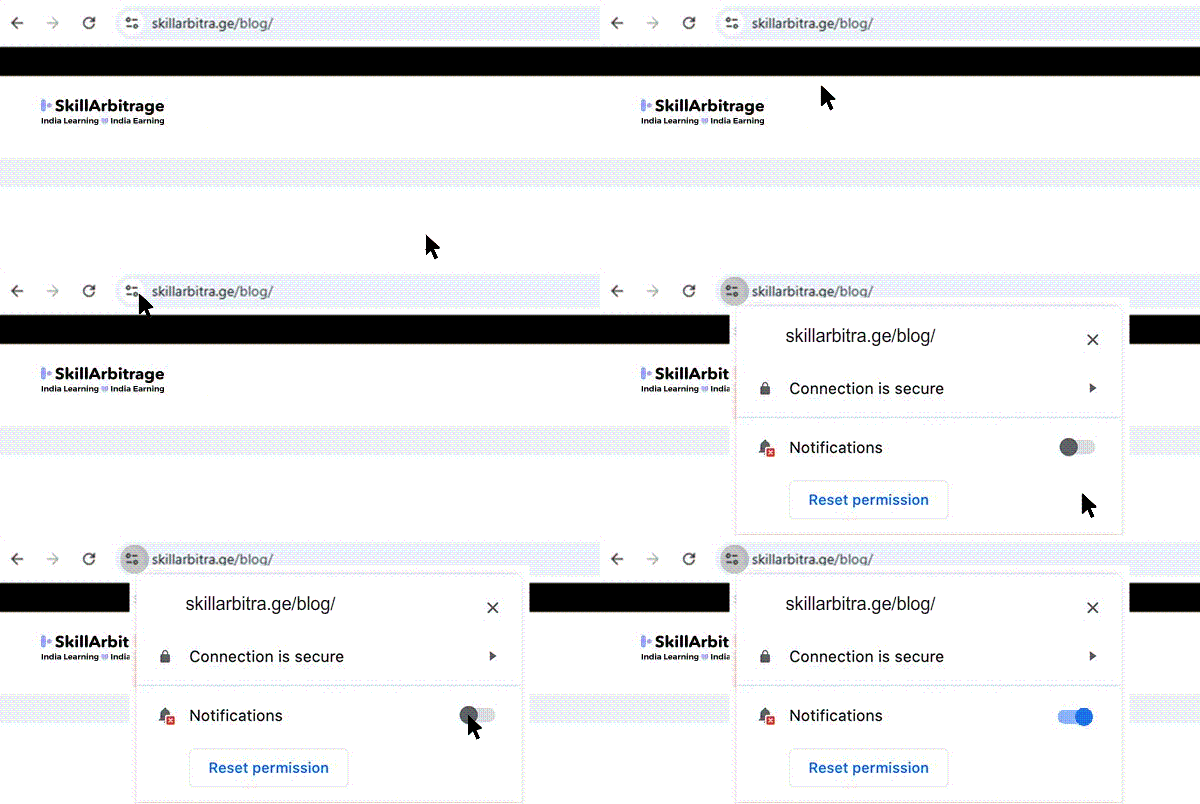
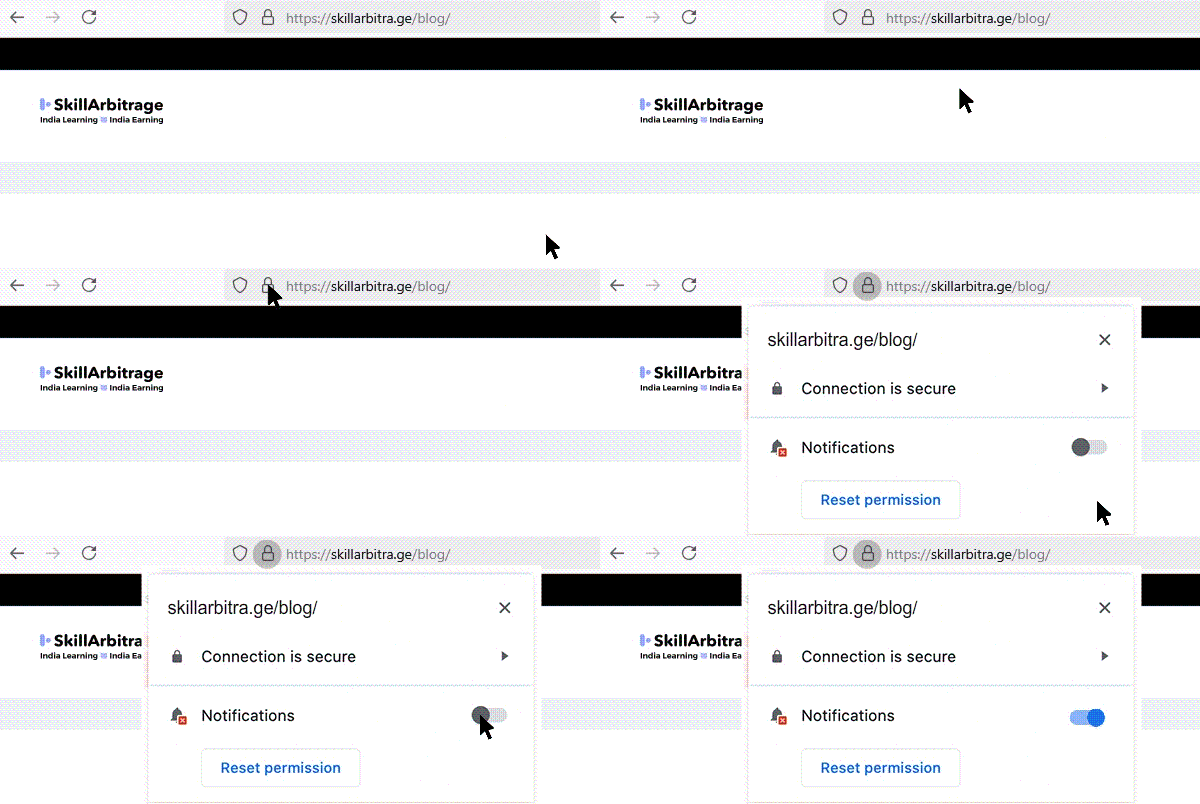
It’s great to see the VA industry booming! I’m especially interested in how content creation roles are evolving. With platforms like YouTube and Instagram continuing to grow, VAs with creative skills have a real chance to expand their portfolios and help businesses boost their online presence.